

The Hidden Cost of Modern Living: Why Your Body Feels Out of Sync
Golden Hook & Introduction
SECTION
Nova: What if the very things we’ve been told are signs of progress – our comfortable lives, our endless food supply, our constant connectivity – are actually quietly sabotaging our health?
Atlas: Whoa. That's a bold claim, Nova. I mean, progress is supposed to make things better, right? Are you suggesting our modern conveniences are actually making us… worse? That feels counter-intuitive.
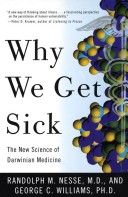
Nova: It absolutely does, Atlas, and that’s precisely the fascinating paradox we’re diving into today. We’re exploring a concept that turns our understanding of health on its head, moving beyond the idea that individual health problems are isolated incidents. We’re looking at the profound insights from two groundbreaking books: "Why We Get Sick" by Randolph Nesse and George Williams, and "The Story of the Human Body" by Daniel Lieberman.
Atlas: Nesse and Williams, Lieberman… these are big names in evolutionary biology and anthropology.
Nova: They truly are. Randolph Nesse, for instance, is a true pioneer. He wasn't just another doctor; he was instrumental in founding the entire field of evolutionary medicine, essentially asking: 'Why did evolution leave us vulnerable to disease in the first place?' It's a revolutionary way to think about illness. And Daniel Lieberman, on the other hand, he's spent his career literally digging into our past, showing us how our bodies were built for movement, for natural foods, for a life that looks almost nothing like ours today.
Atlas: So, it's not just theory for him, it’s literally etched into our bones and our history? That's compelling.
Nova: Exactly. The core of our podcast today is really an exploration of how our ancient biology is clashing with the modern world, and why understanding this evolutionary mismatch is crucial to truly solving our health puzzles. We'll dive deep into this from two perspectives. First, we'll explore the fundamental concept of evolutionary mismatch – how our bodies are still designed for a world that no longer exists. Then, we’ll discuss how this understanding helps us move beyond treating isolated symptoms to truly addressing the systemic roots of chronic issues.
The Evolutionary Mismatch: Ancient Biology Meets Modern Life
SECTION
Atlas: Okay, so this "evolutionary mismatch" sounds like a fancy term. How does it actually manifest in our daily lives? Give me an example of how my ancient body is getting confused by my 21st-century habits.
Nova: That's the perfect question, Atlas, because it’s everywhere once you start looking. Let’s take something incredibly common, something almost universally enjoyed: our craving for sugar and fat. In the modern world, it’s a recipe for metabolic disaster, right? Diabetes, heart disease, obesity.
Atlas: Absolutely. We're constantly told to eat less, move more, practice portion control. It feels like a constant battle against our own desires.
Nova: And that’s precisely the mismatch. For millions of years, for our hunter-gatherer ancestors, sugar and fat were incredibly rare and incredibly valuable. Finding a patch of ripe berries or a fatty animal was a survival jackpot. Our brains evolved powerful reward systems to drive us to seek out and consume as much of these high-calorie foods as possible, because you never knew when the next meal would come. It was a feast-or-famine world. So, when they found something sweet or fatty, their bodies said, "Eat it all, store it all, because winter is coming, or the drought is coming."
Atlas: Oh man, that makes so much sense. So, my intense desire for that second slice of cake isn't just a lack of willpower; it's literally my ancient brain screaming, "Stock up! There might be a famine tomorrow!"
Nova: Precisely! Your ancient brain is still operating on a Paleolithic operating system, but you're living in a world of endless supermarkets and drive-thrus. The famine never comes, but the signal to consume relentlessly is still firing. Daniel Lieberman’s work really highlights this. He shows how our bodies were shaped for constant movement, for foraging, for hunting, for periods of scarcity. Now, we're largely sedentary, surrounded by hyper-palatable, calorie-dense foods designed to trigger those ancient reward pathways. It’s like putting a finely tuned Ferrari engine, designed for the open race track, into bumper-to-bumper city traffic and expecting it to perform optimally. It’s not the engine’s fault; it's the environment.
Atlas: That’s a great analogy. So, it's not that our bodies are broken, it’s that the instruction manual for our bodies is for a completely different environment. I imagine a lot of our listeners, especially those in demanding, high-stress jobs, feel this disconnect. They're trying to perform at peak capacity in an environment their biology isn't built for.
Nova: Exactly. And it's not just food. Think about sleep. Our ancestors lived by natural light cycles, rising with the sun, resting when it was dark. Now, artificial light, screens, and constant stimulation bombard us, disrupting our circadian rhythms. Our bodies are still wired for that natural light-dark cycle, but our modern lives force us out of sync. This leads to chronic sleep deprivation, which then cascades into other health issues.
Atlas: So, the evolutionary mismatch isn't just about what we eat or how much we move; it's about the entire sensory and environmental landscape we inhabit now, compared to what our bodies were designed for. It really reframes the problem from personal failing to systemic challenge.
From Isolated Problems to Systemic Understanding: The Blind Spot in Modern Health
SECTION
Nova: And that naturally leads us to the second key idea we need to talk about, which often acts as a counterpoint to what we just discussed: the "blind spot" in modern health. We tend to view health as a series of isolated problems. High blood pressure? Take a pill. Inflammation? Anti-inflammatory. Anxiety? Medication.
Atlas: Yeah, that’s the standard approach, isn't it? Treat the symptom, manage the condition. It’s what we’ve been conditioned to do. But you're saying that misses something crucial.
Nova: It misses the forest for the trees, Atlas. It's like trying to fix a leaky pipe in one room of a house without realizing the entire plumbing system is under too much pressure from the main water line. The evolutionary perspective, championed by Nesse and Williams, helps us see that many of these seemingly isolated problems are actually interconnected responses to that fundamental mismatch we just talked about.
Atlas: Can you give me a concrete example of this blind spot in action? Something that really illustrates how we're missing the bigger picture.
Nova: Absolutely. Let's take chronic inflammation. In our ancestral past, inflammation was a vital, short-term response. You cut yourself, your body inflamed to fight infection and heal. You got a fever to kill off a pathogen. These were incredibly useful, acute defense mechanisms. They were meant to be brief and intense, then resolve.
Atlas: Right, a necessary evil, a short-term battle.
Nova: But fast forward to modern life. We're constantly exposed to novel stressors that our ancient bodies weren’t designed for: highly processed foods full of refined sugars and unhealthy fats, chronic psychological stress from work and social media, lack of adequate sleep, environmental toxins, sedentary lifestyles. These aren't acute, one-off events. They're persistent, low-grade assaults.
Atlas: So, our bodies are constantly being told there’s a threat, even when there isn’t a saber-toothed tiger chasing us?
Nova: Exactly! And in response, our immune systems are constantly activated, firing off low-grade inflammatory responses that never fully resolve. This chronic, systemic inflammation then becomes a silent driver of a whole host of modern diseases that seem unrelated: heart disease, type 2 diabetes, autoimmune conditions, neurodegenerative diseases, even certain mental health disorders. We treat the heart disease, the diabetes, the depression as separate entities, but they might all be downstream effects of this persistent inflammatory state driven by our modern environment.
Atlas: Wow. So, we're treating the symptoms of a chronically overstressed, mismatched system, rather than stepping back and addressing the root cause. It’s like a historical analyst looking at a series of seemingly unrelated rebellions in different provinces, but failing to see the underlying economic oppression or social unrest that’s sparking all of them.
Nova: That's a perfect analogy, Atlas. You’re seeing the systemic nature. When you understand that chronic inflammation isn't just "bad luck" or an isolated problem, but often an evolutionary response gone awry due to our modern environment, your approach to health changes dramatically. You start looking for ways to reduce those modern stressors, to align your diet, sleep, and activity with your ancient blueprint, rather than just taking a pill for each new symptom that pops up. It's about moving from a repair mindset to a design mindset.
Atlas: So, it's not just about fixing what's broken, but understanding it got broken in the first place, and then trying to live in a way that respects our biological heritage. That's a profound shift in perspective. It really underscores the idea that our health isn't just about individual choices, but about the environments we've created for ourselves.
Synthesis & Takeaways
SECTION
Nova: Absolutely. What Nesse, Williams, and Lieberman really illuminate is that our bodies aren't some fragile, poorly designed machines prone to failure. Quite the opposite, they are incredibly robust, finely tuned organisms, optimized by millions of years of evolution for a specific set of challenges. The problem isn't our biology; it's the radical, unprecedented shift in our environment.
Atlas: So, our bodies are perfectly designed, but for a world that no longer exists. That's a powerful and humbling thought. It means many of our health struggles aren't personal failings, but rather echoes of an ancient past struggling to adapt to a hyper-modern present.
Nova: Exactly. And the profound insight here is that when we understand this evolutionary mismatch, we can stop fighting our bodies and start working them. True health isn't about endlessly battling symptoms; it's about consciously designing our modern lives to respect our ancient blueprint. It's about recognizing that our comfort, our abundance, our constant connectivity, while seemingly beneficial, can carry a hidden cost if we're not mindful of our evolutionary heritage.
Atlas: That’s a really compelling call to action. It makes me wonder, what modern habit might be silently creating friction with my own evolutionary blueprint? And for our listeners, what’s one modern habit that might be quietly out of sync with your ancient self? Something you might want to re-examine after hearing this?
Nova: A fantastic question to leave everyone with, Atlas. It's about that self-reflection, that deep dive beyond the surface.
Atlas: This is Aibrary. Congratulations on your growth!