

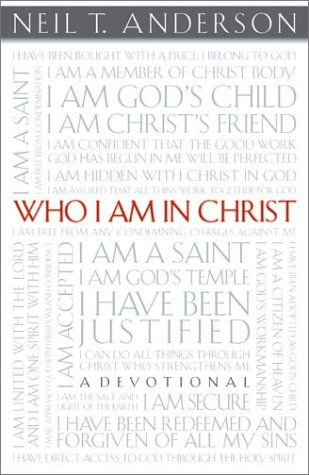
Who I am in Christ
Introduction
Nova: Welcome back to Aibrary, the podcast where we unpack the books that shape how we think, live, and grow. I'm Nova.
Nova: : And I'm Kai. Nova, let me start with a question. If I stopped you on the street and asked, who are you, really, at your core, what would you say?
Nova: That is the question, isn't it? Most of us would probably reach for our job title, or our role as a parent, or maybe something we've achieved. But here's the thing: all of those can be taken away. And then who are you?
Nova: : That's unsettling to think about. And I think that's exactly why today's book exists.
Nova: Exactly. Today we're diving into Who I Am in Christ by Dr. Neil T. Anderson. It's a devotional book built around 36 short readings, each one unpacking a single, powerful truth about what the Bible says a believer's identity actually is. And the core message is this: most of us spend our lives trying to earn something we already have.
Nova: : Okay, that's a bold claim. Trying to earn something we already have?
Nova: Think about it. How many people walk around feeling like they're not enough? Not good enough, not spiritual enough, not successful enough. Anderson's whole argument is that if you're a Christian, your identity isn't something you achieve. It's something you receive. And the book is designed to help you internalize that, one day at a time.
Nova: : So it's less about adding something to your life and more about uncovering what's already true?
Nova: That's exactly it. And the man behind this book has a pretty fascinating story himself. Before he was a pastor or an author, Neil Anderson was an aerospace engineer. He worked at Honeywell. He was also in the Navy as an electronics technician and a rescue swimmer. Then he had a dramatic conversion to Christianity, left his engineering career, and eventually earned five advanced degrees, became a seminary professor at Talbot School of Theology, and founded Freedom in Christ Ministries in 1989.
Nova: : So this is someone who understands both the analytical, logical mind and the deep spiritual life. That's an unusual combination.
Nova: And that combination is all over this book. It's methodical, it's structured, but it's also deeply pastoral. Today we're going to walk through the three pillars of the book: acceptance, security, and significance. Let's get into it.
How the Book Is Structured
The Blueprint of Identity
Nova: So Kai, before we dive into the content, let's talk about how this book is actually built. Who I Am in Christ is organized around 36 short chapters, each one about three to five pages long. And those 36 chapters are grouped into three major sections.
Nova: : Three sections. Let me guess: acceptance, security, and significance?
Nova: You've done your homework. Yes. Part one is all about acceptance. Part two covers security. And part three tackles significance. Each section has exactly eleven affirmations, each one rooted in a specific Bible verse.
Nova: : Why those three? Why not, say, love, joy, and peace?
Nova: Great question. Anderson argues that these three things, acceptance, security, and significance, are the deepest needs of every human being. He calls them the being needs, as opposed to the doing needs. And he says that in Christ, these needs are already fully met. The problem is, most of us don't know it, or we don't believe it.
Nova: : So the book is essentially a tool for rewiring how you see yourself.
Nova: Exactly. And here's what's interesting: the famous list of Who I Am in Christ affirmations actually first appeared in Anderson's earlier bestseller, Victory Over the Darkness. That book sold millions of copies. But readers kept asking for something they could use daily, something devotional. So Anderson took each of those 33 affirmations, expanded them into full chapters with stories, explanations, and prayers, and that became this book.
Nova: : So it's like the practical, daily application version of his bigger theological work.
Nova: Right. And the format is consistent throughout. Each chapter opens with the affirmation and its supporting scripture, then Anderson unpacks what it means, often sharing a real-life story from his counseling ministry, and then closes with a written prayer. The idea is you read one a day for 36 days.
Nova: : I like that. It's bite-sized but not shallow. So let's start with part one. What does it mean to be accepted in Christ?
The Foundation of Identity
I Am Accepted
Nova: This is where Anderson starts, and I think it's intentional. Before you can feel secure or significant, you have to know you're accepted. The first affirmation is simply: I am God's child, from John chapter 1 verse 12.
Nova: : That sounds almost too simple. I mean, lots of people grow up hearing that God is their Father. What makes Anderson's take different?
Nova: He pushes hard on the idea that this isn't a metaphor. He says it's a legal and spiritual reality. You have been adopted. You're not a guest in God's house. You're family. And he contrasts this with what he calls the orphan mentality, that feeling that you have to earn your place, that you're on the outside looking in.
Nova: : I've definitely felt that. Like you're always trying to prove you belong.
Nova: That's exactly the lie Anderson says the enemy wants you to believe. And he stacks up affirmation after affirmation to dismantle it. You are Christ's friend, from John 15. You have been justified, declared righteous, from Romans 5. You are united with the Lord, one with Him in spirit. You have been bought with a price. You belong to God.
Nova: : Bought with a price. That one hits differently. It's not just that God likes you. It's that He paid for you.
Nova: Right. And then Anderson goes further. You are a saint, which he points out doesn't mean you're perfect. The Greek word means holy one, set apart. Every believer is a saint, not just the super-spiritual ones. You have been adopted. You have direct access to God through the Holy Spirit. You don't need an appointment. You don't need a priest to mediate. You can just come.
Nova: : And then the section closes with what might be the most comprehensive one: I am complete in Christ, from Colossians 2:10.
Nova: Yes. And Anderson is emphatic about this. Complete doesn't mean you've arrived morally. It means that in terms of your standing before God, nothing is missing. You don't need to add anything. You don't need a special experience or a second blessing. In Christ, you lack nothing.
Nova: : That's radical. Because so much of religious culture is built on the idea that you're missing something and you need to go get it.
Nova: And Anderson would say that's exactly the problem. He writes that the great tragedy is that so many of us spend our lives trying to earn something we already have. The gift of life that God freely gives when we decide to follow Christ.
Nova: : Okay, so if acceptance is the foundation, what does security build on top of it?
Unshakeable Ground Beneath Your Feet
I Am Secure
Nova: If acceptance answers the question, does God want me, security answers the question, can I lose this? And Anderson's answer is an emphatic no.
Nova: : That's a big claim. A lot of people live with this nagging fear that they might mess up badly enough to get kicked out of God's family.
Nova: And Anderson tackles that head-on. The first affirmation in this section is: I am free forever from condemnation, from Romans 8:1. Not temporarily free. Not free until the next sin. Forever free.
Nova: : But doesn't that create a license to do whatever you want?
Nova: Anderson would say no, and here's why. He argues that real transformation doesn't come from fear of punishment. It comes from understanding who you already are. If you know you're a child of God, you start acting like one, not because you're afraid of being disowned, but because it's your nature.
Nova: : That's a different motivation entirely.
Nova: Completely. And then he builds this fortress of security. All things work together for good. No condemning charge can stick against you. You cannot be separated from the love of God. Not by death, not by demons, not by your own failures. He quotes Romans 8: nothing in all creation can separate us.
Nova: : That's Romans 8:38 and 39. I know that passage. But I think a lot of people read it and think, sure, but what about my specific situation?
Nova: That's where Anderson's pastoral experience comes in. He's spent decades counseling people who have been through horrific things: abuse, addiction, profound loss. And he shares stories in the book of people who felt utterly abandoned by God, only to discover that their feelings were lying to them. The truth of their security in Christ was objective, not based on their emotions.
Nova: : So feelings are not the measure of truth.
Nova: Exactly. And he keeps going. You have been established, anointed, and sealed by God. You are hidden with Christ in God. You are a citizen of heaven. You have not been given a spirit of fear, but of power, love, and a sound mind. You can find grace and mercy in your time of need. And the final one in this section: you are born of God, and the evil one cannot touch you.
Nova: : That last one is intense. The evil one cannot touch you. That's a spiritual warfare claim.
Nova: It is. And this is where Anderson's broader ministry comes into view. He's known for his work on spiritual warfare, especially in his book The Bondage Breaker. His core belief is that Satan's primary strategy is deception. He can't steal your salvation, so he tries to steal your assurance of it. If he can make you doubt who you are, he can keep you living like a prisoner even though the door is open.
Nova: : So the security section is essentially armor against those lies.
Nova: That's a great way to put it. And once you know you're accepted and secure, Anderson says, you're ready to live out the third dimension: significance.
Living with Purpose and Power
I Am Significant
Nova: So here's where the rubber meets the road. Acceptance is about who you are. Security is about what can't be taken from you. Significance is about what you're here for.
Nova: : And I think this is where a lot of people get stuck. They might believe God loves them, but they don't feel like their life matters.
Nova: Anderson opens this section with a striking image: you are the salt of the earth and the light of the world. That's from Matthew 5. And he points out that Jesus didn't say you should try to become salt and light. He said you are salt and light. It's a statement of identity, not a goal to achieve.
Nova: : So significance isn't something you chase. It's something you already possess and express.
Nova: That's the whole paradigm shift. And then he unpacks what that looks like. You are a branch of the true vine, a channel of Christ's life. You have been chosen and appointed to bear fruit. You are a personal witness of Christ. You are God's temple, the place where His Spirit dwells.
Nova: : God's temple. That one always gets me. The same God who filled the temple in Jerusalem with His glory now lives in ordinary people?
Nova: That's exactly Anderson's point. And he says if believers really understood this, it would transform how they see themselves and how they live. You are a minister of reconciliation. You are God's coworker. You are seated with Christ in the heavenly realm. You are God's workmanship, His poiema, His masterpiece.
Nova: : Workmanship is such a beautiful word. It implies craftsmanship, intentionality, artistry.
Nova: Yes. And Anderson contrasts this with the world's definition of significance, which is usually based on performance, popularity, or possessions. He says those are shaky foundations. But being God's workmanship? That's unshakeable. You may approach God with freedom and confidence. And the section closes with the famous verse: I can do all things through Christ who strengthens me.
Nova: : Philippians 4:13. That verse gets put on a lot of athletic gear and motivational posters. Does Anderson address that?
Nova: He does. He's careful to say this isn't a blank check for personal ambition. Paul wrote those words from a prison cell, talking about being content in every circumstance, whether well-fed or hungry, in plenty or in want. The strength isn't for achieving your dreams. It's for enduring and thriving in whatever God has called you to.
Nova: : That's a much richer meaning. So across all three sections, acceptance, security, significance, Anderson is essentially giving people a new script to run in their minds.
Nova: Exactly. And he's very practical about how to do that. He recommends reading the affirmations out loud, daily, especially when you're feeling attacked or discouraged. He says you won't become prideful by doing this, but you may be defeated if you don't.
A Balanced Look
The Method and the Critiques
Nova: Now Kai, I think we should be fair and acknowledge that this book isn't without its critics.
Nova: : I was wondering when we'd get to that. What do people push back on?
Nova: A few things. First, some readers have noted that Anderson frequently references his other books and his Freedom in Christ courses throughout the devotional. For some, it starts to feel less like a devotional and more like a promotional tool.
Nova: : I can see how that would be distracting. You're trying to meditate on your identity in Christ and suddenly you're being pitched another book.
Nova: Right. One Goodreads reviewer put it bluntly: the introductions and conclusions of many chapters come across as a sales pitch for the author's courses and books. Another said the long letters of praise to the author seemed strange and seemed to praise the author as much as the Savior.
Nova: : That's a pretty sharp critique.
Nova: It is. And there's a second concern. Some readers, including a Lutheran pastor who reviewed the book, felt that Anderson sometimes oversimplifies complex problems. The pattern goes: I was struggling my whole life, then one day I prayed this prayer, and now I'm free. Critics say this can create unrealistic expectations and doesn't account for the complexity of mental health, trauma, and long-term healing.
Nova: : So it's the quick fix criticism.
Nova: Yes. And a third concern comes from some theological circles. Organizations like the Christian Research Institute have published critiques questioning some of Anderson's teachings on spiritual warfare and sanctification. They argue his approach can sometimes blur the line between biblical counseling and a kind of formulaic spiritual deliverance.
Nova: : But on the flip side, the book has a 4.42 rating on Goodreads with hundreds of reviews. People clearly find it helpful.
Nova: Absolutely. And I think that's the tension. For many readers, this book has been genuinely life-changing. One reviewer said it helped her realize her worth after years of being bullied and struggling with insecurity. Another said he'd been on a journey to understand his position in Christ and this book was a powerful addition. Pastors have used it in counseling. Small groups have worked through it together. The core message resonates deeply.
Nova: : So the takeaway might be: take the truths, but hold the packaging loosely.
Nova: That's a wise way to put it. The 33 affirmations themselves are almost entirely direct quotations or paraphrases of scripture. That's the gold. The stories and the methodology around them, that's where discernment comes in.
Conclusion
Nova: So Kai, as we wrap up, what's your biggest takeaway from this book?
Nova: : I think it's the idea that identity is received, not achieved. That's countercultural. We live in a world that constantly tells us to define ourselves, brand ourselves, prove ourselves. And Anderson comes along and says, actually, the most important things about you are already settled. You are accepted. You are secure. You are significant. Not because of what you've done, but because of whose you are.
Nova: That's beautifully said. And I think that's why this little book has had such a long shelf life. It was first published in 2001, and people are still discovering it, still sharing the affirmations list on social media, still using it in churches and counseling settings.
Nova: : The list itself has almost become a standalone resource. I've seen it printed on bookmarks, shared in PDFs, posted on church websites. It's taken on a life of its own.
Nova: It has. And I think the core practice Anderson recommends is worth highlighting. Read these truths out loud. Not because there's magic in the words, but because there's power in reminding yourself of what's already true. When you feel like a failure, say out loud: I am God's child. When you feel condemned, say: I am free forever from condemnation. When you feel insignificant, say: I am God's workmanship.
Nova: : It's like recalibrating your internal compass.
Nova: Exactly. And Anderson's final word in the original list is this: because you are alive in Christ, every one of these characteristics is completely true of you, and you can do nothing to make them more true. You can, however, make these traits more meaningful and productive in your life by simply choosing to believe what God has said about you.
Nova: : So the question for our listeners is: which of these truths do you most need to internalize today? Is it acceptance? Security? Significance? Maybe all three.
Nova: That's a great place to land. Who I Am in Christ by Neil T. Anderson. 36 readings. Three pillars. One life-changing message: you are not who your failures say you are. You are not who your fears say you are. You are who God says you are.
Nova: : This is Aibrary. Congratulations on your growth!