The Quiet Power: Why Mindfulness is Your Inner Superpower for Health.
Golden Hook & Introduction
SECTION
Nova: Atlas, I was today years old when I realized my brain is basically a web browser with 30 tabs open, 28 of them playing auto-start videos I didn't ask for. And I can't find the mute button.
Atlas: Oh, I totally know that feeling! Mine's less a web browser and more like a chaotic news ticker that never stops scrolling. It's exhausting, honestly. You're trying to focus on one thing, and suddenly you're thinking about what you had for breakfast, that email you forgot to send, and the existential dread of laundry day.
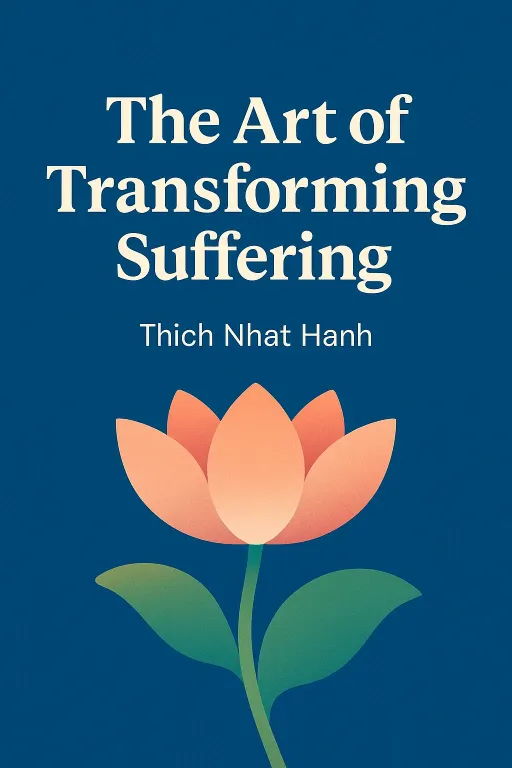
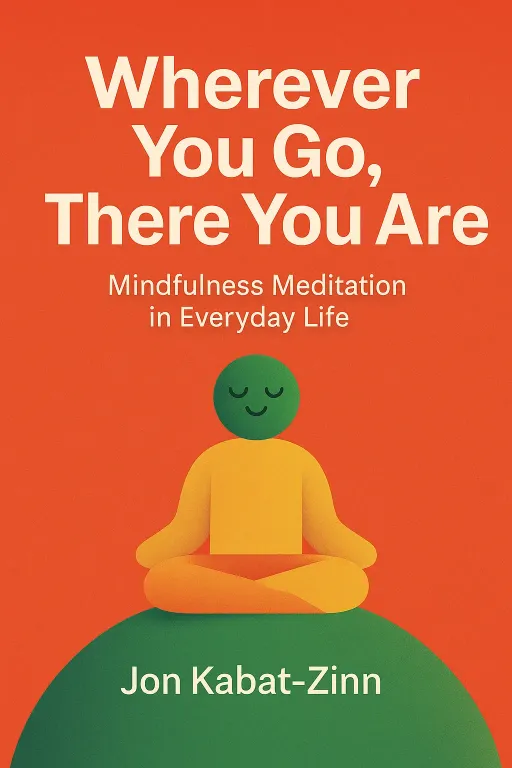
Nova: Exactly! And that constant mental chatter, that feeling of being pulled in a million directions, is precisely what we're tackling today. We're diving into the quiet power of mindfulness, drawing wisdom from two absolute titans: Jon Kabat-Zinn's classic,, and Thich Nhat Hanh's gentle masterpiece,.
Atlas: Oh, I like that. Two very different figures, but both pivotal. Kabat-Zinn, if I remember right, was a molecular biologist, right? He basically brought mindfulness into Western medicine.
Nova: That's right! He really bridged ancient Eastern wisdom with modern science, making it accessible as a stress-reduction technique in hospitals. And then you have Thich Nhat Hanh, a Zen master, nominated for the Nobel Peace Prize by Martin Luther King Jr. himself. His work is all about integrating mindfulness into everyday life, showing how it can foster deep peace and reconciliation.
Atlas: Wow, that's incredible. So this isn't just some abstract philosophical concept, it's something with real-world, tangible impact, from the lab to global peace.
Nova: Absolutely. And what they both illuminate for us is how profoundly this internal chaos impacts our health and overall well-being.
The Pervasive Distraction: Understanding Mental Chatter and Disconnection
SECTION
Nova: So, let's start with that feeling you just described, Atlas – the exhaustion of the "chaotic news ticker" brain. We often mistake a busy mind for a productive one, don't we? Like if our brain isn't constantly spinning, we're not doing enough, or we're missing something. But what if that constant mental chatter is actually draining our energy and disconnecting us from ourselves?
Atlas: That's a great way to put it. I imagine a lot of our listeners, especially those who love deep thinking and learning, might even pride themselves on having a constantly active mind. For them, isn't a busy mind just a sign of intellectual engagement? How do you separate that from 'mental chatter'?
Nova: That's a crucial distinction. Intellectual engagement is focused, intentional, and often brings a sense of flow. Mental chatter, on the other hand, is usually fragmented, repetitive, and often negative. It's like a hamster wheel of thoughts that goes nowhere, leading to anxiety and that pervasive feeling of being scattered. Think of it this way: imagine a high-achieving professional, let's call her Sarah. She's brilliant, always multitasking, juggling emails, calls, project deadlines. On the surface, she's incredibly productive.
Atlas: Yeah, I know a lot of Sarahs. They're everywhere these days.
Nova: Right. But internally, Sarah feels this constant hum of anxiety. She's always thinking about the next thing, replaying past conversations, worrying about future outcomes. She's physically present in a meeting, but her mind is already drafting an email for after the meeting. She's with her family, but half her attention is on her phone, or on her to-do list.
Atlas: So she's not truly. She's disconnected, not just from her external environment, but from her own experience. That sounds rough, but how do we escape this if it feels like the default mode of modern existence? It's almost like our environment is designed to keep us in that state.
Nova: Precisely. That constant internal noise prevents Sarah, and all of us, from experiencing the present moment. It creates a superficial engagement with life. We're not actually living the moment; we're living it, always anticipating or reminiscing. This is what Kabat-Zinn means when he talks about being fully present. It's about recognizing that wherever you go, your mind goes too – and if your mind is chaotic, your experience of the world will be chaotic, regardless of your external circumstances.
Mindfulness as Radical Presence: Cultivating Inner Calm and Connection
SECTION
Atlas: So, if our minds are these chaotic web browsers, constantly running unwanted programs, how do we close those tabs? What's the antidote to this pervasive distraction you're describing?
Nova: That's where mindfulness comes in, and both Kabat-Zinn and Thich Nhat Hanh offer powerful pathways. Kabat-Zinn defines mindfulness as "paying attention in a particular way: on purpose, in the present moment, and non-judgmentally." It's not about emptying your mind, which is a common misconception. It's about observing your thoughts, feelings, and sensations without getting tangled in them.
Atlas: Okay, so it’s not about stopping thinking, but about changing your relationship with your thoughts. That makes sense. But how do you even start? For someone constantly on the go, someone who prides themselves on being a curious learner, who might feel they don't have 'time' for such practices, is it a quick fix or a lifelong practice?
Nova: It's definitely a lifelong practice, but it starts with incredibly simple steps. Thich Nhat Hanh, for instance, offers gentle wisdom on integrating mindfulness into everyday activities. He shows how awareness, even in mundane tasks, can bring profound joy and inner peace. He talks about mindful walking, mindful eating, mindful dishwashing. It's about bringing your full attention to whatever you're doing, no matter how small.
Atlas: Can you give an example? Like, how does that actually work in a real-world setting?
Nova: Absolutely. The book content mentions a simple yet powerful exercise: taking three deep breaths. Let's try it for a moment, right now. Just wherever you are, take a deep breath in through your nose, feeling your belly expand. Hold it for a second. Then slowly release it through your mouth. Do that again. And one more time.
Atlas: Wow. Okay, I actually feel a shift. It's subtle, but it's there. The background noise in my head quieted down, even if just for a few seconds.
Nova: That's it! That's the core of it. In those moments, you're not trying to solve a problem or plan your next move. You're just noticing the sensation of your body, the air moving in and out, the quietness of your mind. It's a radical act of presence. For our curious learners, who might want to dive into complex topics, this practice sharpens their focus, making their learning even deeper, not distracting from it. It cultivates resilience and clarity, transforming the quality of their experience.
Atlas: So it's not about adding another thing to your already busy schedule, but about bringing a different quality of attention to what you're already doing. That's actually really inspiring. It feels less like an obligation and more like an enhancement.
Nova: Exactly. It's about transforming the mundane into moments of profound awareness. Kabat-Zinn would say that this practice builds a kind of inner sanctuary, a place you can always return to, no matter how chaotic the external world becomes. It's not about being calm all the time, but about developing the capacity to return to calm, to choose how you respond rather than just react.
Synthesis & Takeaways
SECTION
Nova: So, what both Jon Kabat-Zinn and Thich Nhat Hanh, the scientist and the Zen master, ultimately show us is that presence isn't an elusive state for hermits on mountaintops. It's a skill. It's a quiet superpower that's accessible to everyone, right here, right now. It fundamentally changes our relationship with ourselves and with the world, fostering a deeper, richer experience of life.
Atlas: That's a great way to put it. It sounds like mindfulness is the ultimate act of self-care in a world constantly demanding our attention. It doesn't just reduce stress; it fundamentally changes how we interact with our own thoughts and feelings, allowing us to choose how we respond rather than just being swept away.
Nova: It really does. It allows us to step off that mental hamster wheel, even for a few breaths, and reconnect with our true selves. It's about finding that inner calm and connection that's always available, beneath all the noise.
Atlas: So, for anyone listening who feels that scattered, disconnected feeling, or that constant mental chatter, what's one simple thing they can do right now?
Nova: Just what we did. Take three deep breaths. Seriously. Whenever you feel overwhelmed, whenever you feel that mental browser with too many tabs open, just pause. Notice your breath. Notice the sensation of your body. It's a simple, powerful tool, always available, always free.
Atlas: I love that. And it’s a tangible step.
Nova: This is Aibrary. Congratulations on your growth!