Harnessing the Present: Mindfulness in Decision-Making
Golden Hook & Introduction
SECTION
Nova: Hey Atlas, quick question for you. Have you ever tried to, you know, find your inner zen, meditate, quiet the mind?
Atlas: Oh, Nova, I've to quiet the mind. My mind usually responds to such attempts by screaming louder and offering a detailed, bullet-pointed list of everything I've forgotten to do today. It's less zen, more mental mosh pit.
Nova: Mental mosh pit! I love that. And I think that's a feeling so many of us can relate to, especially when we're trying to make important decisions. That constant hum of mental noise can feel overwhelming, can't it?
Atlas: Absolutely. It's like trying to navigate a complex spreadsheet while someone's blasting heavy metal in your ear. Clarity feels like a distant dream.
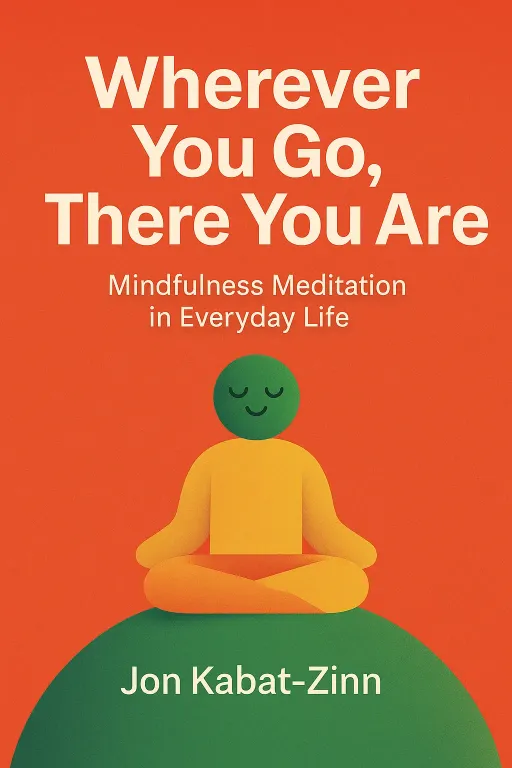
Nova: Well, today, we're diving into how to mute that mental mosh pit, or at least, how to dance to a different rhythm. We're exploring the profound power of mindfulness in decision-making, drawing insights from two incredibly influential authors: Jon Kabat-Zinn with his foundational work, "Wherever You Go, There You Are," and the wonderfully skeptical journalist, Dan Harris, and his journey detailed in "10% Happier."
Atlas: Oh, I like that pairing. Kabat-Zinn, the molecular biologist who basically brought mindfulness into mainstream medicine with his Mindfulness-Based Stress Reduction program back in the late '70s. And then Harris, the news anchor who had an on-air panic attack and then, against all his journalistic instincts, stumbled into meditation. Talk about two different entry points.
Nova: Exactly! And that's what makes their insights so powerful and universally applicable. It's not about being a monk or a guru; it's about a practical toolkit for navigating our fast-paced world. Because at its core, as Kabat-Zinn teaches us, mindfulness is simply about paying attention.
Atlas: Paying attention. That sounds deceptively simple, especially when, for so many of us, our brains are constantly processing vast information, looking for strategic advantages, optimizing outcomes. How does just 'paying attention' translate into sharper decision-making when the stakes are high?
The Foundation of Present-Moment Awareness (Kabat-Zinn's Perspective)
SECTION
Nova: That's the million-dollar question, isn't it? And it's where Kabat-Zinn's genius truly shines. He defines mindfulness as "paying attention, on purpose, to the present moment, non-judgmentally." Think about that for a second. In a high-stakes meeting, for instance, where you're trying to evaluate a complex proposal, what often happens?
Atlas: My mind is probably running a dozen simulations of how this decision will impact next quarter's KPIs, or I'm replaying a conversation from yesterday that didn't go well, or worrying about an email I need to send later. It's rarely on the proposal in front of me.
Nova: Precisely. And that's the mental noise we're talking about. When you're constantly pulled into the past or the future, you're not fully present with the data, the nuances of the conversation, or the subtle cues from the people around you. Your cognitive resources are fragmented.
Atlas: So, the cause is mental distraction, the process is being pulled away from the present, and the outcome is reactive, suboptimal decisions because I'm not seeing the full picture, or I'm responding from a place of stress rather than clarity. That makes sense.
Nova: Right. Kabat-Zinn argues that by intentionally bringing your attention back to the present moment – whether it's the words being spoken, the feeling of your breath, or the physical sensations in your body – you create a space. A space where you're not immediately reacting to every thought or emotion that arises. You're observing them, non-judgmentally.
Atlas: Hold on. Isn't that just another thing to to my mental load? When I'm already trying to manage a demanding workload and distill complexity, being told to also 'pay attention to my breath' might feel like another item on an already overflowing to-do list.
Nova: That's a great point, and it's a common misconception. It's not about something, Atlas. It's about how you process the existing load. Imagine your brain is a computer with too many tabs open. Mindfulness isn't opening another tab; it's like a system clean-up, closing the unnecessary background processes so your primary application runs faster and more efficiently.
Atlas: So, it's about becoming more efficient with my attention, rather than just piling on more tasks. I can see how that would be a strategic advantage. If I'm less reactive and more responsive because I'm truly present, my decisions would naturally be more impactful. Can you give a more concrete example, like how this would play out in a high-pressure corporate environment?
Nova: Absolutely. Think of a CEO facing a sudden market downturn. The natural, reactive impulse might be panic, leading to hasty, short-sighted decisions driven by fear. But a CEO who practices present-moment awareness, even for a few seconds, can notice that fear, acknowledge it, and then choose to be driven by it. They can then objectively assess the data, consider long-term implications, and make a decision rooted in strategic foresight rather than emotional urgency. It’s about creating that crucial pause.
Atlas: That makes perfect sense. It’s not about ignoring the problem, but about engaging with it from a more grounded, analytical space. That's going to resonate with anyone who struggles with making critical choices under intense pressure.
Practical Application and Skeptical Embrace (Dan Harris's Perspective)
SECTION
Nova: And that naturally leads us to someone who initially probably scoffed at the idea of 'paying attention' but found it indispensable for high-stakes performance: Dan Harris. His journey, chronicled in "10% Happier," is a powerful testament to the practical, non-spiritual benefits of mindfulness, even for the most skeptical among us.
Atlas: Ah, the journalist who had a panic attack on live television. That's a pretty undeniable wake-up call to the impact of stress.
Nova: It was. And what's fascinating about Harris is that he approached meditation not from a place of seeking enlightenment, but from a pragmatic need to manage his own mind. He was a high-performing, ambitious news anchor, constantly chasing the next story, fueled by stress and a bit of skepticism. He saw the benefits not as some abstract spiritual gain, but as tangible improvements in his focus, his ability to handle stress, and overall mental clarity.
Atlas: For someone like our listeners who are constantly managing cognitive load, this sounds less like a luxury and more like a necessity. But is it really just two minutes of breathing, as you mentioned earlier? How does translate into better strategic outcomes or sustaining peak performance?
Nova: It's precisely that 'two minutes,' or even shorter, that Harris champions. He makes the case that you don't need to commit to hours of daily meditation to reap significant benefits. His "10% Happier" approach advocates for small, consistent doses. That's why the "Healing Moment" from our content today is so powerful: "Before your next important decision, take two minutes to simply focus on your breath. Notice, without judgment, any thoughts or feelings that arise."
Atlas: So, the idea is to integrate these micro-moments into our daily routine, especially before a critical decision. For someone who processes vast information and needs optimized outcomes, how do you even begin to quiet the noise enough in those two minutes to make it effective? My mind might still be listing bullet points.
Nova: That's where the "non-judgmentally" part comes in, which is key. It's not about thoughts, Atlas. It's about noticing them without getting swept away. Think of your thoughts like clouds passing in the sky. You see them, you acknowledge them, but you don't jump on every single one and ride it away. In those two minutes, if a thought about a deadline arises, you simply note "thinking about deadline" and gently bring your attention back to your breath.
Atlas: Right, like a mental observation deck, rather than being stuck the traffic. That’s a great analogy. It’s not about achieving a blank slate, but about changing my relationship with the mental chatter. That sounds a lot more achievable and practical, especially for someone under pressure. And it makes me wonder, how quickly can someone expect to see a return on investment from this kind of practice?
Nova: That's the beauty of it. Harris, and many others, found that even these small, consistent practices begin to shift your default mode of operation. You start to catch yourself sooner when you're getting lost in thought. You gain a tiny bit more space between stimulus and reaction. That tiny bit of space is where clarity and better decisions are born. It's not a magic bullet, but it's a profound shift in how you engage with your own mind. It’s a refinement, not a revolution.
Synthesis & Takeaways
SECTION
Nova: So, what we're really talking about here, drawing from both Kabat-Zinn's wisdom and Harris's pragmatic journey, is that mindfulness isn't about escaping the demands of our fast-paced world. It's about equipping ourselves with the most powerful tool imaginable to thrive it.
Atlas: Absolutely. It's a strategic advantage, a way to cut through the noise and make truly impactful choices. The noise isn't going anywhere, but our ability to navigate it, to not be overwhelmed by it, is entirely within our control.
Nova: Exactly. It's realizing that the constant mental chatter isn't the problem; it's our automatic, often unconscious, to that chatter that derails our focus and clouds our judgment. By simply paying attention, non-judgmentally, we reclaim that crucial space for clarity.
Atlas: That gives me chills. It reframes the whole idea of "calm amidst chaos" from a passive state into an active, strategic choice. It's about cultivating that inner quiet to make external decisions with greater precision and impact.
Nova: It truly is. And the incredible thing is, the entry point is so simple. Anyone can start right now. Before your next important decision, whether it's sending an email, responding to a colleague, or making a major strategic call, just take two minutes. Focus on your breath. Notice the thoughts, but don't follow them. Just return to the present. You might be surprised at the clarity that emerges.
Atlas: That's a powerful call to action. I think everyone listening, especially those who value efficiency, clarity, and impactful execution, can integrate that simple practice immediately.
Nova: This is Aibrary. Congratulations on your growth!