Building Resilience: Mindfulness & Stress Management for Healthcare Professionals
Golden Hook & Introduction
SECTION
Nova: Atlas, if I told you that the secret to thriving in a high-pressure environment, especially one as demanding as healthcare, isn't about working harder, but about finding a quiet corner within yourself, what would your first thought be?
Atlas: My first thought? Probably, "Easier said than done, Nova!" I mean, for anyone navigating the relentless pace of a hospital ward or a busy clinic, finding a quiet corner sounds like a luxury, not a strategy. It almost feels counter-intuitive.
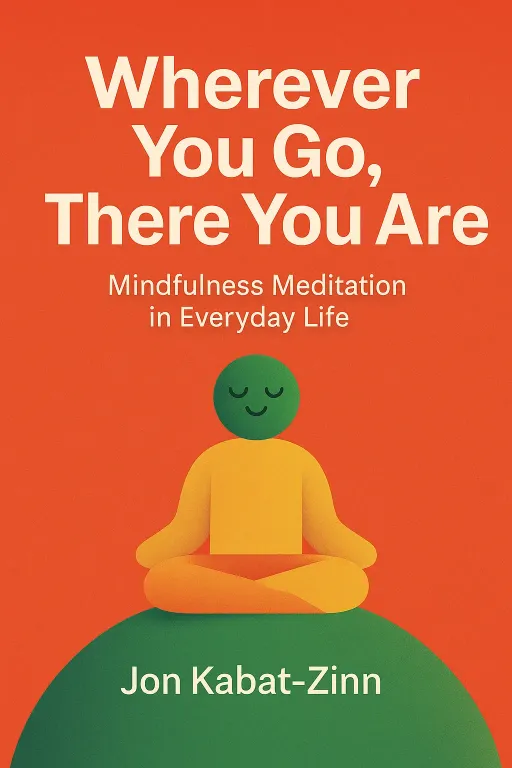
Nova: Exactly! It sounds like a paradox, doesn't it? But that's precisely the profound insight at the heart of the works we're diving into today: Jon Kabat-Zinn’s seminal books, "Wherever You Go, There You Are" and "Full Catastrophe Living." Kabat-Zinn, a molecular biologist by training, almost single-handedly brought mindfulness into mainstream Western medicine, creating programs that are now globally recognized. He’s a fascinating figure who bridged the gap between ancient contemplative practices and rigorous scientific inquiry, essentially making meditation accessible to a skeptical scientific community.
Atlas: That’s a powerful origin story. So, he wasn't just some guru; he was a scientist bringing this ancient wisdom into a modern, evidence-based context. That immediately lends it a different weight, particularly for our listeners who value empirical data. But "Full Catastrophe Living"—that title alone sounds intense. What does it even mean to live a "full catastrophe"?
Nova: It's provocative, isn't it? It speaks to the undeniable reality that life, especially in professions like healthcare, is inherently full of challenges, pain, and stress—the "catastrophes." Kabat-Zinn isn't suggesting we avoid them, but rather learn to live fully them, to embrace the present moment, whatever it holds. And the core methodology for this is his groundbreaking Mindfulness-Based Stress Reduction, or MBSR, program.
Cultivating Inner Peace Amidst External Demands
SECTION
Atlas: MBSR. That’s a term I’ve heard thrown around a lot, even in wellness circles. But for a healthcare professional already stretched thin, how does "mindfulness" translate into something tangible they can use? It sounds a bit abstract when you’re dealing with life-or-death situations.
Nova: That's a critical question, and it's where Kabat-Zinn's brilliance lies. He stripped away the spiritual jargon, focusing purely on the practical application of mindfulness as a tool for stress reduction and self-care. Think of it like this: our minds are constantly either rehashing the past or worrying about the future. Mindfulness is simply the practice of intentionally bringing your attention to the present moment, without judgment.
Atlas: Just… noticing? That feels almost too simple. I mean, if I'm a nurse in the middle of a chaotic shift, and I suddenly decide to "notice" my breathing, isn't that just going to make me more aware of how stressed I am?
Nova: It’s a common misconception that mindfulness means blissful calm. Actually, it's about building a different relationship with stress. In "Wherever You Go, There You Are," he emphasizes that you don't need a special place or a lot of time. It's about integrating moments of presence into your daily life. Imagine a surgeon, mid-operation, taking a conscious breath before making a critical incision. It's not about escaping the moment; it's about being more fully it, with greater clarity and less reactive emotional static. The practice isn't to eliminate stress, but to prevent it from overwhelming you.
Atlas: So it's not about ignoring the chaos, but about observing it without getting swept away by it. I can see how that would be powerful. But how does this "observational" approach actually stress for someone who's constantly on the go?
Nova: It's about creating a subtle but profound internal shift. Kabat-Zinn’s work, particularly "Full Catastrophe Living," provides a comprehensive guide to this through the MBSR program. It's an eight-week course, originally developed for chronic pain patients, that uses practices like body scans, mindful movement, and sitting meditation. The core idea is that by consistently observing your thoughts, feelings, and bodily sensations without judgment, you create a space between the stimulus and your reaction.
Atlas: A space between stimulus and reaction… that's an interesting concept. So, instead of immediately reacting to a stressful situation with panic or anger, you create a tiny pause?
Nova: Precisely. It’s a moment of choice. Consider a doctor who just received difficult news about a patient. The immediate, habitual reaction might be anxiety, self-blame, or a rush to "fix" things. But with mindfulness, they might first acknowledge the surge of emotion, breathe into it, and then respond more skillfully and compassionately, rather than react impulsively. This isn't just theory; MBSR has been extensively studied and has shown measurable benefits in reducing anxiety, depression, and even improving immune function. It’s why it gained such traction in medical settings.
Atlas: So it's not just about feeling better, but about performing better under pressure, because you're less hijacked by your own emotional responses. That makes it incredibly relevant for healthcare professionals, who often have to make high-stakes decisions while managing intense emotional situations. It almost sounds like a superpower.
Nova: It can feel that way. Kabat-Zinn often talks about mindfulness as "waking up" to the richness of the present moment, even when that moment is challenging. It’s about cultivating a resilient presence, one that can bend without breaking. He would say that the mind is like a muscle; the more you train it to be present, the stronger it becomes in navigating the "full catastrophe" of life.
A Moment for Self-Care
SECTION
Atlas: That makes me think about the practical side. For our listeners who are navigating incredibly demanding schedules, the idea of adding another "thing" to their day, even if it's beneficial, can feel overwhelming. How can incorporating a 5-minute mindfulness practice into a daily routine actually shift energy and focus, even in the busiest of days?
Nova: That’s where the accessible nature of Kabat-Zinn’s teachings really shines. He isn't advocating for hours of meditation in a cave. He's talking about micro-practices. A 5-minute mindful breathing exercise, a moment of mindful eating, or even just pausing to feel your feet on the ground as you move from one patient room to another. These aren't just breaks; they're intentional anchors to the present.
Atlas: So, it's not about finding a 5 minutes, but transforming 5 minutes you already have? Like, instead of rushing through a coffee break while checking emails, actually the coffee?
Nova: Exactly! It transforms a routine action into an opportunity for presence. The cumulative effect of these small moments is profound. It's like consistently depositing tiny amounts into a "resilience bank account." Over time, you build up a reserve. You start to notice the subtle signs of stress earlier, and you develop a greater capacity to respond to them before they escalate into full-blown burnout.
Atlas: That’s a very practical way to frame it. I imagine for someone who's constantly giving to others, like healthcare professionals, even a 5-minute intentional pause can feel like a radical act of self-care. It’s almost like giving permission to yourself to just for a moment.
Nova: It absolutely is. And it's not selfish; it's essential. Kabat-Zinn constantly reminds us that you can't pour from an empty cup. By taking these small, consistent moments for reflection and presence, you're not just helping yourself; you're becoming a more present, effective, and compassionate caregiver for others. It’s a virtuous cycle.
Atlas: I can see how that would embrace someone's natural curiosity and deep sense of purpose. It’s not just a quick fix, but a fundamental shift in how you approach your relationship with stress and your own well-being. It’s about building inner strength, not just managing external pressures.
Nova: And that’s the true legacy of Kabat-Zinn’s work: providing a pathway for anyone, especially those in high-demand fields, to cultivate inner peace amidst external demands, fostering a more resilient presence, wherever they go.
Synthesis & Takeaways
SECTION
Atlas: So, Nova, what’s the single most profound takeaway from Kabat-Zinn’s work for someone in a high-stakes environment?
Nova: It’s this: true resilience isn't about having an unbreakable spirit, but about cultivating a flexible awareness that allows you to acknowledge and navigate the inevitable "catastrophes" of life without being consumed by them. It's the profound realization that your inner landscape is always accessible, no matter how turbulent the external world becomes. It’s about finding stability within, even when everything around you feels unstable.
Atlas: That’s a powerful distinction. It moves beyond just coping and into truly thriving, by recognizing that the most powerful tool for stress management isn't external, but internal. It’s about intentional presence.
Nova: Absolutely. It’s about understanding that the present moment is the only one you ever truly have, and learning to inhabit it fully, with kindness and awareness, is the most radical act of self-care and professional effectiveness you can undertake.
Atlas: I love that. It’s a call to action to simply, even for just a few minutes a day.
Nova: This is Aibrary. Congratulations on your growth!