Beyond Reaction: Mastering Your Inner Landscape with Mindfulness
Golden Hook & Introduction
SECTION
Nova: We often think we’re in control of our reactions, don't we? Like we're the captain of our emotional ship. But most of the time, Atlas, we’re just puppets to our impulses.
Atlas: Oh, I know that feeling. It's like my brain hits 'send' on an email before I've even fully processed the frustration that prompted it. So, what’s the surprising truth? Because that sounds like a familiar trap.
Nova: The surprising truth is that freedom isn't about having impulses. It's about what happens in that tiny, almost imperceptible space the impulse, but the reaction. It’s about reclaiming our inner landscape.
Atlas: That makes me wonder about all the times I’ve missed that space. How do we even begin to find it?
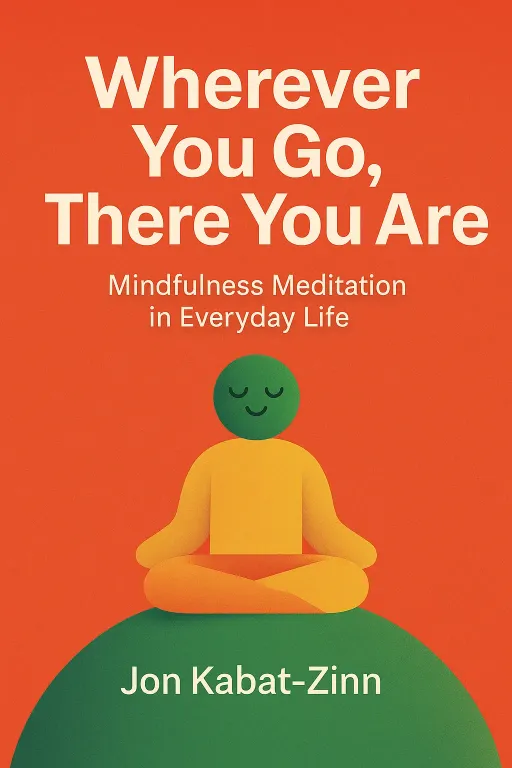
Nova: Well, today we’re diving into exactly that, guided by two pivotal voices in the world of mindfulness: Jon Kabat-Zinn with his classic "Wherever You Go, There You Are," and Bhante Gunaratana with the remarkably clear "Mindfulness in Plain English."
Atlas: Oh, I love that title. "Mindfulness in Plain English." Because for a lot of people, mindfulness sounds... well, a bit abstract, maybe even intimidating.
Nova: Exactly! And that’s what both these authors excel at. Kabat-Zinn, for instance, literally brought mindfulness into mainstream Western medicine and psychology, pioneering the Mindfulness-Based Stress Reduction program—MBSR—which initially faced skepticism but now has decades of scientific validation. He showed it wasn’t just spiritual, it was practical.
Atlas: So he took this ancient concept and made it academically respectable. That’s a huge feat.
Nova: It absolutely is. And then you have Bhante Gunaratana, a Theravada Buddhist monk from Sri Lanka who spent decades teaching meditation in the West. He demystified these ancient practices with remarkable clarity for a modern audience, making them accessible to millions who previously found meditation intimidating. He made it plain.
Atlas: So, both of them are about making this profound wisdom accessible. That sounds like exactly what we need when we feel like we’re being swept away by life.
Nova: Precisely. And that feeling of being swept away, that’s where we start today, with what we call 'The Blind Spot.'
The Blind Spot - Reactivity vs. Responsiveness
SECTION
Nova: So, 'The Blind Spot'—it's this universal experience where we get caught in a whirlwind of thoughts and feelings. We react impulsively instead of responding thoughtfully. We literally miss the space between stimulus and reaction where true choice lies. It's like a reflex versus a conscious decision.
Atlas: But wait, for someone in a high-stakes meeting, or dealing with a deadline, how does that 'space' actually manifest? It sounds so subtle.
Nova: Let's picture it. You get a critical, perhaps even unfair, email from a colleague. What's the immediate, automatic response? Your heart might race, a wave of indignation washes over you, and your fingers start flying across the keyboard to draft a fiery reply. That's the reflex. The blind spot is that you’re so caught up in the emotional surge, you don't even register that there's a moment, a tiny sliver of time, before you hit 'send.'
Atlas: Oh, I’ve been there. Many times. It feels like the emotion just the reaction. There’s no gap.
Nova: And that's the illusion. The gap is always there, it's just incredibly narrow and we're conditioned to rush past it. The stimulus is the email. The reaction is the angry reply. The blind spot is failing to see that you have taken a breath, observed the anger, and chosen a more constructive response.
Atlas: So it's not about suppressing the initial feeling, that surge of indignation, but recognizing it. Noticing it before it takes over and dictates your actions.
Nova: Exactly. It's about observation. This is where Kabat-Zinn's emphasis on "being fully present with who you already are" comes into play. It's not about becoming a different, emotionless person. It's about seeing what – the anger, the frustration – without immediately identifying with it and letting it drive the bus. It's seeing the underlying current of your own mind.
Atlas: That makes sense. It’s like watching a storm from a window instead of being caught in the rain. But that sounds simple, almost too simple. What's the catch? Why don't we just naturally do this if the space is always there?
Nova: The catch is habit, Atlas. Our minds are incredibly efficient, and they love shortcuts. Reactivity is a deeply ingrained habit. When we’re in a fast-paced world, constantly stimulated, our nervous systems are often in a state of hyper-arousal. We're on autopilot, and autopilot defaults to the quickest, most familiar response, which is often reactive. We get swept away before we even realize what's happening.
The Shift - Cultivating Mindfulness for Conscious Living
SECTION
Nova: And that brings us to 'The Shift' – how do we actually reclaim that space? How do we break free from that ingrained habit? This is where Bhante Gunaratana and his "Mindfulness in Plain English" become incredibly valuable, by demystifying the practice of meditation.
Atlas: Okay, so meditation. For our listeners who are constantly on the go, managing high-pressure environments, that sounds like another stressor. Like, 'Great, another thing I be doing, but don't have time for.' Is it about hours of sitting still?
Nova: That’s a common misconception, and Gunaratana tackles it head-on. He explains that meditation isn't about becoming a monk or achieving some mystical state. It’s about clear, practical instructions for developing a mindfulness practice, and he often starts with the breath. The breath becomes an anchor in the stormy sea of thoughts.
Atlas: So, the breath is like a flashlight for the mind's patterns? It helps you see what's actually happening in that tiny gap?
Nova: Exactly! By regularly pausing to observe your breath, you’re not trying to stop thoughts; you’re simply noticing them, and then gently returning your attention to the breath. This simple act builds the 'muscle' of awareness. It's like learning to watch the movie of your mind without getting fully immersed in the drama.
Atlas: The idea of a 'buffer against automatic reactions' really resonates with me. How does this simple observation actually create that buffer? What's the mechanism at play here?
Nova: It’s fascinating. When you observe a thought or an emotion, you create a subtle but crucial distance from it. You’re no longer with it, you're merely of it. Imagine seeing a scary movie. If you’re completely lost in the story, you jump, you scream. If you remind yourself, 'This is just a movie,' you still feel the tension, but you don't react in the same way. You have a choice.
Atlas: So, it’s about seeing the emotional storm, not being it, and then choosing how to navigate. That’s powerful for anyone looking to make a real impact, not just react to whatever comes their way. It’s about intentionality.
Nova: Precisely. This distance allows for conscious choice. Instead of the knee-jerk, reactive email, you might choose to pause, reflect, and then craft a response that aligns with your values, your goals, and a more empathetic approach. It’s how you move from being a passenger to the driver of your own experience. And the beauty is, as Kabat-Zinn reminds us, it’s not about becoming a different person, but being fully present with who you already are.
Atlas: That's a huge distinction. Because the pressure to "be different" often just adds more stress. This is about working with what’s already there, just with more awareness.
Synthesis & Takeaways
SECTION
Nova: So, the journey from blind reaction to conscious response is about cultivating awareness, even in the smallest moments. It's about empowering ourselves to choose how we show up in the world, rather than being dictated by external stimuli or internal impulses.
Atlas: It sounds like the ultimate act of self-leadership – mastering your inner landscape so you can better navigate the external one. For those of us striving for intentionality, it’s not just about what we, but how we when we do it.
Nova: Absolutely. It's not about achieving perfection, but about consistent practice. Just like Nova's Take suggests, regularly pausing to observe creates that buffer, allowing for more conscious and empathetic responses. It's a continuous process of waking up to our own experience.
Atlas: So, the deep question from our content: 'How might a daily pause for mindful observation change your typical reactions to stress or strong emotions?' It feels like the answer isn't just about feeling better, but about acting better, with more clarity and impact on personal and collective levels.
Nova: Exactly right. A simple pause can be the most profound act of rebellion against an overstimulated, reactive world. It’s about remembering that space between stimulus and response, every single day. And that’s a practice everyone can start right now, even for just five minutes. Just notice your breath, or your feet on the floor.
Atlas: What a truly insightful journey into mastering the self. It’s about grounding your emotions and enhancing self-awareness, which are crucial for deeper connection and authentic expression. We encourage all of our listeners to explore these profound practices.
Nova: This is Aibrary. Congratulations on your growth!