

The Feeling: Navigating the Ethical Labyrinth of Modern Healthcare.
Golden Hook & Introduction
SECTION
Nova: Atlas, if I told you that the biggest challenge in medicine isn't about knowing the right answer, but about the agonizing of not knowing if any answer is truly right, what would you say?
Atlas: I'd say, sounds like my last attempt at assembling IKEA furniture, but with actual lives on the line. No pressure, right?
Nova: Exactly! And that's precisely what we're dissecting today with 'The Feeling: Navigating the Ethical Labyrinth of Modern Healthcare.' This isn't just another medical textbook; it's a profound exploration of the emotional and moral tightrope walk that healthcare professionals endure. It really draws on the incredible, often raw, insights from neurosurgeons like Henry Marsh and Frank T. Vertosick Jr., who quite literally hold lives in their hands.
Atlas: Oh, I can only imagine the kind of pressure that comes with that. For our listeners who are driven by impact, who are constantly making high-stakes decisions, that 'feeling' of ethical ambiguity must be immense. It’s not just about the technical skill, is it? It’s about something deeper.
Nova: Absolutely. It's the constant internal conflict, a kind of moral wrestling match between scientific possibility, patient autonomy, and their own personal convictions. Think about it: every day, they face decisions where there isn't a clear 'good' or 'bad' choice, just shades of difficult.
The Immense Weight of Ethical Dilemmas in Healthcare
SECTION
Atlas: So, how does one even begin to navigate that kind of moral fog when the stakes are so incredibly high? For someone driven by impact, isn't the instinct to just the solution, to optimize, to fix it?
Nova: That's the pragmatic approach we're often trained for, isn't it? But healthcare, especially at the cutting edge, often defies neat solutions. Consider a situation where an elderly patient, suffering from a debilitating neurological condition, has expressed a desire to refuse further aggressive treatment. The family, however, is desperate for every possible intervention, even if it offers only a marginal chance of extending life, and potentially increasing suffering.
Atlas: Oh, I know that feeling. That’s a classic ethical paradox. The doctor is caught between respecting the patient's autonomy and the family's fervent hope, all while knowing the medical reality.
Nova: Precisely. The scientific possibility might offer a tiny sliver of hope, but the patient’s right to choose, and the physician's own internal sense of 'do no harm' – which can mean not prolonging suffering – are all at odds. The weight isn't just about making the 'right' call; it's about living with the ambiguity, the potential regret, and the emotional toll of knowing you've navigated a no-win scenario.
Atlas: That sounds rough. You described it as a 'feeling,' and that's what I'm picturing. Not just a logical puzzle, but a deep, gut-wrenching experience. Isn't this just part of the job, or is there something uniquely demanding about modern healthcare ethics that makes this 'feeling' so profound?
Nova: It’s definitely more than just 'part of the job.' Modern medicine, with its incredible advancements, has pushed the boundaries of what's possible, sometimes creating choices that were unimaginable even a few decades ago. We can sustain life in ways we couldn't before, which means we also have to grapple with the ethics of to sustain life, and at what cost – to the patient, the family, and the physician's own conscience. It demands a level of emotional intelligence and moral fortitude that goes far beyond technical skill. It's an unseen burden.
Atlas: So it's like, the more power and capability we gain, the heavier the moral responsibility becomes, not lighter. That's a fascinating, and frankly, a bit terrifying thought.
Honesty, Vulnerability, and the Pursuit of Moral Courage
SECTION
Atlas: So, if the weight is so immense, how do these world-class doctors, like Marsh and Vertosick, actually it? What do they do? Do they become hardened, or is there another path to resilience?
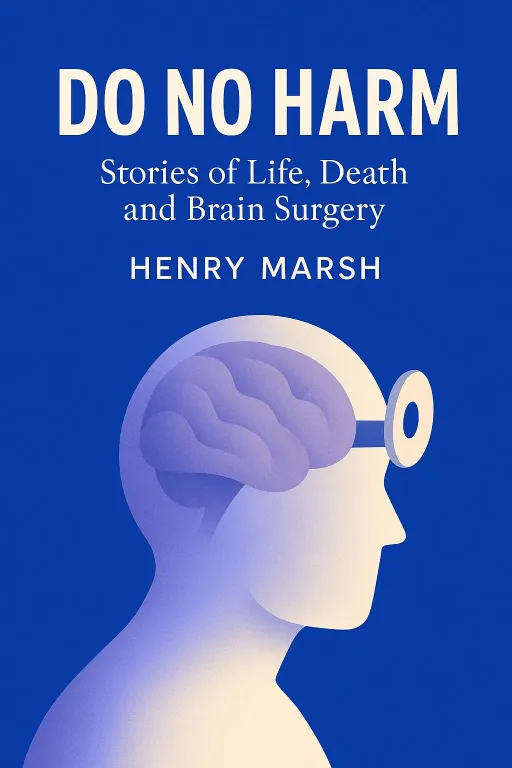
Nova: That’s a great question, and it brings us to the profound insights from their memoirs. Take Henry Marsh's 'Do No Harm.' He's a renowned neurosurgeon, and his book is brutally honest. He doesn't just talk about the triumphs; he lays bare the failures, the agonizing decisions, the moments he questioned himself. He recounts a case where a surgical complication left a patient with severe, unforeseen deficits, and Marsh's internal struggle with the outcome, the guilt, and the self-doubt is palpable. He doesn't shy away from admitting his fallibility.
Atlas: Wow, that’s incredibly courageous. In a field like medicine, where confidence is paramount, isn't admitting vulnerability seen as a weakness? It seems counter-intuitive to what we're often taught about leadership.
Nova: That’s the common misconception, isn't it? But Marsh shows us the opposite. His honesty about his mistakes and the emotional toll isn't a sign of weakness; it's the foundation of his moral courage. It’s what allowed him to learn, to grow, and to continue making incredibly difficult decisions with integrity. He confronts the ethical ambiguities and the emotional toll head-on, rather than burying them.
Atlas: It sounds like he’s not just surviving, but actually growing through this brutal honesty. Is that the secret sauce for resilience training – not avoiding, but confronting the tough 'feelings' head-on?
Nova: Exactly. And Frank T. Vertosick Jr. in 'When the Air Hits Your Brain' offers a similar, yet distinct, perspective. He gives us a vivid, often humorous, and deeply personal narrative of his residency. He exposes the intense pressures and the learning curve, but also the very real moral quandaries faced by young physicians. He uses humor, not to dismiss the gravity, but as a way to cope with the absurdity and the immense stress. He’s showing us that even in the most demanding environments, there’s space for humanity, for doubt, and for a kind of dark humor that helps process the unprocessable.
Atlas: So, both of them are modeling a kind of compassionate self-awareness, validating that complex emotional landscape we discussed earlier. It’s not about being a stoic, unfeeling machine, but about acknowledging the 'feeling' and working through it.
Nova: That’s a perfect way to put it. They connect deeply with the internal struggles, validating that the emotional landscape isn't something to ignore or suppress. It's an integral part of navigating these high-stakes fields with integrity and ultimately, sustained passion. It’s about building resilience by understanding, rather than denying, the human element of medicine.
Synthesis & Takeaways
SECTION
Nova: So, what we've seen today is that the ethical labyrinth of modern healthcare isn't just about intellectual puzzles; it's about immense emotional and moral weight. And the way out, or rather, the way it, isn't by becoming impervious, but by cultivating radical honesty and vulnerability, as exemplified by these extraordinary neurosurgeons.
Atlas: That’s actually really inspiring. For our listeners who are aiming for leadership in healthcare, or any demanding field, it sounds like the real playbook isn't about having all the answers, but about cultivating the courage to feel the questions, and the honesty to admit when you don't. It's about embracing that journey, not just the destination.
Nova: Absolutely. It’s about adopting a more compassionate, self-aware perspective. So, I challenge our listeners to reflect on a recent ethical challenge you've encountered or imagined. How might adopting this kind of compassionate, self-aware perspective change your approach? It’s not about finding the perfect solution, but about how you engage with the problem itself.
Atlas: That’s a powerful call to action. It’s about building that resilience and integrity from the inside out. Great stuff, Nova.
Nova: Always a pleasure, Atlas.
Atlas: This is Aibrary. Congratulations on your growth!