

The Grand Narratives of Finance: History, Hubris, and Crises
Golden Hook & Introduction
SECTION
Nova: Financial history: messy, brilliant, inevitable doom.
Atlas: Wow. Okay, I like that. My five words for today are: Genius, models, hubris, collapse, lesson.
Nova: Ooh, a little darker than mine, but equally potent. And honestly, they perfectly set the stage for our deep dive today. We're talking about the grand narratives of finance, the sweeping arcs of innovation and the sharp, brutal falls from grace.
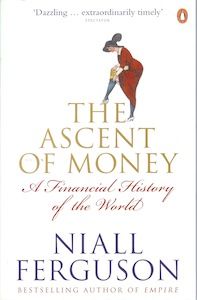
Atlas: Exactly. And to unpack this, we're pulling from two titans of financial storytelling. On one side, we have Niall Ferguson's monumental work, "The Ascent of Money." Ferguson, a renowned historian, argues that finance isn't just a dry subject; it's the very "killer app" of human history, shaping civilizations as much as any emperor or invention.
Nova: Absolutely. He looks at how seemingly simple concepts like banking and insurance profoundly altered our world. But then, on the other side, we have Roger Lowenstein's "When Genius Failed," a gripping, almost cinematic account of Long-Term Capital Management. Lowenstein, a master financial journalist, meticulously details how a hedge fund built on the brilliance of Nobel laureates almost brought the global financial system to its knees.
Atlas: That's the tension right there! It makes me wonder, for anyone in finance or consulting, how do these historical innovations and spectacular failures truly inform our understanding of market risk today? And how do we grapple with the limitations of those quantitative models we rely so heavily on?
The Historical Arc of Financial Innovation
SECTION
Nova: Precisely. Let's start with Ferguson's "Ascent of Money," because to truly grasp modern financial risk, we have to understand its deep historical roots. Imagine, for a moment, the bustling markets of 14th-century Florence. Merchants are trading goods, but also promises. This is where banking, as we know it, truly began to take shape.
Atlas: That makes sense. Before that, was it just... bartering? Or simple money lending?
Nova: Much simpler. But with the rise of international trade, you couldn't just carry sacks of gold across borders. So, bankers—like the legendary Medici family—started issuing bills of exchange. You deposit money in Florence, get a bill, and cash it in Bruges. It was revolutionary. It created credit, allowing merchants to expand, to invest, to take bigger risks. Prosperity soared.
Atlas: So you're saying that even something as fundamental as a promissory note, a piece of paper, was a financial innovation that unlocked immense potential?
Nova: Absolutely. It was the birth of liquid capital, the idea that money didn't have to be physical. But here's the kicker: with credit came debt, and with debt came the risk of default. The Medici themselves, for all their brilliance, faced ruin when their major debtors—kings and popes—couldn't pay up. Their bank collapsed in the late 15th century, sending shockwaves across Europe.
Atlas: Wow. So even the very first steps towards modern finance immediately showed its double-edged nature. Prosperity potential catastrophe.
Nova: Exactly. Or take bonds. Imagine the Dutch Republic in the 17th century. They needed to finance wars and massive infrastructure projects. So, they invented the perpetual bond, essentially an IOU from the state that paid interest forever. This was ingenious! It allowed governments to raise vast sums of capital, fostering stability and growth. It literally funded the Dutch Golden Age.
Atlas: That's a great way to put it. It’s like they invented the concept of long-term national investment.
Nova: And it was incredibly successful. People could invest their savings, governments could plan for the future. But even here, Ferguson points out the inherent risk. What happens if the government defaults? What if interest rates fluctuate wildly? These innovations, while empowering, also created complex interdependencies and new vectors for systemic risk.
Atlas: So, for anyone trying to navigate today's complex markets, this historical pattern of innovation-risk-crisis must feel eerily familiar. We're still grappling with those same fundamental dynamics, aren't we?
Nova: We absolutely are. The tools change, the scale explodes, but the underlying human impulse to innovate, to take risks, and the potential for things to go spectacularly wrong, remains constant. It’s a recurring theme in the grand narrative of finance.
The Hubris of Models
SECTION
Nova: From the grand sweep of history, where innovation often brought unforeseen risks, let's fast-forward to a more recent, yet equally grand, failure that vividly illustrates the limits of even the most brilliant minds. I'm talking about Long-Term Capital Management, or LTCM, as meticulously chronicled in Lowenstein's "When Genius Failed."
Atlas: Oh, I've heard whispers about LTCM. Wasn't that the hedge fund with Nobel Prize winners?
Nova: Indeed. It was founded in 1994 by John Meriwether, a legendary bond trader, and boasted two Nobel laureates in economics, Myron Scholes and Robert Merton, who were famous for their work on options pricing theory. Their team was a collection of the smartest people in finance, armed with complex mathematical models designed to exploit tiny, temporary mispricings in the market.
Atlas: So basically, they had the best brains and the best algorithms trying to find inefficiencies? That sounds like a recipe for unbeatable success.
Nova: It did, on paper. For a few years, they were astonishingly successful, generating returns that defied belief. Their strategy relied on arbitrage, making small, almost guaranteed profits from minute differences in prices across various markets. But to make those small profits add up, they used massive amounts of leverage—borrowing huge sums of money to amplify their bets.
Atlas: Hold on. So, the models were brilliant, but the application involved enormous leverage. Isn't that where the risk starts to compound?
Nova: Precisely. Their models were sophisticated, built on decades of academic research. They believed they had quantified almost every risk. But what they underestimated was market irrationality, or what's often called "tail risk"—those rare, extreme events that fall outside normal statistical distributions. In 1998, a series of global economic shocks, particularly Russia's default, triggered a flight to safety.
Atlas: And suddenly, their small mispricings became massive, correlated losses?
Nova: Exactly. Markets that their models assumed would move independently suddenly moved in lockstep. Liquidity vanished. Their arbitrage trades, which were supposed to be nearly risk-free, blew up. The leverage, which had amplified their gains, now magnified their losses to catastrophic levels. LTCM lost billions in a matter of weeks.
Atlas: That sounds rough, but how did it almost bring down the global financial system? It was just one hedge fund, right?
Nova: Ah, but that's the insidious part. Because they were so leveraged and interconnected with every major investment bank, their collapse threatened to create a domino effect. If LTCM defaulted on its massive loans, it would have taken down several major banks with it, potentially triggering a systemic meltdown. It was the Federal Reserve, in an unprecedented move, that had to orchestrate a bailout by a consortium of banks to prevent a wider crisis.
Atlas: That’s incredible. So, even with all that genius, all those advanced models, they couldn't account for the human element of panic and the sheer unpredictability of extreme market events?
Nova: Not fully. Lowenstein makes it clear that while the math was brilliant, the hubris was immense. They believed their models were a perfect representation of reality, rather than a simplified map. They convinced themselves that what hadn't happened in their historical data happen. It was a profound underestimation of market irrationality and the limits of quantitative prediction.
Atlas: That makes me wonder, for anyone working with complex financial models today, what's the core lesson here? How do you sharpen your market edge when genius itself can fail so spectacularly?
Nova: The lesson is humility. It's understanding that models are tools, not oracles. They are based on historical data, which might not predict future anomalies. They can quantify risks, but they struggle with unknowns, like a sudden sovereign default or a pandemic. It's about combining quantitative rigor with qualitative judgment, with an awareness of human behavior and potential systemic vulnerabilities.
Synthesis & Takeaways
SECTION
Nova: So, bringing these two grand narratives together, what emerges is a powerful, recurring theme: finance, from its earliest innovations to its most complex modern forms, is always a human endeavor. It’s driven by ingenuity and ambition, but constantly shadowed by the potential for hubris and unforeseen consequences.
Atlas: Yeah, I can definitely relate. It’s like the more sophisticated our tools become, the more we need to remember the fundamental, often irrational, human element driving the markets.
Nova: Exactly. Ferguson shows us that the very structures that enable prosperity—credit, bonds, insurance—also create the pathways for crisis. And Lowenstein gives us a stark modern reminder that even brilliant minds, blinded by their own models and excessive leverage, can stumble spectacularly when faced with market irrationality.
Atlas: So, for someone navigating today's complex markets, how do these grand narratives—from ancient bonds to modern hedge funds—really change how we approach risk? It feels like it's more than just crunching numbers.
Nova: It absolutely is. True financial acumen isn't just about understanding the mechanics or the models; it's about understanding the human story of ambition, innovation, hubris, and fear that drives it all. It’s about respecting the limits of prediction, building in safeguards for the unexpected, and cultivating a healthy skepticism toward anything that promises guaranteed returns or perfect foresight. It's about remembering that the market is ultimately a reflection of collective human behavior, not just a set of equations.
Atlas: That's a powerful thought. It means our best defense against future failures might not be more complex models, but a deeper understanding of ourselves and our history.
Nova: Precisely. The grand narratives of finance teach us that while we can strive for mastery, we must always embrace the process of learning from both our ascents and our spectacular stumbles. What risks are you underestimating in your own models?
Nova: This is Aibrary. Congratulations on your growth!