The Architect of Meaning: Lessons on Life's Blueprint from a Dying Neurosurgeon
Golden Hook & Introduction
SECTION
Albert Einstein: Imagine you're at a crossroads. Path A leads to a life of guaranteed contentment and happiness. Path B leads to a life of profound meaning, but it comes with struggle, uncertainty, and maybe even pain. Which do you choose?
ally: That's a heavy question to start with, Albert. I think most people would instinctively say happiness, right? It's the goal we're all told to chase.
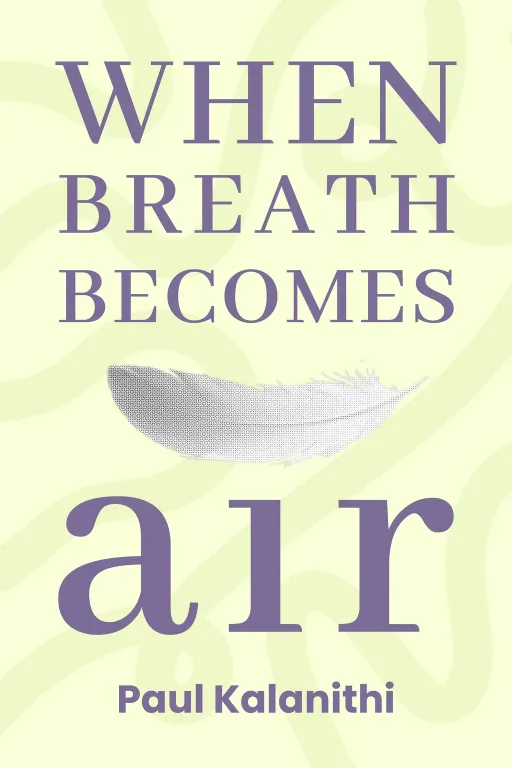
Albert Einstein: Exactly. But it's not just a philosophical game. It’s the central question a brilliant young neurosurgeon, Paul Kalanithi, had to answer, first in theory, and then in the most brutal, personal way imaginable. His memoir, 'When Breath Becomes Air,' isn't just a book about dying—it's a masterclass in how to live. And that’s why I’m so glad you’re here today, ally, because as someone thinking about building a future, this book is like a blueprint.
ally: I'm fascinated to dive in. It feels incredibly relevant for anyone trying to figure out their own path.
Albert Einstein: It is. So today we'll dive deep into this from two powerful perspectives. First, we'll explore Kalanithi's winding search for a true calling, and what it teaches us about choosing our own paths. Then, we'll discuss the crucible moment when he became a patient, and how that radical shift in perspective reveals what's truly essential in life.
Deep Dive into Core Topic 1: The Crossroads of Vocation
SECTION
Albert Einstein: So, ally, let's start with that first idea: the search for a calling. In a world that pushes for specialization early, Kalanithi did the opposite. He was a brilliant student at Stanford, but he was torn. He didn't just want a job; he wanted an answer.
ally: An answer to what, exactly?
Albert Einstein: To the big one: What makes human life meaningful? At first, he thought the answer was in literature. He studied English, believing that the great poets and novelists had mapped the terrain of human experience. He was on track to become a professor, to spend his life examining these beautiful, intricate maps of life.
ally: That sounds like a noble pursuit. A life of the mind.
Albert Einstein: It was. But then, a powerful doubt began to creep in. He captured it with a haunting question he asked himself: "If the unexamined life was not worth living, was the unlived life worth examining?" He realized that studying the map wasn't the same as walking the territory. Literature could describe suffering, morality, and death, but it kept him at a safe distance.
ally: He felt like a spectator.
Albert Einstein: Precisely. And so, he made a radical pivot. He decided he had to get closer to the raw, visceral source code of life and death. He chose medicine. And not just any medicine—neurosurgery, the discipline where brain and identity, self and matter, collide. He felt he had to set aside the books to truly understand the human condition.
ally: That's a huge decision. It's almost like he was building a very specific kind of expertise. In venture capital, we talk a lot about 'domain expertise'—knowing an industry inside and out. But Kalanithi seems to be building 'humanity expertise.' He's not just picking a job; he's picking the field with the highest density of the data he's looking for—the data on meaning.
Albert Einstein: What a wonderful way to put it. 'Humanity expertise.' So, let me ask you, from your perspective, was his time spent in literature a 'sunk cost'? A detour on the way to his real career?
ally: Absolutely not. I think it was the essential foundation. That background in literature and philosophy is what made him a different kind of doctor. It gave him the language and the framework to grapple with the moral and existential questions his patients faced. He wasn't just a technician fixing a biological machine; he was a guide. That's his unique value proposition, if you will. He combined technical excellence with deep humanistic understanding. That's a powerful combination in any field.
Albert Einstein: It is. And that unique combination, that foundation, was about to be tested in the most profound way possible. Which, of course, leads us directly to our second point. After years of being the one holding the CT scans, the one delivering the news... he found himself on the other side of the table.
Deep Dive into Core Topic 2: The Crucible of Identity
SECTION
ally: The role reversal. This is the part of the book that’s just breathtaking.
Albert Einstein: It is. Let me paint the scene for our listeners. It's described in the prologue. Paul is in the final year of his grueling neurosurgery residency. He's been suffering from debilitating back pain and weight loss, but he's been brushing it off as the cost of his demanding job. Finally, he gets a CT scan. He and his wife, Lucy, who is also a doctor, are in a darkened room, looking at the images on a computer screen.
ally: And he knows what he's looking at.
Albert Einstein: Instantly. He describes seeing the image of his own spine, and I quote, "The vertebrae were shot through with tumors, the lungs stippled with innumerable nodules. The cancer, widely disseminated." He, the expert diagnostician, was diagnosing his own death sentence. In that moment, his entire world flips upside down.
ally: The identity he spent over a decade building just… evaporates.
Albert Einstein: Completely. And he asks this devastatingly simple question: "Why was I so authoritative in a surgeon’s coat but so meek in a patient's gown?" He had all the knowledge, all the technical vocabulary, but as a patient, he felt powerless. His expertise was suddenly useless for his own predicament.
ally: That's the crucible you mentioned. All his external achievements, his status, his skills—they're stripped away. He's left with just himself.
Albert Einstein: And that's where his oncologist, a woman named Emma Hayward, becomes so critical. She doesn't just treat his cancer; she treats. She sits with him, and instead of drowning him in statistics and probabilities, she repeatedly asks him a simple, profound question: "You have to figure out what’s most important to you."
ally: That question is everything. It's so powerful. It's like a VC asking a founder, "Beyond the revenue, beyond the market share, what is the one non-negotiable mission of this company?" For Kalanithi, the 'company' was his own remaining life. He had to define his core values under the ultimate time pressure.
Albert Einstein: Yes! He had to write his own mission statement for his final chapter. And it wasn't about 'beating cancer' or 'surviving.' It became about something else. He and Lucy decide to have a child, even knowing he wouldn't live to see her grow up. He decides to pour his remaining energy not into more surgery, but into writing this book.
ally: He's reallocating his most precious asset—time—based on a new set of values. He's no longer optimizing for longevity; he's optimizing for meaning. He wants to leave a legacy for his daughter, a way for her to know him. That's an incredible return on investment, even if the timeline is brutally short. It's a shift from a quantitative goal to a qualitative one.
Albert Einstein: And in doing so, he provides the answer to the question I posed at the beginning. He chose meaning over happiness. His final year was filled with physical pain and the sorrow of impending loss, but as his wife Lucy writes in the epilogue, it was also filled with a "sated joy" he had never known before. The joy of holding his daughter, of writing his truth.
Synthesis & Takeaways
SECTION
ally: It’s just… a stunning story of intentionality.
Albert Einstein: It truly is. So as we bring this together, we see this two-part journey, don't we? First, there was a deliberate, philosophical search for a meaningful path, which led him to neurosurgery. And that was followed by a sudden, visceral test of that meaning when he became a patient.
ally: And the lesson seems to be that the first part is what makes you resilient enough to handle the second. Because he had spent so much time thinking about what makes life meaningful, when the crisis hit, he had a compass. He wasn't starting from scratch. He had done the work.
Albert Einstein: He had done the work. That's the key. The book isn't a morbid meditation on death. It’s a powerful, urgent call to live with purpose. It leaves us with a challenge.
ally: Right. The call to action isn't to wait for a crisis to figure out what matters. It's to do the work now. It's to ask yourself, in the quiet moments, when the stakes are low: What are my non-negotiables? What, for me, makes life meaningful enough to go on living?
Albert Einstein: A question for all of us, no matter our path.
ally: Exactly. Answering that question, and then building your life around that answer—that is the most important investment you can ever make.
Albert Einstein: A perfect final thought. ally, thank you for exploring this profound book with me today.
ally: Thank you, Albert. It was a privilege.