Unseen Forces: The Subtle Influence of Social Structures on Health
Golden Hook & Introduction
SECTION
Nova: Atlas, if I were to ask you, what's the most profoundly individual aspect of human existence? What comes to mind?
Atlas: Oh, that's easy, Nova. Without a doubt, it's our health. Your diet, your exercise, your genes – it's all about you, right? Purely personal.
Nova: Ah, "purely personal." That's what most of us think, isn't it? But what if I told you that idea is one of our biggest blind spots? That our health, from the moment we're born to our very last breath, is being subtly, yet profoundly, shaped by forces we rarely even acknowledge?
Atlas: Wait, hold on. You're saying my kale smoothie isn't entirely my own choice, and that my morning jog has some kind of… invisible puppet strings attached to it? That sounds a bit out there.
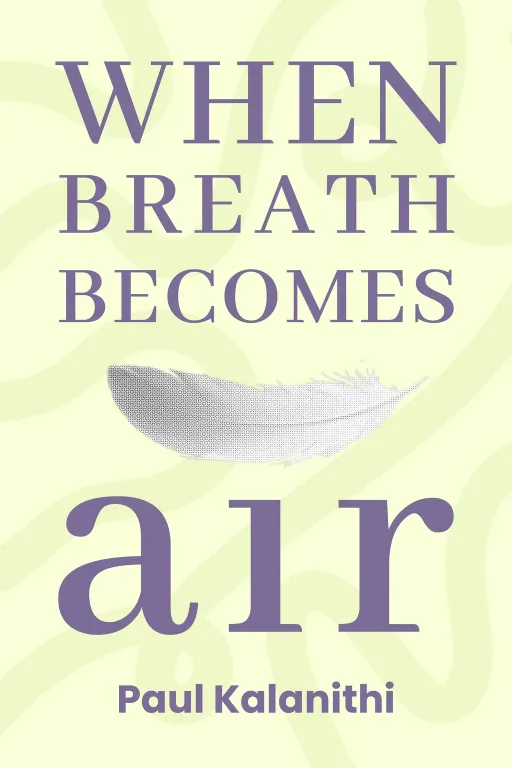
Nova: Not puppet strings, Atlas, but rather the very architecture of the stage we’re performing on. Today, we’re diving into the idea of "Unseen Forces: The Subtle Influence of Social Structures on Health." It's about how everything from economic inequality to cultural norms profoundly shapes our well-being in ways we've largely overlooked. And to illuminate this, we're going to lean on two incredibly powerful books: Paul Kalanithi's deeply moving memoir, "When Breath Becomes Air," and Jonathan M. Metzl's incisive "Dying of Whiteness."
Atlas: Okay, so we're talking about moving beyond the individual diet and exercise paradigm to this larger, more ethereal concept of "social structures." I can see why that's a blind spot. It’s hard enough to choose to eat that kale, let alone understand how society is nudging me towards or away from it.
Nova: Exactly! And Kalanithi's story is a perfect, poignant entry point. He was a neurosurgeon, literally on the cusp of completing his incredibly demanding residency, when he was diagnosed with terminal lung cancer. Just imagine that irony—a master of the brain, a healer, suddenly finding himself on the other side of the scalpel.
The Illusion of Individual Health: When Personal Battles Meet Systemic Realities
SECTION
Atlas: Oh man, that's heartbreaking. And talk about a brutal twist of fate. So, how does this intensely personal tragedy, a doctor facing his own mortality, connect to these "unseen forces" you're talking about?
Nova: It's precisely it's so personal that it reveals the systemic. Kalanithi's memoir pulls back the curtain on the human fragility within our medical systems. While his fight was individual, his experience was deeply shaped by the structure of healthcare itself. Think about the immense pressure on doctors, the grueling residency hours that contribute to burnout, the ethical dilemmas of end-of-life care, and the sheer bureaucracy of a hospital system.
Atlas: Right, like even though he’s the one literally dying, the way he dies, the care he receives, the conversations he has—they’re all framed by this massive, complex institution. It’s not just him and his disease; it’s him, his disease, and the entire medical-industrial complex.
Nova: Precisely. And in his reflections, Kalanithi grapples with the societal expectations of a doctor—the provider of hope, the one who fixes. When he becomes a patient, he suddenly confronts the limitations of that system, not just medically, but socially. How do you maintain your identity, your role, when the very structure you embodied now defines your illness? How does a system designed for treating diseases navigate the human experience of dying?
Atlas: That’s such a powerful reframe. We often think of doctors as almost superhuman, detached from the very human condition they treat. His story reminds us that they’re also just people caught within a system, and that system, for all its brilliance, has profound social and structural limitations. I imagine a lot of our listeners, especially those who’ve navigated serious illness themselves or with loved ones, will resonate with how impersonal and overwhelming the system can feel, even when the individual care is excellent.
Nova: Absolutely. His story is a testament to how personal health journeys are often inextricably intertwined with complex societal factors—from research funding priorities to insurance coverage, from cultural attitudes towards death to the very training of medical professionals. It challenges that comfortable myth that health is simply a matter of individual choices and good genes. It's about recognizing that the stage itself, the backdrop of our lives, is a major player.
Atlas: So basically, Kalanithi's personal battle becomes a lens through which we see the systemic challenges. It’s not just about cancer, but about healthcare system and societal approach to illness and mortality. That makes me wonder, if that's the subtle influence, what happens when social structures are actively, overtly working against health?
The Politics of Well-being: How Social Choices Literally 'Dying of Whiteness' Affect Health Outcomes
SECTION
Nova: That’s a brilliant pivot, Atlas, because if Kalanithi's memoir shows us the subtle, often tragic, hand of social structures, then Jonathan M. Metzl's "Dying of Whiteness" reveals the explicit, and often devastating, impact of social. Metzl, a psychiatrist and director of the Center for Medicine, Health, and Society at Vanderbilt, delves into something truly provocative.
Atlas: Okay, I’m intrigued. "Dying of Whiteness"? That sounds like it’s going to challenge some preconceived notions. What's the core argument here?
Nova: Metzl’s research examines how certain political choices and social policies, particularly among white working-class Americans, paradoxically lead to health outcomes for that very demographic. He argues that loyalty to specific political ideologies or cultural identities can prompt people to support policies that, in the long run, actively harm their own health.
Atlas: Wait, hold on. Are you saying that political choices can literally make people sicker? That someone might vote for something that actively shortens their own lifespan or makes them more prone to disease? That sounds almost… self-defeating.
Nova: It does, doesn't it? But Metzl provides compelling evidence. He looks at specific examples, like resistance to Medicaid expansion in states where many white working-class people would benefit, or opposition to gun control measures despite high rates of gun-related deaths, or even skepticism towards environmental regulations in areas suffering from industrial pollution. These are often rooted in a strong sense of cultural identity, a particular vision of freedom, or a distrust of government intervention.
Atlas: So the argument is that, for some, the perceived benefits of maintaining a certain cultural or political identity, or resisting what they see as government overreach, outweigh the tangible, immediate health benefits of things like affordable healthcare or safer communities? That’s a really counter-intuitive idea. It’s like prioritizing an abstract ideal over concrete well-being.
Nova: Exactly. Metzl’s work shows the direct link between social structures—in this case, political structures and cultural norms—and health. He documents how these choices manifest in higher rates of chronic disease, shorter life expectancies, and increased mortality rates in these communities. He highlights the tragic irony: policies supported out of a sense of identity or freedom can become instruments of self-harm, all because of these deeper, often unexamined social and political structures at play.
Atlas: Wow. That’s kind of heartbreaking, actually. It really underscores how powerful these "unseen forces" of identity and politics must be if they can override even basic self-preservation. It's not just about individual choices anymore, it's about the collective choices that shape the very air we breathe and the care we receive.
Nova: Precisely. Both Kalanithi and Metzl, from very different vantage points, challenge us to look beyond the individual. They urge us to consider the powerful, often invisible, forces of society and culture that dictate who thrives and who struggles. This isn't about blaming individuals; it's about illuminating the systemic issues that create health disparities.
Synthesis & Takeaways
SECTION
Nova: So, whether it’s the quiet dignity of a neurosurgeon facing his own mortality within a complex healthcare system, or entire communities making political choices that inadvertently undermine their own well-being, the message from "Unseen Forces" is clear: our health is a social construct as much as it is a biological one.
Atlas: That’s a profound insight, Nova. It means that if we truly want to improve health, we can't just tell people to eat better and exercise more. We have to look at the larger landscape—the economic opportunities, the political decisions, the cultural narratives—that fundamentally shape those individual choices. It’s about building healthier societies, not just healthier individuals.
Nova: Absolutely. True health requires us to move beyond our individual blind spots and start seeing the intricate web of social structures that cradle or crush our well-being. It requires us to ask uncomfortable questions about how our communities are built, how our policies are formed, and what values truly underpin our collective health.
Atlas: And that's the big takeaway from these books. For anyone listening, if we're all living inside these "unseen forces," what's one thing our listeners can do to start seeing them, or even shifting them, in their own lives or communities?
Nova: I think the first step is simply observation. Pay attention to the health outcomes in your community. Look at who has access to fresh food, good schools, safe environments, and quality healthcare. Then, start asking. Why are some groups thriving while others are struggling? The answers often point directly to those unseen forces. It's about cultivating a structural lens, rather than just an individual one.
Atlas: That's a powerful challenge to our conventional thinking. It reminds us that our well-being is a shared responsibility, not just a personal one.
Nova: Indeed.
Atlas: This is Aibrary. Congratulations on your growth!