The Empathy Gap: Why Connection Trumps Logic in Healing
Golden Hook & Introduction
SECTION
Nova: What if I told you that sometimes, the most advanced medical science in the world isn't enough to heal someone? That our obsession with protocols might actually be making us sicker?
Atlas: Oh, I love that. Because it flies in the face of everything we're taught about healthcare being purely scientific.
Nova: Exactly! Today we're diving into the profound "empathy gap" in healthcare, exploring how our focus on clinical detachment can overshadow the very human experience of illness.
Atlas: So we're talking about connecting the science with the soul, essentially.
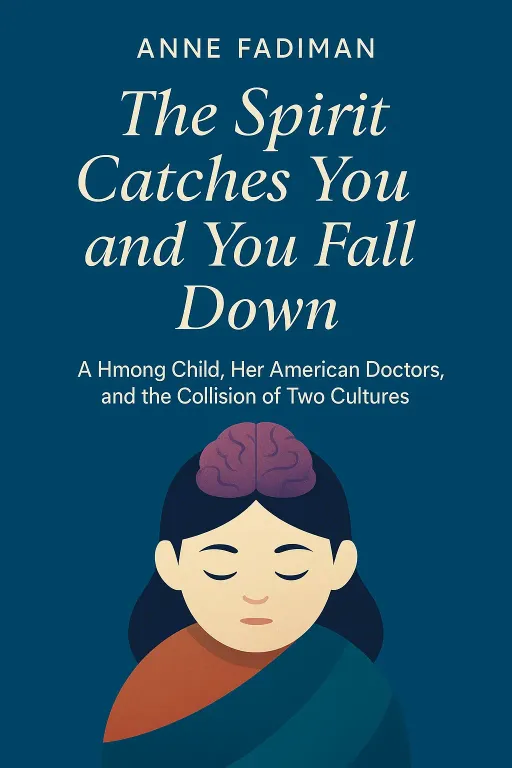
Nova: Precisely. We'll be drawing insights from two incredibly powerful books. First up, Anne Fadiman's "The Spirit Catches You and You Fall Down," which meticulously chronicles a cultural clash in medicine. Then, we’ll turn to Paul Kalanithi's "When Breath Becomes Air," a neurosurgeon's poignant journey from doctor to patient.
Atlas: Wow, that's a powerful combination. That makes me wonder, how do we begin to bridge a gap that feels so fundamental?
Nova: That's the core of our discussion today. We'll dive deep into this from two crucial perspectives. First, we'll explore the often-devastating 'empathy gap' that can arise when medical protocols overshadow personal stories. Then, we'll discuss how we can actively bridge that gap, fostering a healthcare system that prioritizes compassion alongside cure, drawing powerful lessons from these two seminal books.
The Empathy Gap: Protocols vs. Personal Narratives
SECTION
Nova: Let's start with Anne Fadiman's "The Spirit Catches You and You Fall Down." This isn't just a book; it's a meticulously reported, immersive piece of journalism that earned widespread critical acclaim and numerous awards. Fadiman spent years living with the Hmong family at the heart of her story, ensuring she captured their lives and struggles with incredible depth.
Atlas: That's dedication. It sounds like she really committed to understanding the full picture, not just the clinical notes.
Nova: Absolutely. Her book tells the tragic story of Lia Lee, a young Hmong girl in California diagnosed with severe epilepsy. The American doctors saw a medical problem to be solved with precise medication schedules. Lia’s family, however, understood her illness, which they called "quag dab peg" or "the spirit catches you and you fall down," as a spiritual experience, a mark of distinction.
Atlas: So, immediately, we have two completely different worldviews colliding. It’s like they were speaking different languages, even if the words were English.
Nova: Exactly. The doctors, driven by their training and protocols, saw the family's non-compliance with medication as neglect, even abuse. They believed the family was actively harming Lia by not following the strict regimen. From the family's perspective, the doctors were imposing a Western scientific framework that ignored their deeply held spiritual beliefs, which involved traditional healers and ceremonies. They even believed the medication was making Lia worse, dulling her spirit.
Atlas: That's heartbreaking. It highlights how clinical detachment, while sometimes necessary for objective diagnosis, can become a profound barrier to true healing. For someone in healthcare ethics, this is a nightmare scenario. How do you advocate for policies that account for such deeply ingrained cultural beliefs without compromising medical efficacy?
Nova: That's the million-dollar question, isn't it? The tragic outcome for Lia—severe brain damage after a grand mal seizure—is directly attributed to this chasm. It wasn't a lack of medical knowledge or parental love; it was the inability of the two sides to truly understand each other's context, to bridge that empathy gap. The doctors focused on the 'what' of the disease, while the family was focused on the 'who' of Lia, her spirit, and her place in their culture.
Atlas: It’s not just a communication breakdown then; it's a fundamental clash of realities. It makes me wonder, how often do we, as a society, impose our 'best practices' without truly seeing the human being on the other side? That must resonate with anyone working in cross-cultural advocacy.
Nova: Far too often. And that naturally leads us to the second key idea we need to talk about, which often acts as a counterpoint to what we just discussed, moving from external cultural clashes to the internal, existential clash of illness.
Bridging the Gap: Compassion Beyond Cure
SECTION
Nova: This brings us to Paul Kalanithi's "When Breath Becomes Air." It’s a highly rated, widely acclaimed book that touched millions. Kalanithi was a brilliant neurosurgeon who, in the final years of his life, transitioned from doctor to patient after being diagnosed with terminal lung cancer. His memoir offers a uniquely profound perspective on mortality, meaning, and the human condition.
Atlas: That's a gut punch of a premise. It reminds us that no matter how much knowledge you have, life can still hit you with the unexpected.
Nova: Indeed. Kalanithi's journey is a powerful testament to the idea of compassion beyond mere cure. Before his diagnosis, he was at the pinnacle of medical science, performing complex brain surgeries. His perspective was, understandably, very clinical. Patients were often problems to be solved, diseases to be excised. But facing his own mortality fundamentally shifted his understanding.
Atlas: So, he moved from seeing patients as a collection of symptoms or a surgical challenge, to seeing them as fellow humans grappling with the most profound questions of life and death.
Nova: Exactly. He realized that while he could operate on brains, he couldn't fix a person's soul or their fear of dying. He began to understand that the core of medicine wasn't just about eliminating disease, but about helping patients confront their mortality, find meaning in their suffering, and live fully until the very end. His book emphasizes that true healing involves acknowledging the patient's humanity, even when a cure isn't possible.
Atlas: That’s a powerful distinction. It makes me wonder, what does 'compassion beyond cure' actually look like in a busy hospital setting? For someone in policy, how do we translate this kind of profound individual empathy into systemic change in healthcare?
Nova: It means active listening, validating fears, and asking deeper questions than just "What are your symptoms?" It's about respecting a patient's values and priorities, even if they differ from what a doctor might prescribe. For policy, it means designing systems that allow providers the time and resources to engage with patients on this human level, not just as data points. It means integrating palliative care earlier, focusing on quality of life, and fostering cultural humility in medical training.
Atlas: So it's about creating space for those personal narratives, for the "who" of the patient, just as much as the "what" of their illness. It's about making sure that the protocols serve the person, not the other way around. That’s a huge shift in mindset for a system built on efficiency.
Nova: Absolutely. Both Fadiman and Kalanithi, in their distinct ways, show us the immense cost when we fail to see the whole person, and the profound healing that can occur when we do.
Synthesis & Takeaways
SECTION
Nova: So, as we wrap up, I'm left with this question: If we truly believe in healing, how much of a patient's story are we willing to listen to?
Atlas: And how do we translate that listening into policies that don't just treat diseases, but honor the whole person? It's a powerful challenge for anyone advocating for better systems, for those of us who seek systemic solutions.
Nova: Absolutely. It’s about building bridges, one narrative at a time, and understanding that profound understanding and compassion are not just 'soft skills,' but fundamental to true healing. It's about moving beyond clinical detachment to a more human-centered approach, ensuring that every protocol serves the individual.
Atlas: That’s a powerful call to action for anyone in healthcare, or frankly, anyone who interacts with another human being. It’s about recognizing the inherent dignity and complexity in every person’s story.
Nova: This is Aibrary. Congratulations on your growth!