Building an Unshakeable Financial Fortress
Golden Hook & Introduction
SECTION
Nova: Atlas, quick challenge for you. If you had to describe what it takes to build an in just five words, what would they be? Go!
Atlas: Five words? Hmm. “Data, discipline, patience, perspective… and a really good lawyer.”
Nova: A lawyer! That’s a curveball, but I like the outside-the-box thinking. Most people would probably say something about stocks or diversification. But your answer hints at something deeper, something about protection and strategy, which is exactly what we’re diving into today.
Atlas: Well, if you’re building a fortress, you’re thinking long-term, right? You’re thinking legacy, not just today’s market whims. That’s why the lawyer is crucial for the part.
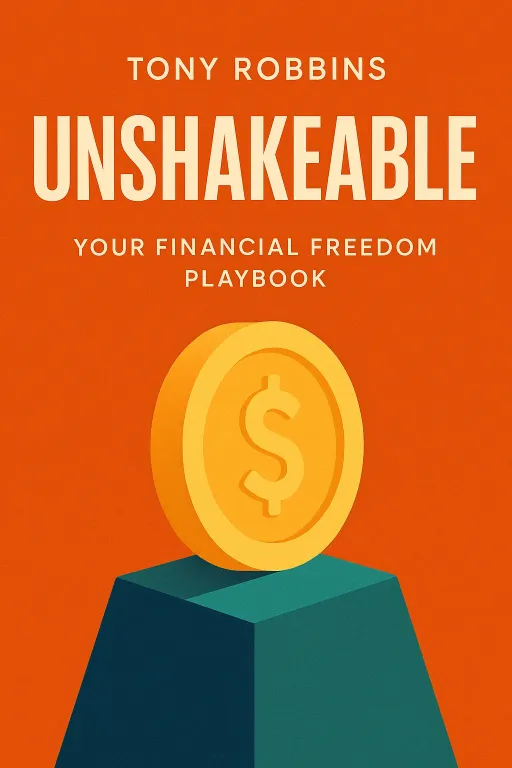
Nova: Absolutely. And that’s why we’re pulling insights from two powerhouse books that, together, offer a blueprint for exactly that kind of long-term security. We’re talking about Tony Robbins’, which he co-authored with financial expert Peter Mallouk, and James P. O’Shaughnessy’s classic,.
Atlas: O’Shaughnessy! Now that’s a name that makes quantitative analysts swoon. And Robbins, of course, is a master at distilling expert wisdom into actionable steps. What a combo.
Nova: They truly are. Robbins, with Mallouk, has this incredible ability to take the complex strategies of the world’s most successful investors and make them accessible. It’s less about market predictions and more about building a bulletproof mindset and system. And O’Shaughnessy? He spent decades, literally decades, sifting through market data to scientifically prove which investment strategies work over time, stripping away all the guesswork.
Atlas: So, one brings the panoramic view and the strategic wisdom, and the other brings the hard, undeniable data. This sounds like the ultimate pairing for anyone who wants to move beyond speculation and truly build something lasting.
Nova: Precisely. Today, we’re going to explore how these two seemingly different approaches converge to help you forge an unshakeable financial future, especially when you’re thinking about safeguarding something as vital as your retirement funds and building a lasting legacy.
The Mindset of Market Resilience: Tony Robbins' Unshakeable
SECTION
Nova: Let’s start with. Tony Robbins, as we know, is a master of human psychology and motivation. But what he and Peter Mallouk do in this book is bring that psychological resilience to the world of investing. They argue that true financial security isn't just about picking the right stocks; it's about understanding the cycles of the market and, more importantly, understanding your own behavior.
Atlas: Okay, but understanding market cycles sounds a bit like trying to predict the future. And as someone who approaches things with strategic clarity, I know the future is inherently unpredictable. So, how does "understanding cycles" translate into actual protection for, say, someone’s retirement funds, when those funds face constant market volatility?
Nova: That’s a brilliant distinction, Atlas. It’s not about predicting the timing of a downturn, but understanding that downturns are. Think of it like seasons. You don't know the exact day winter will arrive, but you know it come, and you prepare for it. reveals how the world's most successful investors – the true financial titans – don't panic during these "financial winters." Instead, they see them as opportunities.
Atlas: That’s interesting. For a lot of our listeners who are focused on building legacies and ensuring lasting impact, the instinct during a downturn is often fear or a desire to pull back, to protect what they have. How do these titans flip that script?
Nova: They embrace what Robbins calls a "permanent portfolio" mindset, which is essentially about diversification and rebalancing. Imagine you have a portfolio spread across different asset classes – stocks, bonds, commodities, real estate. When one asset class performs exceptionally well, you trim it back. When another crashes, you buy more, essentially "rebalancing" to your original allocation. It’s counter-intuitive for many. When everyone else is selling in a panic, the unshakeable investor is buying.
Atlas: So, the strategy is about disciplined action emotional impulses. It’s like saying, "My wisdom is a powerful asset," as our user profile suggests, and not letting short-term fear override long-term strategic clarity.
Nova: Exactly. They’re not driven by the daily news cycle or the latest market frenzy. They focus on what they can control: their asset allocation, their costs, and their behavior. They cultivate what Robbins calls "financial freedom habits." One compelling insight from the book is that the average investor often underperforms the market precisely because they try to time it, buying high out of greed and selling low out of fear. The titans do the opposite.
Atlas: That’s a powerful point. It’s not just about having the right investments, but having the right. It sounds like is saying, "You can have the best plan in the world, but if your mindset isn't aligned, you'll sabotage it."
Nova: Precisely. It’s about building a psychological fortress alongside your financial one. It's about recognizing that market volatility is normal, not an anomaly, and having a systematic approach to navigate it. The book is filled with insights from legends like Ray Dalio and Warren Buffett, showing how their enduring success isn't just about financial genius, but about unwavering discipline and a deep understanding of human nature.
The Data-Driven Edge: O’Shaughnessy's What Works on Wall Street
SECTION
Nova: Now, if gives us the strategic mindset and the wisdom of the giants, James P. O’Shaughnessy’s gives us the cold, hard, undeniable data. This book is a monumental achievement in quantitative analysis, where O’Shaughnessy doesn't just guess what works; he it.
Atlas: I’m curious, how does one "prove" what works on Wall Street? For many, it feels like a chaotic, unpredictable beast. Our listeners, clear thinkers focused on building legacies, value evidence. What kind of evidence does O'Shaughnessy bring to the table?
Nova: He brings decades of historical market data, spanning from the 1920s to the present day. He ran countless simulations, testing hundreds of different investment strategies across various market conditions, industries, and company sizes. He was looking for persistent patterns, for quantifiable factors that consistently led to outperformance. It's like the scientific method applied to investing.
Atlas: That sounds incredibly rigorous. So, what were some of his big takeaways? What did the data actually say "works"?
Nova: One of the most compelling insights was the power of "value" investing combined with "momentum." For example, he found that strategies focusing on companies with low price-to-sales ratios, or high shareholder yield, consistently outperformed the broader market over long periods. And when you combine those value factors with strong price momentum – meaning stocks that have been performing well recently – the results are even more robust.
Atlas: So, it’s not about finding the next big thing, but identifying statistically proven characteristics of companies that tend to do well. But wait, historical data, even decades of it, doesn't guarantee future results. What about unforeseen events, the "black swans" that can blow up even the most data-backed models? For our listeners optimizing retirement income, they can't afford a catastrophic failure based on past performance.
Nova: That's a crucial point, and O'Shaughnessy addresses it with the concept of robustness. He emphasizes that no single strategy works all the time, which is why diversification is as important as diversifying across assets. His work isn't about finding a magic bullet, but about building a portfolio of strategies that have historically proven resilient across different market regimes. It's about stacking the odds in your favor, not eliminating risk entirely.
Atlas: That makes sense. It’s about building a portfolio that’s diversified not just in it holds, but in those holdings are selected. So, for a busy strategist who wants to integrate these data-backed principles without becoming a full-time quant, how does one practically apply these insights?
Nova: It means focusing on systematic, rules-based approaches rather than discretionary stock picking. You might look for low-cost index funds that track value or momentum factors, or consider rebalancing periodically to maintain your exposure to these proven factors. The beauty of quantitative strategies is that they remove emotion from the equation, aligning perfectly with the disciplined mindset Robbins advocates. It’s about building a robust system that runs on data, not gut feelings.
Synthesis & Takeaways
SECTION
Nova: So, we’ve looked at Tony Robbins and Peter Mallouk’s, which gives us the long-term mindset and behavioral discipline, and James P. O’Shaughnessy’s, which provides the rigorous, data-backed strategies. The real power, the true unshakeable fortress, comes from integrating these two.
Atlas: That’s the deep question we started with: How can you integrate data-backed investment principles with a long-term, resilient mindset to safeguard your retirement funds and build a lasting legacy? It sounds like it’s about having a scientific approach to you invest in, combined with an almost Zen-like approach to you react to the market.
Nova: Exactly. Think of it this way: provides the psychological armor and the strategic map for navigating the financial battlefield, knowing that storms will come. provides the scientifically engineered weapons and defensive structures that have been proven effective over decades of combat. You need both to truly be unshakeable. It’s not enough to know to do; you also need the mental fortitude to consistently, especially when it’s uncomfortable.
Atlas: So, for our listeners who are clear thinkers, building legacies, and driven by security, what’s a tiny step they can take this week to start building this financial fortress? The kind of step that fits into a busy schedule but moves the needle significantly towards retirement income optimization.
Nova: A fantastic question, Atlas. Your tiny step this week could be to dedicate just 20 minutes to researching one market indicator. Perhaps start with something like the Shiller P/E ratio, or simply understanding the concept of "mean reversion" in stock market returns. Don't just look up the definition; try to understand its historical performance, how it's measured, and what it tells us about long-term market cycles.
Atlas: That’s a brilliant way to start. It’s not about making a quick trade, but about building foundational knowledge, understanding the underlying mechanics. It empowers the strategist, the steward, to make informed decisions for their future, rather than just reacting.
Nova: Absolutely. It’s about cultivating that long view, recognizing that wisdom is indeed a powerful asset. By combining the emotional intelligence and strategic foresight from with the quantitative discipline from, you’re not just managing finances; you’re building a legacy that can withstand any storm.
Atlas: That’s a compelling vision. It’s about moving from hoping for the best to systematically preparing for anything, and doing it with data and discipline.
Nova: Precisely. And that, my friends, is how you build an truly unshakeable financial fortress.
Atlas: This is Aibrary. Congratulations on your growth!