

The Unwritten Rules of Excellence
Golden Hook & Introduction
SECTION
Nova: What if the syllabus is a trap? We're told to study, to ace the tests, but what if the real path to mastery bypasses the classroom entirely?
Atlas: Oh, that's a provocative starting point, Nova! It certainly challenges the traditional narrative we've all been fed about learning and success. It feels like we're often told to follow a very specific, rigid path, and anything outside of that is… well, extra credit at best, or a distraction at worst.
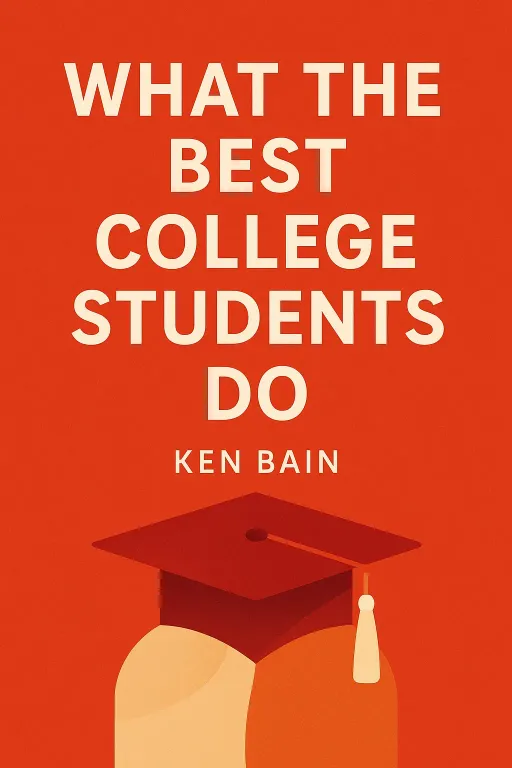
Nova: Exactly! And that’s precisely the tension we’re exploring today. We’re diving into some profound insights from Ken Bain's "What the Best College Students Do" and Sharon E. Jones' "Mastering the Game."
Atlas: Two books that really cut through the noise about what it means to be truly excellent, and how to get there. I'm always looking for those deeper truths, that actionable wisdom that helps us build something meaningful.
Nova: Absolutely. And the authors bring such distinct, yet complementary, perspectives. Bain, a leading educational researcher, spent years observing truly exceptional students. He found that they weren't just chasing grades or ticking boxes; they were pursuing deep, profound understanding. They were, in essence, learning how to learn.
Atlas: That resonates with the 'Focused Learner' aspect of our audience, that craving for clarity. But how does that translate to the real world, beyond academia?
Nova: That's where Sharon E. Jones comes in. Drawing from years navigating the corporate labyrinth herself, she argues that while technical skills are crucial – they're your ticket to get in the door – they are only half the battle. The other half, she says, are the 'unwritten rules' of organizational politics, networking, and influence. Those are the currents that truly ignite a career and amplify impact.
Atlas: So, it’s not just about you know, but you navigate the system where you apply that knowledge. That's a critical distinction for anyone ambitious, anyone looking to build something significant.
The Deep Dive vs. The Shallow Splash (Deep Learning)
SECTION
Nova: Precisely. Let's unpack Bain's concept of 'Deep Learning' first. He observed that students who achieved true excellence weren't just cramming information for a test. They were engaging with the material on a much more fundamental level. They wanted to understand things worked the way they did, how concepts connected, and how they could apply that knowledge in new situations.
Atlas: So, it’s not just about memorizing facts for the exam, but understanding the underlying principles so well that you could explain them in your sleep, or even… invent something new based on them?
Nova: Exactly! Think of it like building a bridge. Surface learning is like slapping some paint on a rickety old structure and calling it new. Deep learning is about understanding the physics of stress and load, designing a robust foundation, and constructing a bridge that can withstand time and traffic. It’s about grappling with complexity, questioning assumptions, and seeking genuine understanding, not just a good grade.
Atlas: That analogy really lands. But here’s the tough question, Nova, for our ambitious builders and strategic navigators out there: When you’re up against deadlines, when the performance review is looming, and the immediate pressure is to just get the report done, or ace that presentation, how do you carve out time for this ‘deep dive’? Doesn't it sometimes feel more efficient, more pragmatic, to just skim, to do the minimum required to get by?
Nova: It’s a very real tension, Atlas, and it’s one that many people grapple with. The temptation of the ‘shallow splash’ – that quick, superficial engagement – is powerful because the rewards often feel immediate. A good grade, a passed exam, a completed task. But Bain’s research suggests that this approach creates a fragile foundation. You might pass the test, but you haven't truly learned.
Atlas: And that fragility is exactly what hinders long-term independence and impact, isn't it? If your knowledge is shallow, your ability to adapt, to innovate, to lead – it’s going to be limited.
Nova: Exactly. Deep learning isn't about spending time studying in a passive sense. It’s about engaging with the material in a more active, critical, and curious way. It’s about asking probing questions, connecting new information to what you already know, and actively seeking out opportunities to apply what you're learning. This active engagement builds not just knowledge, but resilience, critical thinking skills, and a profound sense of competence. It’s the bedrock upon which true independence is built, because you’re not relying on external validation; you’re building internal mastery.
Atlas: So, it’s an investment in your own capability, rather than just an effort to meet external requirements. It’s about building the engine, not just polishing the car’s exterior.
Nova: Beautifully put. This deeper understanding is what allows you to tackle novel problems, to see connections others miss, and to innovate. It’s the difference between being a technician and being a true master of your craft.
The Hidden Currents of Career Advancement (Unwritten Rules)
SECTION
Atlas: So we've established the importance of building that robust internal engine through deep learning. But what about navigating the external landscape? How do you actually that mastery to make a real impact, to build that future of independence and influence that so many of us crave? That’s where Sharon E. Jones’ work comes into play, right?
Nova: Absolutely. Jones points out that while deep competence is essential, it’s often not enough on its own to accelerate your career trajectory or amplify your impact. She’s talking about the ‘unwritten rules’ – the informal, often unspoken, dynamics that govern how organizations function.
Atlas: These ‘unwritten rules’… they sound a bit like corporate politics. And honestly, Nova, for many people, that word, 'politics,' can have negative connotations. It can feel manipulative, or like something you have to compromise your integrity to engage with. How do you learn these rules without becoming someone you’re not? Especially for our listeners who are aiming for strategic navigation and want to build their future with integrity?
Nova: That’s a crucial point, Atlas, and Jones doesn't advocate for cynicism or manipulation. Instead, she frames it as understanding the ecosystem you're operating in. Think of it like a chef. A chef needs to master their ingredients, their techniques, their recipes – that’s the deep learning, the technical skill. But to run a successful restaurant, they also need to understand how the kitchen operates, how to manage staff, how to interact with suppliers and customers, how to market their dishes. Those are the unwritten rules of the restaurant business.
Atlas: Ah, so it’s about understanding the mechanics of the human system, not just the mechanics of your specific task.
Nova: Exactly. For instance, an unwritten rule might be understanding truly holds influence in a department, even if they don't have the highest title. It could be knowing to frame your proposals or ideas so they resonate with the decision-makers’ priorities, which might not always be explicitly stated. It’s about understanding communication styles, recognizing unspoken expectations, and building genuine alliances based on mutual respect and shared goals.
Atlas: So, it’s less about playing games and more about understanding the game board and the other players’ typical moves. For the strategic navigator, this means observing, listening, and deciphering the underlying patterns of interaction.
Nova: Precisely. It’s about developing your emotional intelligence and your situational awareness. It’s about learning to read the room, understanding the organizational culture beyond the official handbook, and knowing how to effectively communicate your value and your vision. Jones argues that technical skill gets you hired, but mastering these unwritten rules is what allows you to move from simply performing your job to truly shaping your environment and accelerating your growth. It’s what helps you build that career foundation and move towards leadership potential.
Atlas: It sounds like a necessary complement to deep learning. You can have all the knowledge in the world, but if you can’t effectively communicate it, or navigate the channels to make it impactful, its potential is severely limited. It’s about translating competence into influence.
Synthesis & Takeaways
SECTION
Nova: And that’s where these two powerful ideas converge, Atlas. Deep learning gives you the substance, the undeniable competence, the mastery that our listeners crave. It's the bedrock of genuine independence because you know you can do the work, and do it well.
Atlas: Right, it's the 'what' and the 'how' of your craft. But mastering the unwritten rules – that’s the 'who' and the 'where' and the 'when' of applying that craft effectively within a human system. It’s about understanding the context and the dynamics that allow your competence to translate into broader impact and leadership.
Nova: Exactly! It’s not one or the other; it’s both. You need the depth of understanding to be truly excellent, and you need the strategic navigation skills to ensure that excellence is recognized, utilized, and amplified. It’s a dual pursuit.
Atlas: So, for our audience – the focused learners, the ambitious builders, the strategic navigators – what’s the actionable step? How do they begin to bridge this gap between profound knowledge and effective influence?
Nova: The takeaway from both Bain and Jones is powerful and practical. Identify just ‘unwritten rule’ in your current environment. It could be how decisions are made in your department, who you should connect with for specific types of information, or what the unspoken dress code is for informal meetings.
Atlas: And then what? Just identify it?
Nova: No, no. Then, you spend just 10 minutes analyzing it. Apply that deep learning mindset to this ‘unwritten rule’ itself. Ask yourself: Why does this rule exist? What purpose does it serve? Who does it benefit? How does it impact workflow or decision-making? This focused, analytical approach, applying the principles of deep learning to understanding the very game you’re playing, gives you a significant competitive edge. It moves you beyond just following the syllabus to truly mastering the environment.
Atlas: That’s brilliant. It’s taking the abstract concept of "learning the unwritten rules" and making it concrete, actionable, and time-bound. It’s about turning observation into insight, and insight into strategy.
Nova: Precisely. The ultimate competitive edge, the path to true independence and lasting impact, comes from mastering both the depth of knowledge and the dynamics of its application. It’s about transforming learning itself into a strategic advantage, not just for grades, but for life.
Atlas: This has been incredibly illuminating, Nova. It’s about building competence and then strategically deploying it.
Nova: And that, listeners, is how you move from just participating to truly excelling.
Atlas: This is Aibrary. Congratulations on your growth!