

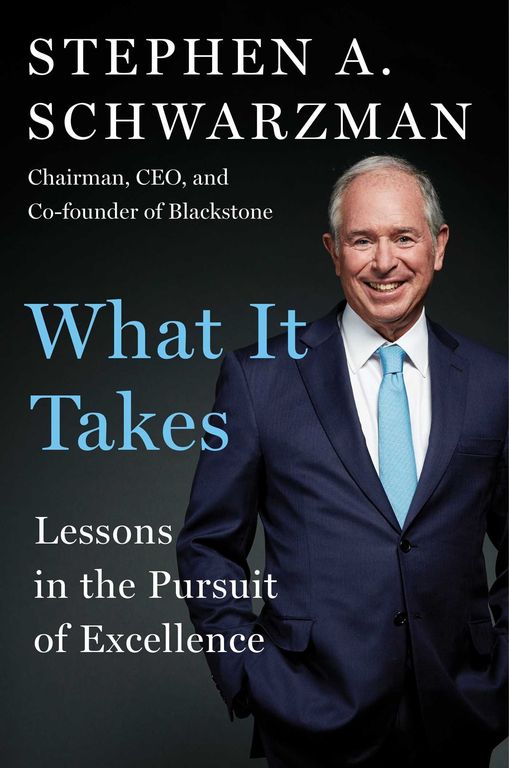
The Blackstone Blueprint: Lessons in High-Stakes Finance and Unrelenting Excellence
Golden Hook & Introduction
SECTION
Albert Einstein: Imagine this: you're on the verge of the biggest deal of your life. A twenty-six-billion-dollar bet. But as you're about to sign, the world's financial system begins to crumble. The market is in freefall. Every expert, every partner, every voice in your head is screaming 'PULL OUT!'. What do you do? This isn't a thought experiment; it's the reality Stephen Schwarzman faced, and his answer built an empire.
Amadeus: That's a scenario that gives any finance professional, even at my level, a cold sweat. It's the ultimate stress test. Your analysis says one thing, but the entire world is screaming the opposite.
Albert Einstein: Precisely. And that's why we're here. Today, we're dissecting the playbook of one of finance's modern titans through his book, 'What It Takes.' We'll explore this from two powerful angles. First, we'll uncover the foundational, almost paranoid, rule that governs every deal: the art of not losing money.
Amadeus: Which sounds simple, but in practice, it's anything but.
Albert Einstein: Exactly. Then, we'll flip the script and discuss the audacious philosophy that it's actually easier to build something massive than something small. This is a masterclass in calculated risk and relentless ambition.
Deep Dive into Core Topic 1: The Art of Not Losing Money
SECTION
Albert Einstein: So let's start with that first, almost paradoxical idea, Amadeus. In a world that glorifies risk-takers, Schwarzman's number one rule is... 'Don't lose money.' What does that even mean when you're playing with billions?
Amadeus: Right. It seems contradictory. The whole point of private equity is to take on risk that public markets won't. But I think the nuance is in you define risk. It’s not about avoiding risk, it's about structuring it so you can't be wiped out. It's about surviving the worst-case scenario.
Albert Einstein: You've hit the nail on the head. It's about engineering the outcome. And there is no better story to illustrate this than the one I opened with: the acquisition of Hilton Hotels. Let's set the scene. The year is 2007. The markets are euphoric, credit is cheap, everything is going up. Blackstone, led by Schwarzman, identifies Hilton as a prime target. It's a globally recognized brand with huge potential. They agree to a massive deal: $26 billion. It's one of the largest leveraged buyouts in history.
Amadeus: The very peak of the market. Talk about timing.
Albert Einstein: The worst possible timing, as it turned out. They sign the deal in July 2007. And then... the world starts to fall apart. The subprime mortgage crisis begins to unfold. By early 2008, Bear Stearns collapses. By September, Lehman Brothers files for bankruptcy. The global financial system is in a complete meltdown.
Amadeus: And Blackstone is holding this enormous, debt-fueled hotel company as the world stops traveling and spending money. The value of their investment must have plummeted.
Albert Einstein: Plummeted is an understatement. On paper, they were down billions. The media called it the worst deal ever. Everyone assumed Blackstone was facing a catastrophic loss. But here is where the genius of 'Don't Lose Money' comes in. It wasn't about predicting the crash. It was about preparing for the possibility of one.
Amadeus: The structure of the deal.
Albert Einstein: Exactly. Of that $26 billion purchase price, Blackstone's funds only put in about $6 billion of their own equity. The other $20 billion was debt. But crucially, it was debt. Can you explain for our listeners what that means, Amadeus?
Amadeus: Of course. It's a critical detail. Non-recourse debt means the loan is secured only by the asset itself—in this case, Hilton Hotels. If the deal goes bad and Blackstone can't pay the debt, the lenders can seize Hilton, but they can't go after Blackstone's other funds or assets. Their loss is capped at the initial equity they put in. It's an institutional-level firewall.
Albert Einstein: A firewall. I love that. So while the world saw a $26 billion disaster, Schwarzman's actual risk was limited to that $6 billion. The banks that lent the other $20 billion were the ones truly on the hook. This gave Blackstone the one thing they needed most: time. They weren't forced to sell at the bottom. They held on, weathered the storm, and as the economy recovered, Hilton's value soared. They eventually took it public again and walked away with a $14 billion profit.
Amadeus: That's incredible. It transforms from the worst deal in history to one of the most successful private equity deals ever. And the key wasn't just picking the right company, it was the meticulous, defensive financial engineering beforehand. It's a lesson in asymmetric risk.
Albert Einstein: Asymmetric risk. Unpack that for us.
Amadeus: It's the idea of finding bets where the upside is many, many times larger than the downside. Here, the upside was, well, $14 billion. The downside was capped at their initial investment. For someone at my stage, the parallel isn't buying a hotel chain, but maybe investing in a promising startup. You know you could lose your entire investment, but you cap it at an amount you can afford to lose. In exchange, you get a shot at a 10x or 100x return. Schwarzman just did it on a scale that's hard to even comprehend. He built a safety net out of debt structure.
Albert Einstein: A safety net made of financial physics. It proves that the most aggressive offense is sometimes born from an unbreakable defense.
Deep Dive into Core Topic 2: The Audacity to Go Big
SECTION
Albert Einstein: Exactly! It's a masterclass in building that safety net. But what's so fascinating about Schwarzman, and this is where he differs from a pure value investor like an early Warren Buffett, is that once that safety net is in place, he argues for taking the biggest leap possible. This brings us to our second idea: It's just as hard to do something big as it is to do something small, so you might as well go big. That feels... deeply counterintuitive, doesn't it?
Amadeus: It really does. Common wisdom says to start small, prove the concept, and scale slowly. Going big from the start sounds like ego and a recipe for a spectacular failure. Why does he believe it's 'easier'?
Albert Einstein: His logic is rooted in human nature and markets. He argues that any new venture, big or small, requires a staggering amount of effort. You have to raise money, hire people, fight bureaucracy, deal with setbacks. The energy required is immense, regardless of the scale.
Amadeus: That's true. The administrative and emotional burden of a small business can be all-consuming.
Albert Einstein: Right. But, he says, a big, bold, ambitious idea has a unique gravitational pull. It attracts the very best people. 'A-players', as he calls them, are not interested in solving small, boring problems. They want to work on things that matter, things that change the world. A grand vision is a recruiting tool.
Amadeus: That makes so much sense. You see it in the tech world constantly. People leave safe, high-paying jobs at established companies to join a startup with a massive, world-changing mission. The mission is a form of compensation.
Albert Einstein: It is! And it's not just about talent. A big idea attracts the attention of the media, of potential partners, of customers. It creates its own momentum. A small idea has to fight for every inch of attention. A big idea forces the world to pay attention.
Amadeus: So it's a strategic choice to change the physics of the game. Instead of pushing a boulder uphill, you're trying to start an avalanche.
Albert Einstein: A perfect analogy. And the story of Blackstone's real estate business is the ultimate proof. When they decided to get into real estate in the early 90s, they didn't start by buying a single office building in Manhattan. That would have been the 'small' path.
Amadeus: The sensible path.
Albert Einstein: The sensible, and therefore, wrong path, in his view. Instead, they waited. The Savings and Loan crisis had created a government entity called the Resolution Trust Corporation, or RTC, which was saddled with billions in toxic real estate assets. No one knew how to value them or wanted to touch them. Schwarzman's team saw an opportunity not just to buy an asset, but to create a market. They went to the RTC and made an audacious proposal: "Don't sell us one building. Sell us your entire portfolio in this region. We'll take it all."
Amadeus: Wow. So instead of participating in the market, they effectively became the market. They set the price by being the only ones willing to operate at that scale.
Albert Einstein: You've got it. It was a massive, complex, and risky bet. But because it was so big, they were able to negotiate incredible terms. And because they were the only ones doing it, they had their pick of the best assets. It was the foundation of what is now the largest real estate empire on the planet. They didn't climb the ladder; they built a new, bigger ladder next to it.
Amadeus: That's a powerful shift in mindset. It's moving from being an investor to being an innovator. It makes me think about the figures I admire, like Bezos or Gates. They didn't set out to build a slightly better bookstore or a slightly better operating system. They went for the whole ecosystem. Schwarzman was applying that same 'platform' thinking to finance decades ago.
Albert Einstein: He was. And it begs the question for your generation in finance, Amadeus. What is the equivalent 'Go Big' move today? With the rise of FinTech, AI, and decentralized finance, the opportunities to create new markets, not just participate in old ones, seem immense.
Amadeus: It's the key question. Is it building the financial plumbing for the metaverse? Is it creating an AI-driven asset management firm that democratizes strategies previously only available to the ultra-wealthy? The principle holds: solving a small problem in those areas is likely just as hard as solving a huge one, but the huge one is the only one that will attract the capital and talent to succeed.
Synthesis & Takeaways
SECTION
Albert Einstein: So there we have it. These two principles, held in perfect, dynamic tension. On one hand, you have this deep, analytical, almost paranoid obsession with risk. The 'Don't Lose Money' doctrine, embodied by the brilliant structure of the Hilton deal.
Amadeus: The fortress. The firewall.
Albert Einstein: Yes. And on the other hand, you have the visionary's audacity. The belief that if you're going to expend the energy anyway, you might as well aim for something monumental. The 'Go Big' philosophy that built their real estate empire. You need both. The paranoia allows you to survive the storms, and the audacity allows you to conquer new worlds.
Amadeus: It's a powerful combination, and it's not just for billionaires. It's a mindset. For anyone listening, especially if you're early in your career in finance or tech, the takeaway isn't to go out and try to buy a hotel chain. It's to start asking two questions about your next move.
Albert Einstein: What are they?
Amadeus: First: 'What is my real, absolute downside here, and how can I intelligently cap it?' Whether that's with a financial instrument, the structure of a deal, or just how you approach a project. Protect yourself from the catastrophic loss. Second: 'What is the most ambitious, '10 out of 10' version of this goal?' Don't just think about the safe, incremental step. Ask what the 'Go Big' version looks like.
Albert Einstein: And what would it take to aim for that instead of the safe version?
Amadeus: Exactly. Just looking at your opportunities through that dual lens—paranoid defense and audacious offense—can completely change the path you take. It's the difference between having a good career and, just maybe, building something that lasts.