The Code Behind Our Actions: What Trauma Teaches Tech Leaders About Mindset and Innovation
10 minGolden Hook & Introduction
SECTION
Nova: Chuqinglai, as a product manager, you've probably seen it a hundred times: you ship a small, logical, well-researched UI change, and suddenly, your user feedback channels explode with pure emotion. It feels completely irrational. But what if it's not? What if their brains are just doing exactly what they were designed to do?
chuqinglai: That question hits home, Nova. It's the mystery at the heart of so much of our work. We build what we think is a perfect, logical path, and users react in ways that defy the data. You're left scratching your head, thinking, "What's wrong with this user?"
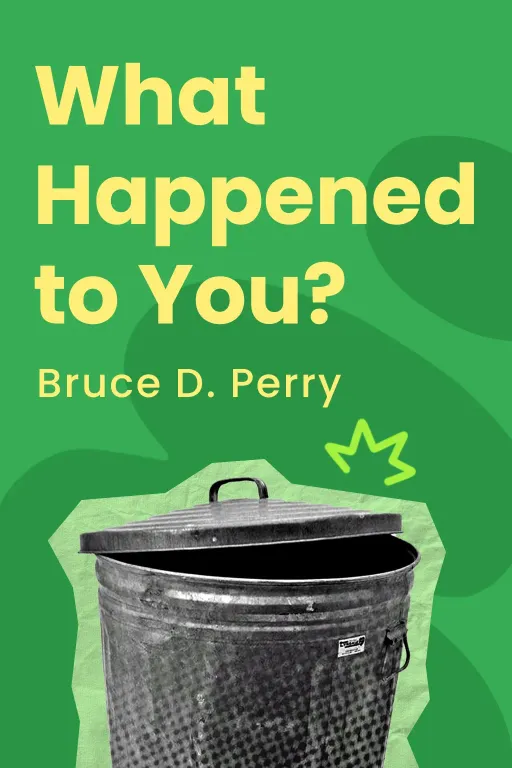
Nova: Exactly! But the book we're diving into today, "What Happened to You?" by Dr. Bruce D. Perry and Oprah Winfrey, flips that question on its head. It suggests we should be asking, "What happened to you?" It's this profound shift from judgment to curiosity. And while it's a book about trauma, we're going to treat it as an essential user manual for the human brain, especially for leaders and innovators.
chuqinglai: I love that framing. A user manual for the brain. It feels like the missing piece of the puzzle for so many of us in tech who are trying to build things for humans.
Nova: It really is. That's why today, we're going to unpack it from two powerful angles. First, we'll explore the hidden 'code' in our brains that makes us react before we think. Then, we'll unpack a powerful three-step framework—Regulate, Relate, Reason—that can transform how you lead, communicate, and innovate. Ready to dive in?
chuqinglai: Absolutely. Let's decode this.
Deep Dive into Core Topic 1: The 'Bottom-Up' Brain
SECTION
Nova: Alright, so let's start with that hidden code, this idea that we react before we think. The book explains that our brain isn't one big thinking machine. It's organized in a sequence, from the bottom up. At the very bottom, you have the brainstem—the most primitive, reptilian part. It’s all about survival and regulation. Above that, you have the emotional, relational midbrain. And only at the very top do you get the cortex, the 'smart,' logical, thinking part.
chuqinglai: So information doesn't just land in the 'smart' part. It has to travel up through the more primitive layers first.
Nova: Precisely. And those lower layers are incredibly fast and powerful. They scan the world for threats based on our past experiences. The book gives this incredible story about a Korean War veteran named Mike Roseman. He was in therapy with Dr. Perry for PTSD—anxiety, flashbacks, the works. One day, Mike calls Dr. Perry in a total panic. He was out with his girlfriend, a motorcycle backfired, and he just… lost it. He dove for cover, heart pounding, completely terrified. He was so ashamed and confused by his reaction.
chuqinglai: Because logically, he knew it was just a motorcycle. His thinking brain knew he was safe.
Nova: Exactly. But the sound didn't go to his thinking brain first. Dr. Perry explained it to him this way: that loud, sharp bang was sensory data. It shot straight into his brainstem, which instantly matched it to the sound of gunfire from his time in the war. His survival brain took over and screamed, "DANGER!" It triggered a full-blown combat response—fight or flight—before his cortex, his logical brain, even had a chance to say, "Hey, wait, we're on a sidewalk in 1985, not a battlefield in 1952."
chuqinglai: Wow. So his brain wasn't 'broken'; it was perfectly adapted to a world that no longer existed. That completely reframes how we should think about 'irrational' user behavior. We see a user abandoning a checkout cart and we think, "The button is the wrong color." But what if something in the process—a sudden pop-up, a confusing sound—is creating a tiny, subconscious spike of stress?
Nova: You've nailed it. Their brainstem might be whispering "this feels unpredictable, this feels unsafe," and they bail. The most powerful part of Mike's story is that when Dr. Perry explained this, Mike felt this huge wave of relief. Not because he was "fixed," but because he was finally. His reaction made sense.
chuqinglai: That's a huge insight for product management and leadership. It reframes 'user friction' entirely. It's not just a design problem; it can be a human state problem. We're not just designing flows; we're managing emotional states.
Nova: You're not just a Product Manager; you're a state manager! I love that.
chuqinglai: It even makes me question how we interpret A/B testing. We assume users are making a rational choice between version A and B. But what if version A, for some sensory reason—a jarring color, an unexpected animation—is triggering a mild stress state for a segment of users? Their 'choice' isn't purely logical; it's regulatory. They're moving away from what feels subtly stressful. We're not just measuring preference; we could be measuring nervous system responses.
Nova: That is a brilliant and slightly terrifying thought. It adds a whole new layer of empathy we need to bring to our work. And that idea of managing the state before you can even get to the logic is the perfect bridge to our second core idea.
Deep Dive into Core Topic 2: The Leader's Playbook: Regulate, Relate, Reason
SECTION
Nova: So, if the logical brain is the last to get the message, especially when we're stressed, how do you communicate with anyone effectively? Dr. Perry offers this beautifully simple, yet profound, playbook: Regulate, Relate, then Reason.
chuqinglai: Okay, break that down. It sounds like a formula.
Nova: It is! 'Regulate' means you first have to help the other person—and yourself—get calm. You have to soothe that reactive brainstem. 'Relate' means you then need to build a connection, show them you're on their side. This engages the middle, emotional part of the brain. Only when someone feels calm and connected can you effectively 'Reason' with them—engaging their cortex with logic, data, and problem-solving.
chuqinglai: So you can't just lead with a PowerPoint deck full of data if the room is tense.
Nova: You're just talking to their brainstems at that point! The book has this amazing story. Dr. Perry was asked by the FBI to interview a three-year-old boy named Joseph. Joseph had witnessed his older sister's abduction and was the only one who saw the attacker. But he was traumatized and completely shut down. The FBI agents, with all their training, were trying to 'reason' with him, asking direct questions: "What did he look like? What was he wearing?" And they were getting nothing.
chuqinglai: Of course. A terrified three-year-old's cortex is completely offline.
Nova: Totally. So Dr. Perry comes in and does the opposite. He doesn't ask a single question. He gets on the floor in Joseph's home. He starts playing with toy cars. He just matches the boy's rhythm, creating a calm, predictable environment. That's 'Regulate.' Then, he starts to build a little connection, maybe sharing a snack, speaking softly. That's 'Relate.' He did this for a while, just building safety.
chuqinglai: He was basically rebooting the boy's nervous system.
Nova: Perfectly put. And only after Joseph was calm and felt connected to Dr. Perry did his little brain feel safe enough to access those terrifying memories. He eventually pointed to a picture of the suspect in the newspaper and was able to lead them to the spot where it happened. His testimony was crucial. But it was only possible because Dr. Perry followed that sequence.
chuqinglai: That is such a powerful sequence. In tech, we are obsessed with 'Reason.' We present data, logic, roadmaps. But if the team is stressed from a tight deadline, or a stakeholder is anxious about the budget, we're often met with resistance or blank stares. We're trying to talk to a cortex that's basically offline.
Nova: We've all been in that meeting.
chuqinglai: This 'Regulate, Relate, Reason' is like a human-centered design framework for meetings. 'Regulate' could be as simple as starting a tense retrospective by acknowledging the pressure everyone's under, maybe even sharing a moment of gratitude. 'Relate' is finding that point of shared understanding—"We all want this project to succeed." Only then can you effectively 'Reason' about the solution.
Nova: It's the foundation for psychological safety, isn't it? The feeling that you can speak up, take risks, and be vulnerable without fear.
chuqinglai: Exactly. And that's where all true creativity and innovation come from. You don't get breakthrough ideas from a team that's in survival mode. You get them from a team that feels regulated and connected. This isn't a soft skill; it's the core engine of high-performing, innovative teams.
Nova: It's the ultimate leadership hack. And it starts with empathy, not authority.
Synthesis & Takeaways
SECTION
Nova: So, as we wrap up, we have these two incredibly powerful ideas from "What Happened to You?". First, that our brains are wired from the bottom-up, meaning our past experiences can trigger powerful reactions before we even have a chance to think.
chuqinglai: And second, that to connect with anyone—a user, a teammate, a stakeholder—we have to honor that wiring. We have to Regulate their emotional state and Relate to them as a human before we can ever hope to Reason with them.
Nova: For you, Chuqinglai, as a product leader and an ENFP, what's the biggest personal takeaway from looking at the world through this lens?
chuqinglai: Honestly, for me, this isn't just about leadership or product management. It's a profound tool for self-care. As someone who is driven and works in a fast-paced environment, I can feel that rush of anxiety or frustration when things go wrong. Before, my instinct was to ask, "What's wrong with me? Why can't I handle this?"
Nova: The self-judgment loop.
chuqinglai: Exactly. But now, I have a new question. I can pause and ask, "What just happened to me? What part of my brain just got triggered?" It shifts the focus from self-blame to self-awareness. It gives me the power to regulate myself first. That shift is everything. It's the foundation for resilience.
Nova: That is so beautifully said. You're using the framework on the most important user of all: yourself. So for everyone listening, here's the challenge. The next time you encounter a strong emotional reaction—in a user's feedback, in a colleague's comment, or even in the mirror—resist the urge to fix it with logic or to judge it.
chuqinglai: Pause. Take a breath.
Nova: And just ask that one simple, powerful question: "I wonder what happened here?" You might be amazed at the understanding, compassion, and innovation it unlocks.