

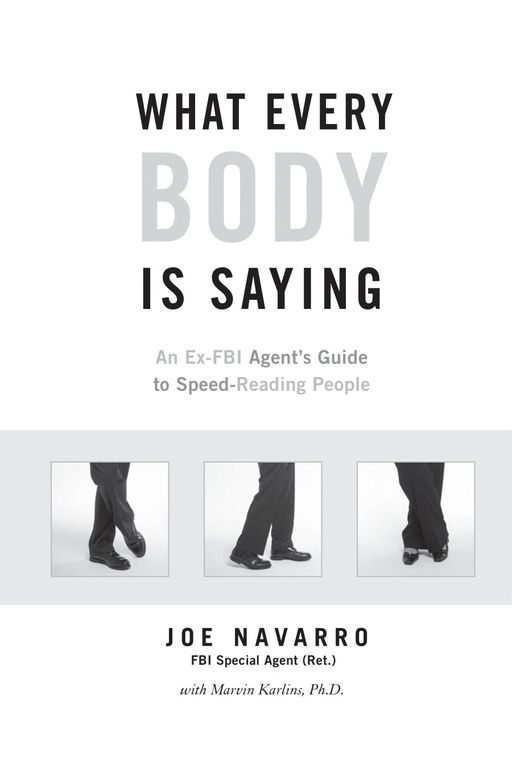
What every BODY is saying
Introduction
Nova: Imagine you are sitting across from a suspected spy in a high-stakes interrogation room. They are calm, their voice is steady, and they have a perfectly crafted alibi. But while their mouth is telling a story of innocence, their feet are slowly pointing toward the exit, and their hand is subtly covering the small notch at the base of their neck. To most people, these are just random movements. To Joe Navarro, they are a loud, clear confession.
Atlas: It is wild to think that we are constantly broadcasting our deepest secrets without saying a single word. I always thought body language was just about crossing your arms when you are annoyed, but apparently, it is way more scientific than that.
Nova: Exactly. Today we are diving into What Every BODY is Saying by Joe Navarro. He spent twenty-five years as an FBI counterintelligence agent, conducting over thirteen thousand interviews. He was literally a professional spycatcher. And his big takeaway is that while we are all taught to be good liars with our words, our bodies are hardwired to tell the truth.
Atlas: Thirteen thousand interviews? That is a lot of people-watching. I am curious to see how a guy who hunted spies for a living looks at a normal conversation at a coffee shop. Is he just constantly seeing through everyone?
Nova: In a way, yes. But he argues that this is not just for FBI agents. It is a survival skill we all have, we just forgot how to use it. By the end of this, we are going to look at everyone from our bosses to our partners in a completely different way.
Atlas: I am ready. Let us see what my body is already saying about how much I want to get into this.
Key Insight 1
The Honest Brain
Nova: To understand body language, Navarro says we have to start with the brain. But not the part of the brain you use to do math or write emails. He splits it into two main players: the Neocortex and the Limbic System.
Atlas: I am guessing the Neocortex is the one that gets us into trouble?
Nova: Spot on. The Neocortex is the thinking brain. It is the newest part of our evolution, and it is the part that allows us to calculate, analyze, and most importantly, lie. It is the master of deception. When you tell your boss you are happy to work on a Saturday while secretly fuming, that is your Neocortex doing the talking.
Atlas: So it is like the PR department of the brain. It puts a spin on everything.
Nova: Exactly. But the Limbic System is the honest brain. It is the emotional center that reacts to the world in real-time, long before you can think about it. It is responsible for our survival. When you hear a loud bang, you jump before you even realize what happened. That is the Limbic System. It does not have a filter, and it cannot be easily trained to lie.
Atlas: So the body is basically just a billboard for the Limbic System. If the Limbic System feels threatened or uncomfortable, it sends a signal to the body, and the body reacts instantly.
Nova: Precisely. Navarro calls the Limbic System the holy grail of body language. It operates on the Freeze, Flight, or Fight principle. Most people know about Fight or Flight, but Navarro emphasizes that Freeze is actually our first response. Think about a deer in headlights. In the modern world, we do not freeze to hide from predators, but we do freeze when we are caught in a lie or hear bad news.
Atlas: That makes sense. Like when someone asks you a question you were not prepared for and you just go still for a split second. You are literally trying to become invisible to the predator, which in this case is the person asking the question.
Nova: Right. And if freezing does not work, we move to Flight, which in a social setting looks like distancing ourselves. We might lean away, turn our feet toward the door, or create barriers with our bags or arms. Only when those fail do we move to Fight, which usually manifests as aggressive posturing or verbal attacks.
Atlas: So the key to reading people is basically watching for these survival reactions in situations where there is no actual physical danger. We are using ancient hardware in a modern world.
Nova: That is the core of his philosophy. If you can spot a limbic reaction, you are seeing the person's true emotional state, regardless of what their mouth is saying.
Key Insight 2
Ground Truth
Nova: Now, if I asked you which part of the body is the most honest, what would you guess?
Atlas: I would probably say the eyes. They say the eyes are the windows to the soul, right?
Nova: That is what everyone thinks, but Navarro says the eyes are actually the most deceptive part of the body. We are taught from childhood to control our facial expressions. We learn to fake smiles, we learn to look people in the eye when we lie because we know people are watching our faces.
Atlas: Okay, so if it is not the face, is it the hands?
Nova: Nope. It is the feet. Navarro argues that the feet and legs are the most honest parts of the human body.
Atlas: The feet? That feels so counterintuitive. Why the feet?
Nova: It goes back to evolution. For millions of years, our feet were our primary tool for survival. They had to react instantly to threats. If you stepped on something sharp or saw a predator, your feet had to move before your brain could even process the danger. Because they are so far from the brain and we rarely think about them, we do not bother to mask their movements.
Atlas: So while I am busy making sure my face looks professional in a meeting, my feet might be doing a jig under the table telling everyone I am actually terrified?
Nova: Exactly. He talks about something called happy feet. These are feet that bounce or wiggle with excitement. You see it in kids all the time, but adults do it too. If you are talking to someone and their feet start bouncing, they are likely feeling very positive about the conversation or the news they just heard.
Atlas: What about the opposite? How do feet show they want to get away?
Nova: This is one of the most useful tips in the book. It is called the intention to leave. If you are talking to someone and you notice one of their feet is pointed away from you, toward an exit, they probably want to go. Their torso might be facing you because they are trying to be polite, but their feet are already on their way out the door.
Atlas: I have definitely done that. You are stuck talking to someone at a party, you are nodding and smiling, but your lead foot is basically halfway to the bar.
Nova: Another great one is the starter's position. If someone shifts their weight from being flat-footed to being on the balls of their feet, they are preparing to take action. It is a sign of high engagement or a desire to move. Navarro even used this to catch a criminal once. He noticed the suspect's feet shifted into a sprinter's stance right before the guy tried to bolt.
Atlas: It is like the body is revving the engine before the car actually moves. That is incredible. I am never looking at a pair of shoes the same way again.
Key Insight 3
The Shield
Nova: Moving up the body, we get to the torso and the arms. Navarro calls the torso the container of our vital organs. Because of that, our limbic brain is incredibly protective of it.
Atlas: So we naturally try to shield our chest and stomach when we feel vulnerable?
Nova: Exactly. He calls this ventral denial. The ventral side is our front side. When we are comfortable and with people we trust, we show our front. We lean in, we open up. But the moment we feel threatened or even just slightly uncomfortable, we turn our torso away or we use our arms as a shield.
Atlas: Is that why people cross their arms? I always hear that crossed arms mean someone is closed off, but some people say they just find it comfortable.
Nova: Navarro has a great take on this. He says it is not just about being closed off; it is a self-comforting gesture. By crossing our arms, we are literally hugging ourselves and protecting our vital organs. It is a sign of discomfort or a need for security. But you have to look for the context. If someone is in a cold room, they are just cold. But if they cross their arms the moment you mention a specific topic, that is a limbic reaction to stress.
Atlas: Context is king. I like that. What about the shoulders? I feel like people carry a lot of tension there.
Nova: They do. One of the biggest tells is the turtle effect. When we are stressed or lose confidence, our shoulders rise toward our ears, making our neck seem to disappear. It is like a turtle retreating into its shell. You see this a lot in people who are being scolded or who feel overwhelmed by a situation.
Atlas: I have seen that in meetings! When a boss asks a tough question, half the room suddenly looks like they do not have necks anymore.
Nova: It is a classic sign of low confidence. On the flip side, high confidence is shown through territorial displays. Spreading your arms out over the back of a chair or putting your hands on your hips with your elbows out. This is called steepling with the body. You are taking up more space because you feel safe and dominant.
Atlas: So if I want to look more confident, I should basically just try to occupy more physical territory?
Nova: To an extent, yes. But Navarro warns that if you overdo it, you can come across as aggressive. The key is to notice when someone else's territory suddenly shrinks. If they go from taking up a lot of space to pulling their arms in tight, something has shifted their emotional state from comfort to discomfort.
Key Insight 4
The High Stakes
Nova: Now we get to the hands and the face. This is where things get really subtle because, as we mentioned, these are the parts we try the most to control. But the hands are still incredibly expressive because they are tied to our fine motor skills and our brain's desire to communicate.
Atlas: I have heard that liars tend to fidget with their hands. Is that true?
Nova: It is more complicated than that. Navarro says there is no single gesture that means someone is lying. Instead, he looks for pacifying behaviors. When the limbic brain experiences stress, it needs to be calmed down. We do this by touching ourselves. Rubbing the neck, stroking the arm, or playing with hair.
Atlas: So it is like a physical reset button for the brain?
Nova: Exactly. One of the most powerful pacifiers is the neck touch. For men, this often looks like adjusting a tie or rubbing the back of the neck. For women, it is often touching the suprasternal notch—that little dip at the base of the throat. Navarro says that when someone touches that spot, they are almost certainly dealing with some kind of insecurity, fear, or significant discomfort.
Atlas: That is so specific. Why that spot?
Nova: It is a very vulnerable area. Protecting it is a primal instinct. He also points out that the thumbs are a huge indicator of confidence. High-confidence people often have their thumbs pointing up when their hands are in their pockets, or they steeple their fingers—touching the tips of the fingers together like a church steeple. It is one of the most powerful signs of confidence there is.
Atlas: I have seen world leaders do that finger steepling thing all the time. It looks very deliberate.
Nova: It is, but it is also a natural reflection of how they feel. If the steeple suddenly drops and they start rubbing their hands together, you know their confidence just took a hit. Now, about the face—Navarro says the most honest part of the face is actually the eyes, but not in the way you think. It is about the pupils and the squint.
Atlas: You cannot really control your pupils, can you?
Nova: No, you cannot. Our pupils dilate when we see something we like and constrict when we see something we dislike. It is called eye blocking. We also squint or cover our eyes when we hear something unpleasant. Even a tiny micro-squint can reveal that someone is bothered by what you just said, even if they are smiling.
Atlas: So the face is like a mask that occasionally slips. You have to be fast to catch it.
Nova: Precisely. He calls these micro-gestures. They might only last a fraction of a second, but they reveal the limbic brain's true reaction before the neocortex can step in and fix the mask.
Conclusion
Nova: We have covered a lot of ground today, from the honest feet to the deceptive face. But the most important thing Navarro emphasizes is that you cannot just look at one gesture and assume you know what someone is thinking. You have to look for clusters.
Atlas: Clusters? Like a group of movements all happening at once?
Nova: Exactly. If someone crosses their arms, it might mean nothing. But if they cross their arms, point their feet toward the door, and start rubbing their neck, now you have a cluster that clearly screams discomfort. You also have to establish a baseline. You need to know how someone acts when they are relaxed so you can spot when they deviate from that.
Atlas: That makes a lot of sense. My baseline for being nervous might look like someone else's baseline for being excited. You have to know the person's normal state first.
Nova: Right. This book is not about being a human lie detector. It is about being a better observer and a more empathetic communicator. When you can see that someone is uncomfortable, you can change the subject or try to put them at ease. It is a superpower for building rapport.
Atlas: It really is. It turns every interaction into a puzzle. I am definitely going to be spending my next commute just staring at people's feet.
Nova: Just try not to make it too obvious! The goal is to be a silent observer, not a creepy one. Joe Navarro's work reminds us that we are always communicating, whether we want to or not. The body truly does not lie if you know how to listen to it.
Atlas: This has been eye-opening. Or maybe I should say feet-opening?
Nova: Definitely feet-opening. Thank you for joining us on this deep dive into the silent language of the human body.
Atlas: This is Aibrary. Congratulations on your growth!