

Wellness Trap
Introduction
The Invisible Cage: Why Wellness Isn't Always Well
Nova: Welcome back to the show. Today, we are diving into a topic that touches nearly everyone, yet often remains unexamined: the massive, multi-billion-dollar industry we call 'wellness.' We see it everywhere—the glowing green smoothies, the $300 yoga mats, the relentless pursuit of 'optimization.' But what if this pursuit isn't making us healthier? What if it’s actually a trap?
Nova: : That's a heavy opening, Nova. I feel like I’m constantly being told I need to optimize my gut biome or try the latest bio-hack just to function. It feels less like a choice and more like a mandatory subscription service for modern life. What gives us the right to question it?
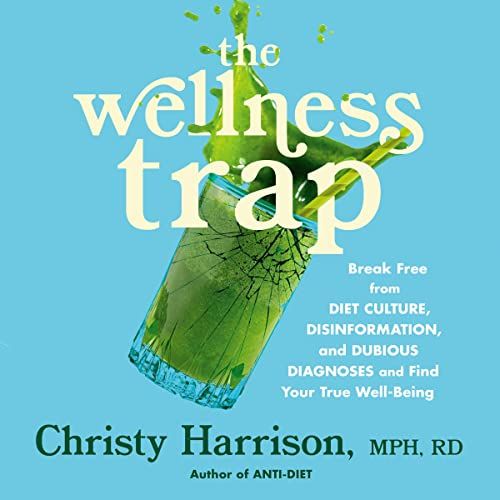
Nova: That feeling of obligation is exactly what Christy Harrison, a journalist, Registered Dietitian, and counselor, tackles head-on in her essential new book, The Wellness Trap: Break Free from Diet Culture, Disinformation, and Dubious Diagnoses—and Find Your True Well-Being. She argues that the modern wellness movement is often just diet culture wearing a very expensive, organic, and spiritually enlightened disguise.
Nova: : A disguise? That’s provocative. So, we’re not talking about basic hygiene or getting enough sleep. We’re talking about the commercialized, prescriptive version of health that seems to demand perfection. Why is this book so critical right now?
Nova: Because, as Harrison details, this culture preys on our deepest vulnerabilities. It promises vitality but often delivers anxiety, financial strain, and disordered eating patterns. It’s a system designed to keep us perpetually seeking the next fix, the next product, the next diagnosis that only can solve. Today, we’re breaking down how this trap is set and how we can step out of it to find genuine well-being.
Nova: : I’m ready to dismantle some green juice myths. Let’s start at the beginning. How did we get from simple healthy habits to this overwhelming 'wellness' complex?
Key Insight 1: From Weight Loss to Optimization
The Great Disguise: Diet Culture's Rebranding
Nova: Harrison makes a crucial distinction: diet culture is the foundation, and wellness culture is the sprawling, profitable skyscraper built on top of it. Diet culture’s primary goal was explicit weight loss, often through restriction. How does wellness change the game?
Nova: : It seems sneakier. If I’m not actively trying to lose weight, I might think I’m safe from diet culture. But Harrison suggests that the underlying mechanism—the moralization of food and the pursuit of a specific body type—is still there, just repackaged as 'clean eating' or 'bio-hacking.' Is that right?
Nova: Precisely. She points out that the language has shifted from 'diet' to 'lifestyle' or 'optimization.' Instead of saying, 'Eat this to be thin,' it’s, 'Eat this to have perfect energy, eliminate toxins, and achieve peak performance.' But the result is often the same: rigid rules, food fear, and a constant feeling of falling short.
Nova: : It’s the moral high ground that gets me. If I eat a conventional slice of bread, I’m not just eating bread; I’m failing my commitment to 'clean living.' Harrison must discuss how this moral framing is so powerful.
Nova: She does. She highlights that this moralization is a key mechanism of control. If you feel morally superior for eating gluten-free, organic, or keto, you are invested in the system that provides that feeling. It creates an identity around consumption habits, which is incredibly sticky. Think about the sheer volume of products marketed this way—supplements, detox teas, specialized flours. It’s a massive economic engine.
Nova: : And that economic engine relies on making us feel inadequate. I remember reading that the wellness industry is valued in the trillions globally. That scale means the incentive isn't public health; it’s profit maximization.
Nova: Absolutely. Harrison emphasizes that the industry thrives on creating problems that their products then solve. If you feel tired, it’s not because you’re overworked or stressed; it’s because you haven't bought the right adaptogen blend. If you have digestive issues, it’s not normal human variation; it’s a 'leaky gut' that requires an expensive, multi-step protocol.
Nova: : So, the trap is that we trade genuine self-care—like rest, connection, and joyful movement—for a consumerist checklist that promises health but delivers anxiety about compliance.
Nova: It’s a performance of health, not the actual experience of it. And this performance is often rooted in exclusivity. Who can afford the $15 organic turmeric latte? It subtly reinforces class and access issues under the guise of universal self-improvement.
Nova: : That’s a great point about exclusivity. It makes the pursuit of 'wellness' feel like a status symbol, which is a classic marketing tactic, but it’s particularly insidious when applied to basic human needs like nourishment.
Nova: Harrison connects this directly to the historical roots of diet culture, which often targeted women and marginalized groups. The wellness trap simply broadens the scope, making everyone feel like a failure if they aren't constantly 'optimizing' their bodies and lives according to the latest trend.
Nova: : It sounds like the first step out is recognizing that the goalposts are always moving. If you achieve one level of 'clean,' there’s immediately a new, more advanced level waiting to make you feel behind again.
Nova: Exactly. It’s a treadmill. And the book’s subtitle points to the next major issue: the disinformation that fuels this treadmill. Let's talk about the dubious diagnoses that wellness culture loves to invent.
Key Insight 2: Monetizing Uncertainty
The Pseudoscience Pipeline: Dubious Diagnoses and Fear Mongering
Nova: One of the most alarming parts of The Wellness Trap is Harrison’s dissection of 'dubious diagnoses.' These aren't official medical conditions; they are often vague, untestable labels that wellness practitioners use to sell solutions. Think 'toxins,' 'inflammation,' or 'hormone imbalance' used as catch-all explanations.
Nova: : I’ve seen this constantly. Someone feels sluggish, and suddenly they have 'adrenal fatigue' or 'candida overgrowth,' and the only cure seems to be a $500 online course or a specific supplement line. Where does the evidence for these claims actually come from?
Nova: Rarely from rigorous, peer-reviewed science. Harrison, as an RD, grounds her critique in evidence. She shows how these concepts are often cherry-picked from legitimate scientific language—like the real concept of inflammation—and then weaponized without context. They take a grain of truth and build a whole commercial empire on it.
Nova: : It’s the exploitation of health anxiety. If you’re worried about your health, you’re desperate for answers, and a definitive-sounding diagnosis, even a fake one, feels comforting because it implies there’s a path forward.
Nova: It’s a perfect storm of fear and consumerism. Harrison notes that this is particularly dangerous because it often leads people away from evidence-based medical care. If you believe your fatigue is due to 'toxins' that only a specific juice cleanse can remove, you might delay seeing a doctor about a potentially serious underlying condition.
Nova: : That’s terrifying. It shifts the focus from treating actual illness to constantly 'detoxing' or 'preventing' hypothetical problems. It turns the body into a machine that needs constant, expensive maintenance rather than a resilient system.
Nova: And the language used is often deliberately vague to avoid accountability. If a protocol doesn't work, the fault is never the protocol; it’s that the patient didn't commit enough, or they still had 'toxins' the protocol couldn't reach. It’s a blame-the-victim structure, just like traditional dieting.
Nova: : So, the wellness guru is selling certainty in an uncertain world, but the certainty is false. What about the practitioners themselves? Are they all malicious actors, or are many of them caught in the trap too?
Nova: Harrison is nuanced here. She acknowledges that many practitioners enter the field with genuine desires to help people heal. But the industry structure rewards those who sell the most compelling, fear-based narratives. It’s a systemic issue where the most profitable advice often isn't the most ethical or evidence-based advice.
Nova: : That makes sense. It’s hard to sell a simple message like 'Eat when you’re hungry and stop when you’re full' when you can sell a ten-step program for 'Gut Restoration.' The latter sounds more authoritative and justifies a higher price point.
Nova: Exactly. The complexity is the product. Harrison’s work is about cutting through that complexity to reveal the simple, often neglected truths about well-being, which brings us to the alternative she champions: the anti-diet framework.
Nova: : I’m eager to hear about that. After all this talk about traps and disinformation, what does Harrison propose as the way?
Key Insight 3: Reclaiming Health from the Market
The Anti-Diet Blueprint: HAES and Intuitive Eating
Nova: The exit strategy from The Wellness Trap is rooted in the principles Harrison has championed for years: Intuitive Eating and the Health At Every Size, or HAES, paradigm. These aren't just buzzwords; they are a complete philosophical shift away from weight-centric health.
Nova: : For listeners who might be new to this, can you quickly define HAES? Because I think many people hear 'Health At Every Size' and immediately picture someone saying weight doesn't matter at all, which sounds medically irresponsible to them.
Nova: That’s the common misconception the wellness industry loves to promote to discredit it. Harrison clarifies that HAES is not about promoting any specific weight. It’s about focusing health behaviors—like joyful movement, adequate sleep, and respectful eating—on bodies, regardless of size. It rejects the idea that weight loss is a prerequisite for health. It’s about health equity.
Nova: : So, instead of chasing a number on the scale, we focus on things we actually have control over, like how we treat our bodies and what we feed them in terms of nourishment, not just restriction. And Intuitive Eating fits into that how?
Nova: Intuitive Eating is the behavioral toolset. It’s about reconnecting with internal hunger and fullness cues that diet culture systematically destroys. Harrison emphasizes that when you stop externalizing your eating decisions to a diet plan or a guru, you start trusting your own body’s wisdom again. This is the antithesis of the wellness trap, which demands you outsource all your bodily knowledge to an expert.
Nova: : That sounds incredibly hard to implement after years of being told your body is inherently flawed and needs external management. Are there specific examples Harrison uses to show how this works in practice?
Nova: Yes, she often uses examples of chronic conditions. In the traditional model, the first line of treatment is often weight loss, even if the condition—say, PCOS or high blood pressure—can be significantly improved through stress reduction, better sleep, and consistent, non-restrictive eating patterns. Harrison shows that focusing on weight loss often backfires, leading to yo-yo dieting and worse health outcomes.
Nova: : It’s about shifting the goal from 'weight management' to 'well-being management.' And I imagine this approach also has strong social justice roots, which Harrison often discusses, right?
Nova: Absolutely. She frames the anti-diet movement as inherently social justice-oriented because weight stigma and fatphobia intersect with racism, sexism, and ableism. When wellness culture demands a specific, often thin, body type, it inherently marginalizes those who don't fit that mold, regardless of their actual health status. HAES pushes back against that systemic oppression.
Nova: : So, the trap is individualistic—'Fix yourself'—while the solution is systemic and community-oriented—'Let’s change the standards of what health looks like for everyone.' That’s a powerful pivot.
Nova: It is. It moves the focus from self-blame to systemic critique. And this critique extends beyond food and into the financial realm, which is the next piece of the puzzle: the sheer cost of trying to be 'well.'
Key Insight 4: The Cost of Compliance
The Price of Perfection: Financial and Psychological Toll
Nova: Let’s talk about the wallet and the mind. Harrison details how the wellness trap is a massive financial drain. People spend fortunes trying to buy their way out of anxiety created by the industry itself.
Nova: : It’s the ultimate sunk cost fallacy. You spend $500 on a cleanse, feel terrible, but then you think, 'Well, I’ve already invested so much, I just need to try the $500 product to finally unlock the results.' It’s designed to be an endless cycle of purchasing.
Nova: She points out that this financial burden disproportionately affects those who are already struggling. If you have to choose between buying the expensive, organic, artisanal bone broth or paying your electric bill, the 'wellness' choice becomes a luxury, not a necessity, further isolating those who can’t afford the performance of health.
Nova: : Beyond the money, the psychological toll must be immense. If you are constantly monitoring your food intake, your sleep quality, your stress levels, and your movement, when do you ever just?
Nova: That’s the core psychological damage. Harrison describes it as a state of perpetual self-policing. You can never truly relax because relaxation isn't 'productive' enough. Joyful movement becomes a chore if it’s not tracked on an app. Eating becomes a math problem instead of a source of pleasure and connection. It steals your presence.
Nova: : I think about the concept of 'orthorexia'—the obsession with eating 'right' or 'purely.' It’s an eating disorder that the wellness industry often celebrates as discipline. Harrison must address this blurring of lines.
Nova: She absolutely does. She shows how the pursuit of 'clean' eating, when taken to the extreme demanded by wellness culture, becomes clinically indistinguishable from disordered eating. The difference between a dedicated follower of a restrictive wellness plan and someone with orthorexia is often just the marketing copy they are reading.
Nova: : It’s the difference between a diet and a lifestyle that functions exactly like a diet. And the constant comparison on social media exacerbates this. Everyone is posting their perfect morning routine, their perfect meal prep, making everyone else feel like their normal, messy life is a failure.
Nova: Harrison encourages listeners to look at the. Are you happier? Are you more connected to your body? Are you financially stable? If the answer is no, then the 'wellness' you are pursuing is actually a trap designed to keep you insecure and spending.
Nova: : So, the ultimate takeaway here is that true well-being is often quiet, messy, and free. It’s not a product you can buy off the shelf.
Nova: It’s a practice of self-trust and boundary setting, which is why her final message is so important: reclaiming our time, money, and well-being from these commercial interests.
Conclusion
Breaking Free: Reclaiming Your True Well-Being
Nova: We’ve covered a lot of ground today, moving from the subtle rebranding of diet culture into the massive wellness industry, through the dangers of pseudoscience, and landing on the powerful alternative offered by the anti-diet framework.
Nova: : If I had to distill the core message of The Wellness Trap, it’s this: Stop outsourcing your health decisions to people who profit from your insecurity. Harrison gives us permission to step off the treadmill of optimization.
Nova: Exactly. The actionable takeaway is to audit your current health habits. Ask yourself: Is this practice rooted in genuine care for my body, or is it rooted in fear of being imperfect? Am I doing this because a guru told me to, or because my body is asking for it?
Nova: : And remember the HAES principle: focus on behaviors you can control—like respecting your body’s needs for rest and movement—rather than obsessing over a weight that is largely determined by genetics and societal factors.
Nova: Harrison’s work is a powerful call to collective action, urging us to demand better, more ethical, and more evidence-based approaches to health from our providers and the media we consume. True well-being is about liberation, not restriction.
Nova: : It’s about finding joy and peace in the body you have right now, not putting your life on hold until you achieve some mythical, perfectly optimized state. It’s a radical act of self-respect in a world that profits from self-loathing.
Nova: A perfect summary. Christy Harrison’s The Wellness Trap is required reading for anyone who has ever felt exhausted by the pursuit of perfect health. It’s time to break free and reclaim our peace.
Nova: : This has been incredibly insightful, Nova. We’ve got a lot to think about regarding our next smoothie purchase.
Nova: Indeed. Thank you for joining us for this deep dive into the shadows of the wellness world. This is Aibrary. Congratulations on your growth!