

Ethical AI is Not a Feature, It's the Foundation: Building Trust with Purpose
Golden Hook & Introduction
SECTION
Nova: Atlas, five words to describe the current state of AI ethics. Go.
Atlas: Oh, uh… complicated, crucial, evolving, urgent, messy.
Nova: Messy! I love that. I was going for… indispensable, overlooked, urgent, foundational, human. Yours is far more visceral than mine.
Atlas: Well, that's just how it feels sometimes, doesn't it? Like we're trying to build a perfectly symmetrical sandcastle on a really busy beach.
Nova: Exactly! And that feeling, that 'messiness,' is precisely what we're wrestling with today. We're diving deep into why ethical AI isn't just a nice-to-have feature, but the absolute bedrock of trust.
Atlas: I'm curious, what sparked this particular deep dive for you? Are there specific works that really hammered this home?
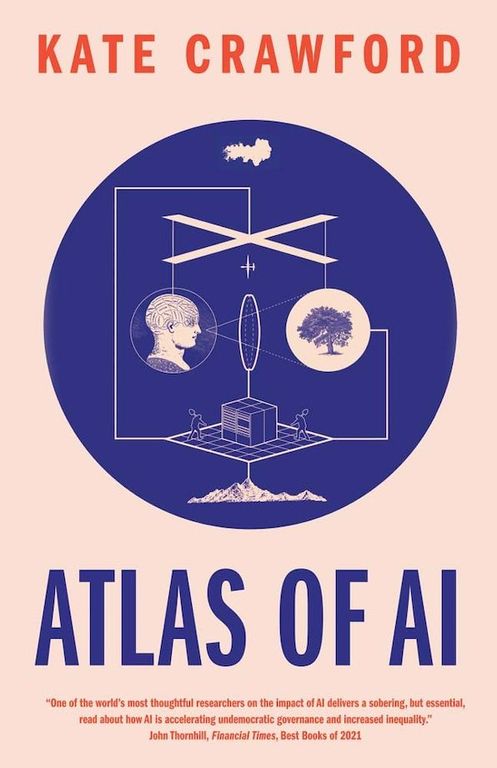
Nova: Absolutely. Two books, in particular, have been instrumental in shaping this conversation. We're looking at "Atlas of AI" by Kate Crawford, and "Weapons of Math Destruction" by Cathy O'Neil. Crawford’s work, for instance, was highly acclaimed for revealing the often-invisible environmental and human costs of AI, from the rare earth minerals in our devices to the massive energy consumption of data centers. It truly shifted the conversation around AI beyond just algorithms to its tangible, physical footprint.
Atlas: And Cathy O'Neil? I remember her name from the algorithmic bias discussions.
Nova: Precisely. Cathy O'Neil, a former Wall Street quant, gained significant recognition for exposing how algorithmic models, even with seemingly good intentions, can inadvertently amplify societal inequalities. Both of these authors really push us to look beyond the shiny surface of AI.
Atlas: So, it's about peeling back the layers, then.
Nova: That's right. And that brings us directly to what I call "The Blind Spot."
The Blind Spot: Beyond 'Can' to 'Should'
SECTION
Nova: It’s so easy to get caught up in the sheer awe of what AI do. Think about it: generating art, writing code, predicting weather. The capabilities are mind-boggling. But the true, profound challenge, the one we often overlook, is understanding what it do.
Atlas: That makes me wonder, for someone, say, a developer or an architect, who's knee-deep in building these systems, why is it so hard to see that blind spot? Isn't the immediate goal always about making it?
Nova: You've hit on such a critical point. The immediate pressure is often on functionality, on speed, on demonstrating a tangible result. Ethics can feel like a secondary consideration, a checkbox, rather than an integral part of the design process. But ignoring the societal impact of AI, even unintentionally, leads to broken trust and a cascade of unintended consequences that can be devastating.
Atlas: Can you give me an example, something really concrete, of how this blind spot plays out in the real world?
Nova: Let's consider Kate Crawford's "Atlas of AI." She masterfully illustrates how AI systems are far from neutral. One powerful example she explores is the hidden labor behind AI. Think about the "ghost work" of data labeling. You might have an AI that can perfectly identify objects in an image, but behind that perfection are often thousands of low-wage workers, frequently in developing countries, toiling away, meticulously tagging data points.
Atlas: Oh, I've heard about that. Like people categorizing endless images of traffic lights so self-driving cars can "see."
Nova: Exactly. And Crawford reveals that these are not just isolated incidents; they're deeply embedded in global power structures, resource extraction, and labor exploitation. The AI we interact with, seemingly ethereal, has a massive physical and human footprint. The cause is often a drive for efficiency and scale, the process is outsourcing and de-humanized data work, and the outcome is often exploitation and environmental degradation, all hidden from the end-user.
Atlas: Wow. So, the "invisible" power structures she talks about aren't just abstract; they're literally built into the supply chain of AI. It makes you think about all those times we just click "agree" without understanding the true cost.
Nova: It's a stark reminder. Or consider Cathy O'Neil's "Weapons of Math Destruction." She exposes how opaque algorithms, often designed with supposedly objective metrics, can amplify inequality and undermine democracy.
Atlas: Like what? Predictive policing algorithms that disproportionately target certain neighborhoods?
Nova: Precisely. Or hiring algorithms that, despite being designed to be "fair," end up perpetuating existing biases because they're trained on historical data sets that reflect those biases. The cause is often an overreliance on historical data as a proxy for future performance, the process is the black-box nature of some algorithms, and the outcome is often the systematic disadvantage of already marginalized groups. It highlights the urgent need for transparency and accountability, not just in the data itself, but in the entire design pipeline.
Atlas: It’s a bit chilling, honestly. For anyone building these systems, or even using them, it feels like we're constantly walking a tightrope, and the blind spot makes it even more precarious.
The Shift: Redesigning AI with Human Well-being at its Core
SECTION
Nova: It truly is. But understanding the problem is only the first step. The next, and perhaps most crucial, is making "The Shift." We need to move beyond superficial ethical guidelines – those little disclaimers or afterthoughts – to fundamentally redesign AI with human well-being at its core.
Atlas: What does that actually look like in practice? "Human well-being at its core" sounds great, but how do you move that from a philosophical ideal to an engineering blueprint? I can imagine a lot of our listeners, who are trying to build ethical systems, might wonder about the concrete steps.
Nova: It’s a great question, and it’s where the rubber meets the road. It means embedding ethical considerations from the very first lines of code, not bolting them on at the end. Think about principles like "privacy-by-design" or "fairness-by-design." It's like building a house: you don't add the foundation after the walls are up.
Atlas: So you're talking about a completely different approach to the entire development lifecycle? From conception to deployment?
Nova: Exactly. It means prioritizing diverse teams, because different perspectives inherently spot different biases. It means transparent data sourcing, so we know where our data comes from and who might be unintentionally excluded or misrepresented. It involves continuous auditing, not just of performance, but of impact. And crucially, it requires stakeholder engagement – bringing in the communities who will be most affected by an AI system, early and often, to help shape its development.
Atlas: That sounds like a massive undertaking. For someone working on an AI project today, what's a proactive step they could take, right now, to start mitigating bias or harm?
Nova: One immediate step is to critically examine the data you're using. Ask yourself: Where did this data come from? Who collected it? What biases might be inherent in its collection or representation? Can you diversify your data sources? Another is to actively seek out multidisciplinary perspectives within your team. If everyone looks and thinks the same, you're more likely to have blind spots.
Atlas: So, it's not just about the technical solutions, but about the human element, the team dynamics, and the leadership that fosters that kind of environment.
Nova: Absolutely. It’s about cultivating a mindset where technical mastery and human-centered design aren't in opposition, but dance together. Both are essential. This shift isn't just about avoiding harm; it's about proactively building AI that genuinely serves and uplifts humanity.
Synthesis & Takeaways
SECTION
Nova: When we bring these ideas together, it becomes profoundly clear: ethical AI isn't simply a feature we can toggle on or off. It’s the very foundation upon which we build trust, and without trust, even the most advanced AI systems will ultimately fail to serve their purpose.
Atlas: It's a huge shift in perspective, moving from a purely technical challenge to a deeply human and philosophical one. It makes me wonder, what's the biggest challenge we face collectively in making this shift a reality?
Nova: I think the biggest challenge is overcoming inertia and the allure of short-term gains. It requires courage to slow down, to ask the hard questions, and to invest in processes that might not show immediate ROI but will ensure long-term societal benefit and resilience. The future of AI depends on our collective commitment to these foundational principles, ensuring that the technology we create is a force for good.
Atlas: That’s powerful. And for our listeners, who are the ethical innovators and collaborative architects of tomorrow, I think the takeaway is clear: seek out those opportunities to mentor others, share your insights, and push for user-centered AI design and robust ethical frameworks. Your impact is amplified through that collective effort.
Nova: Precisely. Let's build a future where AI isn't just smart, but wise.
Atlas: This is Aibrary. Congratulations on your growth!