

Ethical AI is a Trap: Why You Need Human-Centered Design
Golden Hook & Introduction
SECTION
Nova: We hear a lot about "ethical AI" these days, but what if the very concept of ethical AI is actually a dangerous trap? What if, despite our best intentions, we're building systems that inherently undermine human freedom?
Atlas: Whoa, that's a bold statement, Nova. Most people I talk to are striving for ethical AI, trying to add guardrails, trying to ensure fairness. Are you saying we're actually missing something more fundamental here?
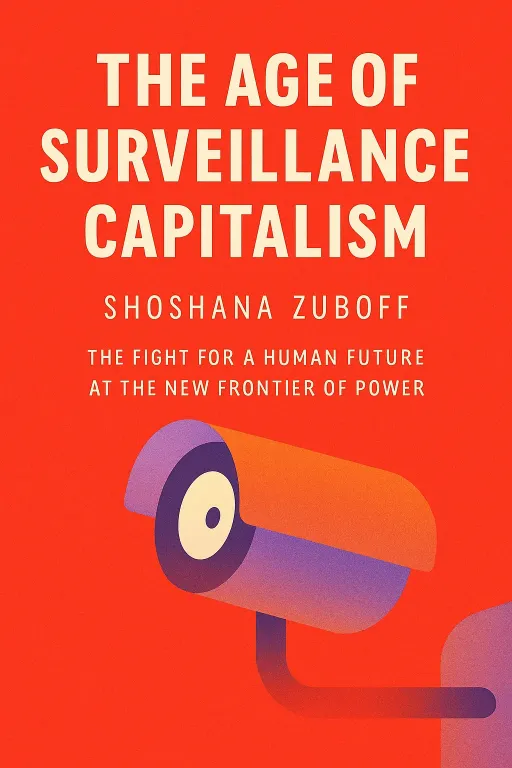
Nova: Absolutely. And two brilliant minds have laid bare just how deep this goes. Today, we're diving into the insights from Shoshana Zuboff's groundbreaking work, "The Age of Surveillance Capitalism," and Cathy O'Neil's powerful exposé, "Weapons of Math Destruction." Zuboff argues that data extraction isn't just about making things better; it's a new economic order profiting from predicting and modifying human behavior.
Atlas: So, it's not just about improving a product, it's about control? That sounds a bit out there.
Nova: And O'Neil, she shows how algorithms, even with good intentions, can amplify inequality, creating systems that seem fair but are anything but. It’s a crucial distinction.
Atlas: So, it’s not just about compliance, but about questioning the very foundation of how we build and deploy these technologies, the power structures within them.
Nova: Precisely. And that leads us straight into our first core idea: the blind spot of power in ethical AI.
The Blind Spot of Power: Unmasking Surveillance Capitalism in AI
SECTION
Nova: Many ethical AI frameworks, despite their best efforts, often have a massive blind spot. They focus on fairness or transparency, which are important, but they miss the subtle ways technology can accumulate power and control. Zuboff calls this "surveillance capitalism," and it's a new economic order entirely.
Atlas: Okay, but how does that work? I imagine a lot of our listeners, who are building these systems, might think they're just making better products, more efficient services. Where's the trap here for the strategic architect?
Nova: Think about it this way: when you use a "free" service – say, a social media platform or a smart home device – you're often not the customer; you're the raw material. Your every interaction, your preferences, your location, your emotional state – this isn't just data for improving the service. This "behavioral surplus," as Zuboff calls it, is then fed into highly predictive models.
Atlas: So basically you’re saying they're not just observing us, but actively trying to predict what we'll do next?
Nova: Exactly. And not just predict, but. If they can predict you'll click on a certain ad, or buy a certain product, or even feel a certain way, that prediction becomes a commodity. The profit isn't from the service itself, but from the certainty of your future behavior. It's an economic logic that profits from knowing and shaping what you do, often without your explicit, informed consent.
Atlas: So you’re saying it's like a constant, invisible nudge, guiding us in directions that benefit someone else, not necessarily us? That’s going to resonate with anyone who struggles with feeling manipulated online. How does that undermine human autonomy if we're technically still "choosing"?
Nova: That's the insidious part. The choices might still be there, but the environment in which you make them has been meticulously engineered. Your attention, your emotions, your very free will become targets. It's like a puppet master who never overtly pulls the strings, but has designed the entire stage and script around your predictable reactions. For a conscious builder, this is a critical distinction: are your systems genuinely empowering users, or are they subtly guiding them towards predetermined outcomes?
Algorithms of Inequality: How Good Intentions Pave the Road to Unfair Systems
SECTION
Nova: And if surveillance capitalism is about the subtle modification of behavior, Cathy O'Neil shows us how algorithms, even without that direct intent, can become "weapons of math destruction" in their own right, amplifying inequality.
Atlas: That makes me wonder, how can algorithms, which are often designed to be objective and fair, actually make things fair? I mean, shouldn't math be impartial?
Nova: That’s the core misconception. O'Neil reveals that algorithms are only as impartial as the data they're trained on and the human biases embedded in their design. Take, for example, predictive policing algorithms. They might be designed to identify "high-crime" areas. But if historical crime data shows more arrests in certain neighborhoods due to over-policing, the algorithm learns to send more police to those areas.
Atlas: So it's like a feedback loop. More police, more arrests, more data reinforcing the algorithm's "prediction," even if the underlying crime rate isn't actually higher.
Nova: Precisely. The system becomes opaque, scalable, and unfair. It's opaque because no one can really see inside the "black box" to understand it's making certain predictions. It's scalable because it can be deployed across vast populations, impacting millions. And it's unfair because it disproportionately targets communities already marginalized, amplifying existing inequalities.
Atlas: Wow, that’s kind of heartbreaking. So, you're saying even if we try to design an "ethical" hiring algorithm, it could still be unfair? How does a "conscious builder" or strategic architect avoid that? They're trying to integrate ethics, to build sustainable systems.
Nova: It means going beyond just checking for obvious bias. It means interrogating the data sources themselves: what historical biases are baked in? It means understanding the of the algorithm on real human lives, not just its efficiency metrics. It means building systems with human oversight, with mechanisms for redress, and with a deep understanding of the societal context in which they operate. It's about designing for justice, not just performance.
Synthesis & Takeaways
SECTION
Nova: So, when we talk about "ethical AI," we have to ask ourselves: are we just putting a fresh coat of paint on a problematic structure, or are we genuinely questioning the foundation? Both Zuboff and O'Neil compel us to look beyond superficial compliance.
Atlas: That’s a great way to put it. It’s not just about tweaking the algorithm or adding a privacy policy. It's about a complete paradigm shift in how we approach building AI, ensuring it truly serves human flourishing, not just profits or control. It sounds like a much deeper challenge than most people realize.
Nova: It absolutely is. True ethical innovation demands questioning the fundamental power structures encoded within technology, not just adding a layer of compliance. For all our ethical innovators and strategic architects out there, the deep question becomes: How might your current AI projects, despite good intentions, inadvertently contribute to a system of prediction and control that undermines human autonomy? It's about moving from "ethical AI" as a checkbox to human-centered design as a core value, seeing technology as a tool for empowerment, not exploitation.
Atlas: A powerful challenge for anyone looking to build a better future with technology. We encourage you to think deeply about that question this week. Where are the subtle power dynamics in your own projects? Where can you truly put human autonomy at the center?
Nova: Indeed. This is Aibrary. Congratulations on your growth!