

AI Ethics is a Trap: Why You Need 'Human-Centered' AI.
Golden Hook & Introduction
SECTION
Nova: Everyone's talking about 'AI ethics' like it's the holy grail, the ultimate solution. But what if that very focus is a sophisticated distraction? What if it's a blind spot that keeps us from seeing the real game being played with our data and our autonomy?
Atlas: Hold on, Nova. Are you saying the very conversation we be having is actually leading us astray? That sounds a bit out there, but I'm intrigued.
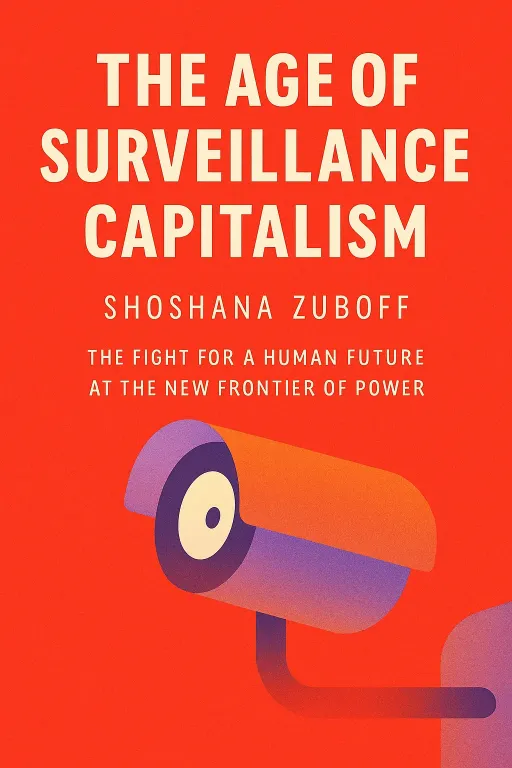
Nova: Precisely! Today, we're tearing down that conventional wisdom, drawing insights from two monumental works: Shoshana Zuboff’s "The Age of Surveillance Capitalism" and Cathy O’Neil’s "Weapons of Math Destruction." What's fascinating about Zuboff’s work is how she, a distinguished Harvard professor, meticulously chronicled this new economic order not as a tech critic, but as a deep observer of societal transformation, essentially predicting the digital future we now inhabit.
Atlas: Okay, so we're talking about a deeper critique, not just tweaking algorithms. For those of us navigating AI in marketing, the idea of a 'blind spot' in ethics is pretty critical. Where do we even begin to unpack that?
Nova: We begin with the 'blind spot' itself. The idea that focusing solely on 'AI Ethics' can actually make us miss the deeper systemic issues of power and data control.
Unmasking the 'AI Ethics' Blind Spot: Beyond Algorithms to Power Structures
SECTION
Nova: When we talk about ‘AI ethics,’ we often think about fairness, bias, transparency for individual algorithms. Which is good, important even. But Shoshana Zuboff, in "The Age of Surveillance Capitalism," argues that this view is far too narrow. She reveals a new economic order, not just a technological one, that profits from predicting and then human behavior. It’s not just about selling your data; it’s about shaping your choices, your actions, your very autonomy.
Atlas: That gives me chills. So you’re saying it’s not just about knowing what I want, they’re actively nudging me to what want? How does this play out for someone trying to innovate ethically in a data-driven industry, like marketing?
Nova: Think about it this way: the rise of "surveillance capitalism" began subtly. Take the early days of Google Street View. The stated goal was to map the world, which sounded benign, even helpful. But during its creation, Google cars weren't just taking photos; they were also quietly collecting data from unencrypted Wi-Fi networks in people's homes.
Atlas: Oh man, I remember that controversy. It felt like a massive privacy breach at the time.
Nova: Exactly. But Zuboff argues it was more than just a breach. It was a pivotal moment in establishing a new norm: that companies felt entitled to collect vast amounts of data, often without explicit consent or even awareness, because it was deemed valuable for "innovation" or improving "user experience." The cause was an insatiable appetite for data, the process was systemic, almost accidental collection, and the outcome was a profound shift in what was considered fair game. It moved beyond a simple "privacy breach" to establishing a new business model centered on data extraction as a core asset.
Atlas: So, basic ethical guidelines around data usage felt a bit like putting a band-aid on a gushing wound. It fundamentally changed the relationship between people and technology, from a service to a source of behavioral data. It’s like, instead of just offering a map, they suddenly owned the entire landscape of our digital lives.
Nova: Precisely. The problem wasn't just they collected the data, but the systemic shift it represented: the transformation of human experience into free raw material for prediction and modification. Ethics discussions often focus on the algorithms themselves, but Zuboff makes us look at the entire economic apparatus that fuels those algorithms, revealing the deeper systemic issues of power and data control. That’s the blind spot.
From Ethical AI to Human-Centered Design: Building Systems for Autonomy and Accountability
SECTION
Nova: And that naturally leads us to the second crucial idea we need to discuss, one that offers a powerful path forward: moving from a narrow 'ethical AI' stance to a genuinely 'human-centered AI' approach. This is where Cathy O’Neil’s "Weapons of Math Destruction" becomes incredibly illuminating.
Atlas: Okay, so if 'AI ethics' is too narrow, then 'human-centered' sounds like the antidote. But what does that mean for someone building these systems? Is it just 'don't be evil' again, or is there a concrete framework?
Nova: It’s far more concrete. O'Neil exposes how opaque algorithms, even those designed with good intentions, can perpetuate and even amplify inequality. She shows how these "weapons of math destruction" create feedback loops that punish the poor, the vulnerable, and the marginalized. Human-centered AI, then, is about embedding transparency, accountability, and fairness not as afterthoughts, but as core design principles. It’s about ensuring technology serves humanity, not the other way around.
Atlas: Can you give an example? Like how an algorithm, meant to be neutral, could become a 'weapon' in practice?
Nova: Absolutely. Think about hiring algorithms. Companies, in an effort to be more efficient and objective, might use AI to screen resumes or even conduct initial interviews. The cause is often a desire for efficiency and to reduce human bias. However, if that algorithm is trained on historical data, and that historical data reflects past biases—say, a company traditionally hired more men than women for leadership roles, or disproportionately favored candidates from certain universities—the algorithm will learn and replicate those biases.
Atlas: Wow. So the system, instead of being objective, just codifies and scales existing human prejudices. That's actually really insidious because it's hidden behind the veneer of 'objective' data.
Nova: Exactly. The process is automated decision-making that appears neutral but produces biased outputs, leading to a lack of diversity or perpetuating existing inequalities. The outcome is perpetuated inequality, and individuals have little recourse because the system is a black box. A human-centered approach would demand transparency in how these algorithms are trained, regular audits for bias, and a human in the loop to override potentially unfair decisions. It’s about asking: how do we design this system so it explicitly protects and empowers users, rather than just optimizing for a narrow, potentially biased outcome?
Atlas: That’s a perfect example of how a system meant to be efficient can become a 'weapon.' So, it’s not just about ethical intentions, it’s about ethical from the ground up, making sure we build in protections for human dignity and choice. For a strategic innovator, this means going beyond compliance and actively building trust.
Synthesis & Takeaways
SECTION
Nova: Ultimately, what Zuboff and O'Neil show us is that the conversation needs to evolve. It's not enough to just put guardrails on 'bad' AI; we need to actively design 'good' AI that champions human autonomy, privacy, and fairness. It’s a shift from a reactive ethical cleanup to a proactive, human-first design philosophy.
Atlas: Exactly. It really shifts the focus from 'what we do ethically?' to 'what we build to genuinely serve humanity?' For anyone in marketing, especially, this means rethinking data strategies not just for compliance, but for true user empowerment, trust, and long-term value creation.
Nova: It's about moving from a defensive posture to an offensive one, where technology is a tool for liberation, not manipulation. We’re talking about moving beyond the superficial layer of 'AI ethics' to the fundamental architecture of human-centered systems. So, the deep question for our listeners today, especially those driving innovation in marketing, is this: How can your approach to AI move beyond basic ethics to genuinely empower and protect your users' data and autonomy, making them partners, not just predictions?
Atlas: That’s a powerful challenge. One that requires a strategic and ethical leader to tackle head-on. This is Aibrary. Congratulations on your growth!