

Navigating Ethical AI in Modern Marketing
Golden Hook & Introduction
SECTION
Nova: We often hear that algorithms are neutral, purely logical, just math. They’re supposed to be objective, right? But what if I told you that some of the most powerful algorithms shaping our world, especially in marketing, are actually creating weapons of math destruction, actively perpetuating inequality?
Atlas: Whoa, Nova, "weapons of math destruction"? That's a pretty strong image. I mean, we’re constantly told data is king, and AI is the future. Are you saying our digital overlords are actually biased?
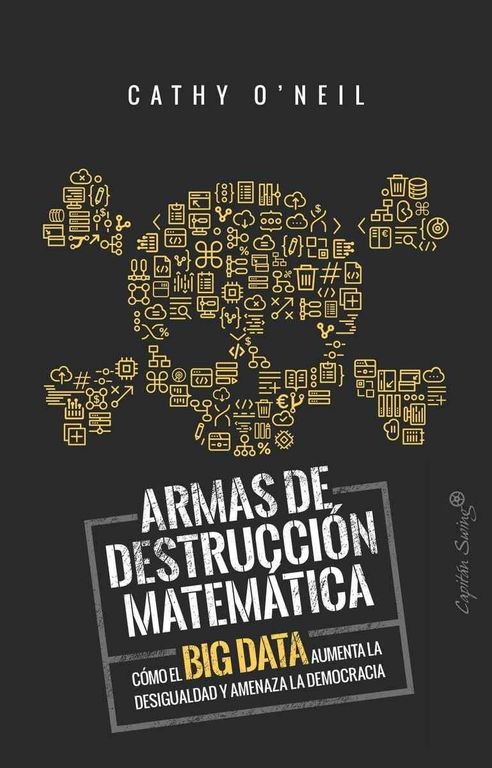
Nova: Absolutely. And that's exactly the provocative, vital argument at the heart of Cathy O'Neil's seminal work, "Weapons of Math Destruction: How Big Data Increases Inequality and Threatens Democracy." O'Neil is fascinating because she’s not some Luddite; she's a former Wall Street quantitative analyst, a data scientist who saw firsthand how unchecked algorithms could go awry, and she became one of their most articulate critics.
Atlas: So she knows the math, and she's saying the math is… weaponized. That’s a powerful perspective. And we’re pairing her insights with Kai-Fu Lee’s global view today, aren't we?
Nova: Precisely. We'll also be drawing on Kai-Fu Lee's "AI Superpowers: China, Silicon Valley, and the New World Order," which gives us a panoramic view of the global AI landscape. Lee, with his background as a venture capitalist and former head of Google China, highlights the urgency of integrating human values into AI development. Together, these two books frame our discussion perfectly, moving from identifying the problem to envisioning the solution.
Atlas: So, we're not just pointing out the dark side, but looking for the light switch. Let’s dive into that darkness first, shall we? How do these algorithms, especially in marketing, become so biased?
The Hidden Biases in Algorithms
SECTION
Nova: Excellent question, Atlas. It starts with the data. Algorithms are only as good, or as unbiased, as the data they're trained on. If historical data reflects societal biases—say, a particular demographic has historically been denied loans or received less favorable marketing offers—then an algorithm trained on that data will simply learn and perpetuate those biases, often amplifying them at scale.
Atlas: So it's not the algorithm itself being inherently evil, but rather reflecting the biases already baked into our society and our data. It’s like feeding a child a steady diet of junk food and then wondering why they’re not healthy.
Nova: Exactly! O'Neil calls these "Weapons of Math Destruction" because they're often opaque, unregulated, and widespread. Take marketing, for instance. Algorithms are used to decide who sees which ads, who gets offered special discounts, or even who gets targeted for certain products. If the training data shows, for example, that certain zip codes or demographics historically respond less to high-value offers, the algorithm might automatically deprioritize them, even if individuals within those groups are perfectly qualified.
Atlas: That sounds incredibly insidious. It's not just about missing out on a deal, it's about being systematically excluded from opportunities. Can you give us a really vivid example of how this plays out in the real world, maybe one that feels particularly unfair?
Nova: Absolutely. O'Neil discusses how algorithms are used in areas like credit scoring, employment, and even criminal justice. Imagine an algorithm designed to predict job applicant success. If historically a certain profession has been dominated by one gender, and the training data reflects that, the algorithm might unintentionally penalize applications from other genders, even if their qualifications are identical. It learns to associate success with the historical demographic, not just the actual skills.
Atlas: Wow. So, someone applying for a job, or a loan, could be at a disadvantage not because of their own merit, but because a computer program has learned historical discrimination? That’s not just unfair; it’s a terrifying thought for anyone trying to get ahead. For our listeners who are trying to build ethical and sustainable solutions, how do you even begin to spot these hidden biases when the algorithms are often black boxes?
Nova: That’s the core challenge, isn't it? These algorithms are complex, and their decision-making processes can be incredibly opaque. Companies often don't even fully understand an algorithm made a certain decision. This opacity, combined with the scale at which these systems operate, means that a small bias in the data can lead to widespread, systemic discrimination, often without anyone consciously intending it. The profit motive often blinds companies to these ethical considerations, pushing for efficiency and personalization above all else.
Atlas: So the drive for efficiency, for personalization, can inadvertently create a system where trust erodes, because people feel unfairly targeted or excluded. It sounds like a ticking time bomb for brand loyalty and customer relationships.
Integrating Human Values into AI Development
SECTION
Nova: It absolutely is. And that naturally leads us to the second key idea: how do we shift from algorithms as potential weapons to algorithms as tools for good? This is where Kai-Fu Lee’s insights become incredibly valuable. He argues that as AI becomes more powerful and pervasive, humanity consciously define its role alongside intelligent machines and, crucially, integrate ethical considerations and human values into AI development from the very beginning.
Atlas: That sounds like a monumental task. I mean, it's one thing to say 'integrate human values,' but practically, how do you even begin to do that in the rapid-fire world of AI development? Especially when you have global competition, as Lee describes, pushing for speed and dominance? It feels like trying to knit a sweater while running a marathon.
Nova: It's definitely challenging, but Lee emphasizes that it's urgent and necessary. He sees AI as a powerful force that can either uplift humanity or exacerbate existing inequalities. His perspective isn't about slowing down AI, but about guiding its development with purpose. This means moving beyond just technical considerations to actively embedding principles like fairness, transparency, accountability, and privacy into the design of AI systems.
Atlas: Okay, but for our listeners who are trying to innovate in marketing, what does "integrating human values" actually look like on the ground? Can you give an example of a marketing AI that is designed with these ethical considerations baked in, rather than bolted on as an afterthought?
Nova: Certainly. Think about recommendation engines. A purely profit-driven algorithm might push the highest-margin product, regardless of user fit, or create extreme filter bubbles that isolate users. An ethically designed recommendation engine, however, might prioritize user well-being, promoting diverse content, offering transparent explanations for its suggestions, or even allowing users to explicitly control the types of recommendations they receive.
Atlas: So instead of just optimizing for clicks, it’s optimizing for a better user experience, for trust, for diversity of thought. That's a significant shift! It suggests that ethical AI isn't just a compliance burden; it's a strategic advantage. It builds a deeper relationship with the customer.
Nova: Exactly. Ethical AI becomes a differentiator. When customers feel that a brand's AI respects their privacy, offers fair treatment, and provides transparent interactions, it fosters trust and loyalty. This isn't just about avoiding the "dark side" but actively building a "bright side" where AI enhances human flourishing. Lee's work really underscores that the global race for AI leadership won't just be won by technical superiority, but by who can build the most and AI.
Synthesis & Takeaways
SECTION
Nova: So, bringing O'Neil and Lee together, we see a clear path. Understanding the potential for algorithmic bias, as O'Neil so starkly reveals, is the vital first step. It illuminates the risks. The second step, guided by Lee, is the proactive integration of human values into AI development itself. It’s about intentional design.
Atlas: That makes so much sense. One shows us the fire, the other shows us how to build fire-resistant structures. For our listeners, especially those leading marketing teams and striving to be ethical innovators, how can an organization proactively implement ethical guidelines and transparency measures to prevent algorithmic bias in their marketing AI, fostering trust while still driving innovation?
Nova: It starts with a multi-pronged approach. First, prioritize and regularly audit them for bias. Second, implement principles so you can understand an algorithm made a certain decision. Third, involve in the AI development process—different perspectives help catch blind spots. And finally, foster a within your organization, making it a continuous conversation, not a one-time checkbox.
Atlas: It really comes down to intentional design and continuous vigilance, doesn't it? It’s not just about the tech, but the people building it, and the values they embed. That gives me a lot of hope that we can actually build a future where AI serves humanity, rather than just exploiting it.
Nova: Absolutely. Ethical AI is a choice, not an accident. And it's a choice that will ultimately define the success and trustworthiness of brands in the AI-driven future.
Atlas: Powerful stuff, Nova. Thank you for illuminating such a critical topic.
Nova: My pleasure, Atlas.
Nova: This is Aibrary. Congratulations on your growth!