The Creative Catalyst: How Art Shapes Individual and Collective Identity
Golden Hook & Introduction
SECTION
Nova: What if I told you the most powerful, influential force shaping your beliefs, your values, and even your deepest connections isn't politics, or economics, or even your family? What if it's something you often dismiss as mere decoration?
Atlas: Wait, something we dismiss as decoration? Are we talking about... art? Like, the paintings on the wall or the statues in the park?
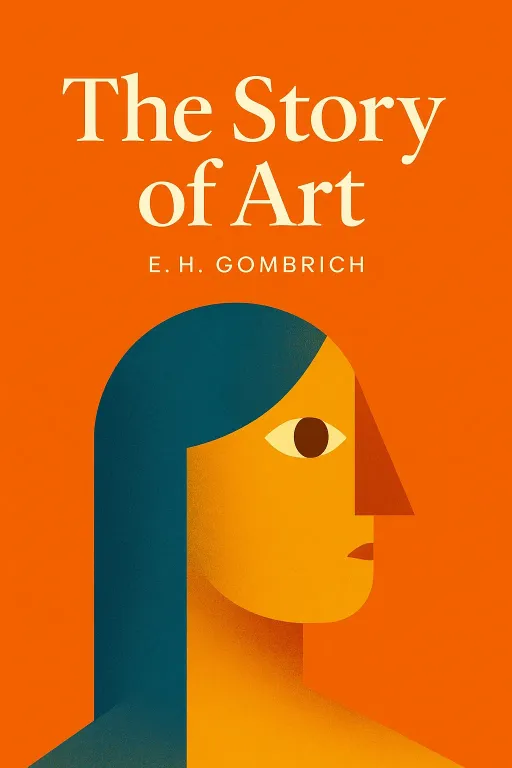
Nova: Exactly, Atlas. We're diving into the profound, often overlooked power of art. It’s what our source material, "The Creative Catalyst," argues is a truly fundamental force. It challenges our norms, shapes our perceptions, and connects us across time in ways we rarely acknowledge. It's why seemingly academic books, like E. H. Gombrich's "The Story of Art" and John Berger's "Ways of Seeing," became such unexpected cultural touchstones, sparking widespread re-evaluation of art's role even among non-experts.
Atlas: Huh. I guess I've always thought of art as a nice-to-have, a luxury, something that adds beauty. But a shaping my beliefs? That feels like a blind spot I didn't even know I had. I'm ready to have my perception shifted.
Art as a Dynamic Force: Beyond Decoration
SECTION
Nova: And that shift is precisely what "The Creative Catalyst" is all about. It starts by saying we've got this blind spot – we see art as separate from the 'real' world. But it's not. Art is an active agent. It’s a dynamic force, not a static object. To really grasp this, let's step back, way back, to one of the earliest forms of art we know: the cave paintings of Lascaux.
Atlas: Oh, the ones with the bulls and horses? I’ve seen pictures. They're ancient, right?
Nova: Incredibly ancient. We're talking 17,000 years old. Imagine being one of those early humans, deep inside a dark, echoing cave. The air is thick, your torch flickers, casting dancing shadows. And then, you see them – hundreds of vivid paintings and engravings of animals, life-sized, moving across the rock walls. These weren't just doodles. These were monumental works, often in chambers deep within the earth, hard to access.
Atlas: So they weren't just hanging out in the living room, so to speak. There was effort involved.
Nova: Massive effort. The cause for creating these was profound: early humans needed to understand their world, pass on vital knowledge, and connect with the spiritual. The process was a communal, ritualistic act, using natural pigments, fat lamps for light, and incredible skill. They were creating, in a sense, a shared reality. These weren't just representations of animals; they were powerful rituals, teaching tools, and ways to connect with their spiritual beliefs about the hunt and the natural world.
Atlas: So, it's like they were creating a visual story to explain their existence, to bind them together?
Nova: Exactly. The outcome was that these paintings shaped the collective identity of the community. They influenced their belief systems, their hunting practices, their social cohesion. They meaning and community, rather than just reflecting it. These images were active participants in their survival and their spiritual lives.
Atlas: Okay, I can see how, for an ancient society, something like that could be incredibly impactful, almost magical. But isn’t that just a primitive form of communication, or a way to record history? How does that connect to a painting in a museum today, or even a piece of street art? That sounds like anthropology, not art's influence on right now.
The Evolving Conversation: Art, Culture, and Perception
SECTION
Nova: That’s a brilliant pushback, Atlas, and it's exactly the point. The changes, but the of shaping our world persists, evolving through a continuous conversation. This brings us to how art history itself is this dynamic dialogue, and how our cultural lens literally changes what we 'see.' This is where thinkers like E. H. Gombrich and John Berger come in, and their insights fundamentally shift our understanding.
Atlas: Gombrich and Berger. Sounds like a law firm.
Nova: A very insightful one! Gombrich, in his seminal work "The Story of Art," wasn't just cataloging art through the ages. He was showing how art history is a continuous, evolving conversation. Artists don't create in a vacuum. They react to, build upon, or rebel against what came before them. Think of it like a massive, ongoing debate where each new artwork is a statement, a question, or a response to previous statements. It's a visual language that's constantly being updated and refined.
Atlas: So, an artist today isn't just painting a canvas; they're in dialogue with Michelangelo, with Van Gogh, with whoever came before?
Nova: Precisely. They're either extending the conversation, offering a new perspective, or completely tearing up the previous script. It means that the art we see today carries echoes of all that came before it. But then, John Berger, with his groundbreaking book "Ways of Seeing," took Gombrich's idea and added another layer, a crucial one for our modern world.
Atlas: What did Berger add to the conversation?
Nova: Berger argued that we see art, and indeed any image, is profoundly shaped by our cultural context. It’s not just about what the artist intended; it's about the entire cultural baggage we bring to the viewing experience. He famously said that "the way we see things is affected by what we know or what we believe." He highlighted how images, especially in modern advertising, don't just show us things; they tell us to feel about them, to desire, shaping our perceptions and desires often without us even realizing it.
Atlas: So, it's not just about what the artist intended, but what society us to see? And advertising is essentially using art to manipulate our desires? That's... a lot. Can you give me an example of how that cultural filter really works?
Nova: Absolutely. Think about a classic Renaissance painting of a wealthy merchant's family. To us, it's a beautiful historical artifact. But in its time, it wasn't just art; it was a display of wealth, power, and social status. The way people would have 'read' that painting would have been entirely different, infused with their understanding of social hierarchies, religious beliefs, and economic realities. Today, we might admire the technique, but we've lost that immediate, visceral understanding of its original cultural message.
Atlas: That makes sense. It’s like when I look at a really old photograph, I see a moment in time, but I don't feel the social weight or the unwritten rules that were present when it was taken.
Nova: Exactly! And Berger extends this to how advertising works. Consider a glossy magazine ad for a luxury car. It's not just showing you a car; it's showing you a lifestyle, a feeling of freedom, success, even sexual allure. The car itself becomes a symbol, and through carefully constructed images, it creates a desire within us that goes far beyond mere transportation. It leverages centuries of visual language and cultural cues to make us something specific.
Atlas: Wow. So, it's like culture gives us a specific pair of glasses, and through those glasses, we interpret everything we see, from a masterpiece in a gallery to a billboard on the highway. And those glasses are constantly being updated by new art, new media, new contexts.
Nova: You've got it, Atlas. That's the fundamental shift. Art isn't static. Our perception isn't neutral. Both are dynamic, constantly influencing and being influenced by the grand, evolving conversation that is human culture.
Synthesis & Takeaways
SECTION
Nova: So, bringing it all together, we've gone from art as a foundational, community-shaping force in ancient caves to a continuous historical dialogue, and finally, to a powerful cultural lens that actively shapes our desires and perceptions in the modern world. It's not passive decoration; it's a profound, dynamic force that shapes who we are and how we connect.
Atlas: That's actually really inspiring. If art has this much power, this much influence on our individual and collective identity, how can we use that knowledge to deepen our human connections and understand cultural evolution better? For someone who values harmony and understanding, like me, this feels incredibly important.
Nova: That's the core question, isn't it? Recognizing art's transformative power means we can become more conscious consumers of culture, more discerning of the messages around us, and more empathetic to perspectives different from our own. By understanding the 'visual language' of different eras and cultures, we unlock deeper insights into human connection and cultural evolution. It empowers us to see past the surface and truly engage with the intricate tapestry of human experience that art reveals.
Atlas: So, the next time I see a piece of art, whether it's in a museum or just a particularly compelling advertisement, I should ask myself: 'What conversation is this joining? What cultural glasses am I wearing right now? And how is this image trying to shape my world?' That’s a powerful shift in perspective.
Nova: It truly is. And with that, we hope you'll look at the art around you—in all its forms—with fresh eyes and a deeper appreciation for its catalytic power. This is Aibrary. Congratulations on your growth!