The Art of Seeing: How to Cultivate Deeper Appreciation and Insight in Your World.
Golden Hook & Introduction
SECTION
Nova: POV: You scroll through your feed, see a striking image, and think you 'get it.' But what if that image, and your understanding of it, is actually a carefully constructed illusion?
Atlas: Whoa, Nova, that's quite an opening. Are you saying we're all just walking around in a visual haze, missing the real picture?
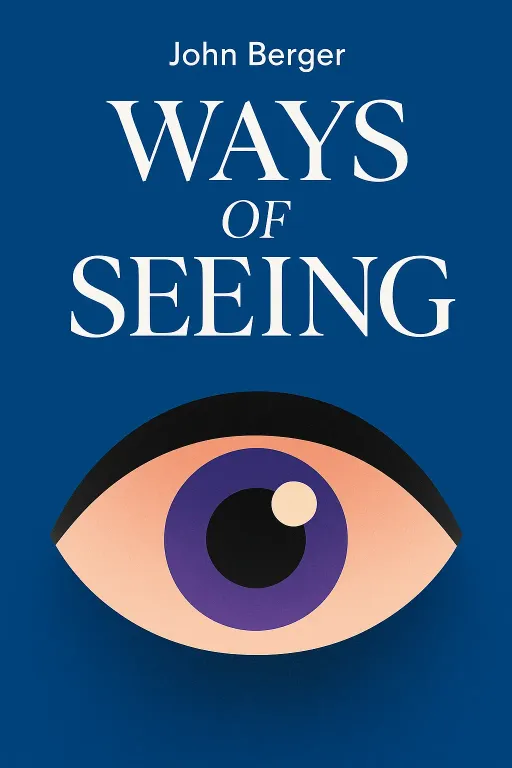
Nova: Exactly, Atlas. We often believe our eyes give us unfiltered truth, but today we're peeling back the layers. We’re diving into how we see, or perhaps more accurately, how we we see, with two immensely influential thinkers: John Berger's "Ways of Seeing" and Susan Sontag's "Regarding the Pain of Others."
Atlas: Oh, I've heard of "Ways of Seeing." Isn't that the book that started as a BBC series?
Nova: That's the one! John Berger's "Ways of Seeing" actually originated as a groundbreaking BBC television series in 1972, before becoming a highly influential book. It radically democratized art criticism, taking it out of the academic ivory tower and challenging gatekeepers. It really set the stage for how we understand the power dynamics embedded in visual culture.
Atlas: That's fascinating. So, this isn't just about appreciating art, it's about understanding the unseen forces shaping our perception? For anyone who considers themselves a curious learner, that's a pretty compelling challenge. How does this 'blind spot' manifest in our daily lives?
The Blind Spot: Unseen Influences in Our Visual World
SECTION
Nova: Well, let's start with a classic example. Imagine you're in a museum, standing before a beautiful 17th-century portrait. The traditional way we're often taught to "see" it is to admire the artist's skill, the subject's beauty, or perhaps the historical period. But Berger argues that for centuries, the way art was presented and valued was inherently tied to ownership and status.
Atlas: Meaning, we weren't just looking at a painting, we were looking at a symbol of someone's wealth or power?
Nova: Precisely. The value wasn't just aesthetic; it was economic and social. The painting became a commodity, and the way it was displayed or discussed reinforced that. This passive consumption, this acceptance of a dominant narrative, limits our ability to truly engage with the image's deeper meanings or even question its purpose.
Atlas: But isn't it good to appreciate beauty? Are you saying we enjoy art? That sounds a bit… joyless.
Nova: Not at all! It’s about enriching that appreciation, not diminishing it. It's about moving beyond surface-level enjoyment to a profound understanding. Think about a widely circulated news photograph – maybe of a natural disaster or a political protest. The way it's cropped, the angle it's shot from, the caption accompanying it – all these elements guide our interpretation. We see the image, process it, and often accept its message without questioning took it, they framed it that way, or might be at play.
Atlas: So, it's like we're being fed a pre-digested version of reality. I imagine a lot of our listeners have felt this way when scrolling through social media, seeing countless curated images that subtly tell a story, perhaps not always the full truth. It's like we're looking through someone else's glasses, without even realizing we have them on. How do we even begin to take those glasses off?
The Shift: Cultivating Critical Vision and Deeper Appreciation
SECTION
Nova: And that's where thinkers like Berger and Sontag become our guides from the blind spot into a new way of seeing. Berger encourages us to constantly question the "why" behind an image. If we go back to that advertisement we were discussing earlier – a glamorous car commercial, for instance – instead of just absorbing the message of luxury and freedom, Berger would prompt us to ask: Who is this ad for? Who benefits from this narrative? What unspoken desires is it tapping into, and why?
Atlas: So, it's not just about what's the picture, but what's it, what frames it, and what power dynamics are at play. It's about deconstructing the visual rhetoric. That makes perfect sense. How does Sontag expand on this critical lens, especially when we talk about images of suffering?
Nova: Sontag, in "Regarding the Pain of Others," takes this critical engagement a step further, delving into the ethics of viewing suffering. She challenges us to consider our own role when confronted with dramatic photographs from conflict zones or humanitarian crises. Are we truly empathizing, or are we simply consuming spectacle? She makes us reflect on the impact these images have on – do they desensitize us, make us feel helpless, or genuinely spur us to action?
Atlas: That’s a powerful distinction. It forces us to confront our own comfort and privilege when seeing someone else's pain. It’s a call to self-awareness, not just image analysis. So, this isn't just about art history or media studies, it's about being a more conscious, ethical human in a visually saturated world. It’s about empowering us to understand the narratives we're being sold, and choose how we respond, right?
Nova: Absolutely. Both Berger and Sontag fundamentally shift our understanding of visual culture. They empower us to become more discerning, more thoughtful observers of the world. It’s about reclaiming our agency from the passive acceptance of dominant narratives, and instead, actively constructing our own informed understanding. It’s a journey from simply looking to truly seeing.
Synthesis & Takeaways
SECTION
Atlas: This is incredibly empowering. It feels like getting a new superpower – the power of critical vision. It's not just about seeing more, but seeing, seeing.
Nova: Exactly. It's about training our eyes and our minds to ask questions, to look beyond the obvious, and to understand the layers of meaning and influence that shape every image we encounter. It allows us to appreciate art and media not just for their surface beauty or immediate message, but for their complex role in shaping our culture and our consciousness.
Atlas: So, for our curious learners out there, what's a practical first step to apply this? To start seeing differently tomorrow?
Nova: Here’s a challenge: Pick a familiar image or piece of art – maybe a photograph on your social media feed, a painting you love, or even an advertisement you see every day. Take a moment to really look at it. What hidden assumptions or cultural biases might be influencing your initial interpretation of it?
Atlas: I love that. It’s not about finding a single 'right' answer, but about activating that critical muscle.
Nova: It's a continuous practice, a lifelong journey of becoming a more discerning and thoughtful observer. Imagine how much richer your world will become when you start truly engaging with its visual language.
Atlas: That's actually really inspiring. It frames seeing not as a given, but as a skill we can cultivate for deeper insight and richer living.
Nova: This is Aibrary. Congratulations on your growth!