The Art of Observation: Seeing More Than Meets the Eye in Everyday Life
Golden Hook & Introduction
SECTION
Nova: You think you see the world, don't you? What if I told you that most of what you 'see' is actually a carefully constructed illusion, a story you've been told, not a reality you've truly observed?
Atlas: Whoa, that's a bold claim right out of the gate, Nova. Are you saying my morning commute, which I ‘see’ every day, is just a figment of my imagination? Because it feels pretty real when I’m stuck in traffic.
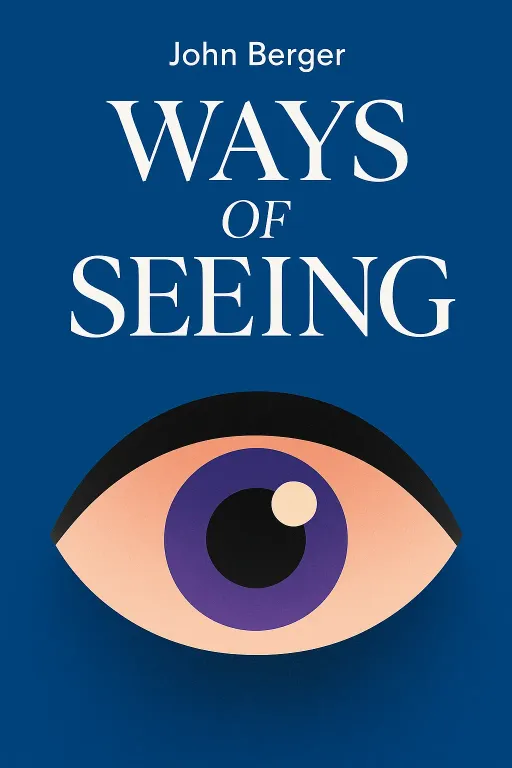
Nova: Not a figment, Atlas, but perhaps a curated experience. Today, we're diving into the fascinating art of observation, and how we can move from passive looking to truly seeing. We're drawing inspiration from two incredible thinkers: John Berger, with his groundbreaking work, "Ways of Seeing," and Alan Fletcher, the legendary graphic designer, and his wonderfully eclectic book, "The Art of Looking Sideways."
Atlas: Oh, I like that pairing. Berger, a Marxist art critic and novelist, sounds pretty serious. And Fletcher, a design icon known for his playful approach. What an unexpected duo to tackle something as fundamental as how we perceive the world. How do these two seemingly different perspectives converge on this idea of seeing more?
Nova: They both fundamentally challenge our assumptions, Atlas. Berger, through a critical lens, forces us to deconstruct we see things the way we do. Fletcher, with a more whimsical approach, shows us to see them differently. It’s about peeling back layers, then finding new ones.
Deconstructing Perception with John Berger
SECTION
Atlas: So, let’s start with Berger. What's his core argument in "Ways of Seeing" that makes you say most of what we see is an "illusion"?
Nova: Berger's central thesis, which he presented first in a BBC series and then in his highly influential book, is that seeing is not a natural or neutral act. It's a political act. He argued that how we perceive images, especially art, is deeply shaped by convention, power structures, and historical context. His work was both widely acclaimed for its revolutionary insights and also quite controversial among traditional art historians for its radical, Marxist-infused critique.
Atlas: Wait, are you saying my appreciation for, say, a classic European landscape painting is actually just me buying into some ancient propaganda? That sounds a bit out there.
Nova: Not propaganda in the crude sense, but certainly a specific way of seeing. Berger famously analyzed historical European oil paintings, arguing they weren't just aesthetic objects. They were often declarations of wealth and status. They showed what the owner – be it a grand estate, valuable possessions, or even a particular social standing – rather than a pure artistic vision. The painting became a representation of property, designed to confirm and glorify the owner's position.
Atlas: I see. So, the painting itself was less about the beauty of the landscape and more about the patron’s power. That makes me wonder how this applies to everyday images today. Because we're absolutely saturated with them – advertisements, social media feeds, news clips. Is that still a political act of seeing?
Nova: Absolutely. Think about advertisements. They don't just show you a product; they show you a lifestyle, a desire, a version of happiness or success that owning that product supposedly brings. They're constructing a narrative, a way of seeing the world where certain things are desirable, and others less so. Berger warned that our modern world, with its rapid, uncritical consumption of images, dulls our perceptive abilities. We scroll past, we glance, but we rarely critically with what we're seeing.
Atlas: That's a great way to put it. I mean, my smartphone. I see it as a tool, a communication device. But Berger would argue it's also a powerful symbol, right? Of connectivity, of status, of instant gratification, and even of the constant data consumption that shapes our attention economy. It influences our desires and behaviors in ways we often don't consciously realize.
Nova: Precisely. It’s a subtle dance. Berger's genius was in pulling back the curtain on that dance. His book wasn't just for art critics; it resonated with a general audience precisely because it offered a new way to understand the pervasive influence of images in their lives. While some found his Marxist lens overly deterministic, the book’s impact on how we think about visual culture is undeniable. He transformed how many people looked at everything from a Renaissance portrait to a billboard.
Playful Observation with Alan Fletcher
SECTION
Atlas: So, if Berger helps us tear down our old, uncritical ways of seeing, how do we build new, more vibrant ones? Because deconstruction is one thing, but then you're left with a blank slate.
Nova: That's where Alan Fletcher, the design icon, comes in with "The Art of Looking Sideways." If Berger was about critical analysis, Fletcher is about playful reconstruction. He encourages curiosity, questioning assumptions, and finding unexpected connections through lateral thinking in the most mundane things.
Atlas: I’m curious. What’s one simple way a listener, say, someone like me who spends their day looking at spreadsheets and trying to find patterns, can start 'looking sideways' at their environment? Give me a concrete exercise.
Nova: Fletcher would tell you to pick a familiar object you encounter daily. Let's say, your coffee mug. Now, spend five minutes observing it as if you've never seen it before. Don't just see "coffee mug." See the subtle imperfections in the glaze, the way the light catches the rim, the texture of the handle, the faint stain inside from a thousand forgotten brews. What story does it tell? What unexpected shapes or patterns do you notice that you usually overlook?
Atlas: That's actually really inspiring. I usually just grab it, fill it, and drink. I’ve probably never truly my coffee mug. But how does this playful approach lead to deeper insights, not just superficial fun? Is it just about noticing more details, or is there something more profound?
Nova: It’s profoundly about retraining your brain. Fletcher, as one of the most influential graphic designers of his time, understood that creativity isn't a mystical gift; it's a habit of perception. By deliberately looking for the unexpected, by asking "what if?" about a paperclip's other uses, you're building neural pathways for lateral thinking. You're teaching your mind to make connections it wouldn't normally make. This cultivates a kind of mental agility that's invaluable, whether you're designing a logo or solving a complex business problem.
Atlas: So basically you’re saying, it’s not just about seeing the object, but seeing the within the object, and within your own mind. It's like finding faces in clouds, but with intention.
Nova: Exactly. Fletcher’s book, with its unique, almost scrapbook-like format, became a cult classic among designers and creative thinkers because it offered a practical toolkit for enhancing observation and sparking ideas. It’s a testament to the idea that serious creativity can emerge from a place of genuine playfulness and curiosity.
Synthesis & Takeaways
SECTION
Nova: So, bringing these two together, Berger teaches us to the illusions and biases that shape our perception, to critically question the frameworks through which we view the world. And Fletcher teaches us to with fresh, curious eyes, to find wonder and new connections in the everyday.
Atlas: It’s not just about looking, it’s about a conscious, intentional relationship with the visual world around us. It’s about reclaiming our perceptive power, not just for art, but for understanding power dynamics, fostering creativity, and enriching our daily lives. That gives me chills, honestly.
Nova: And that's a skill that's never been more important. In a world constantly vying for our attention, the ability to truly observe, to differentiate between what's presented and what's real, and to find inspiration in the mundane, is a superpower.
Atlas: I totally know that feeling of just passively consuming. So, for our listeners, here’s a challenge: Can you spend five minutes observing an object you see daily – like your coffee mug or your computer mouse – as if you've never seen it before, noting every detail you usually overlook? What new stories emerge when you truly it?
Nova: What a fantastic way to put it into practice.
Atlas: This is Aibrary. Congratulations on your growth!