How to See Like an Artist Without Losing Your Unique Vision.
Golden Hook & Introduction
SECTION
Nova: Most of us walk around convinced we know how to "see" art. We visit galleries, scroll through images online, maybe even nod knowingly at a masterpiece. But what if I told you that most of what we think is "seeing" is actually a profound form of blindness?
Atlas: Whoa, blindness? That’s a pretty bold claim, Nova. Are you saying all those hours I spent squinting at abstract expressionism were for nothing? Because I thought I was really getting it!
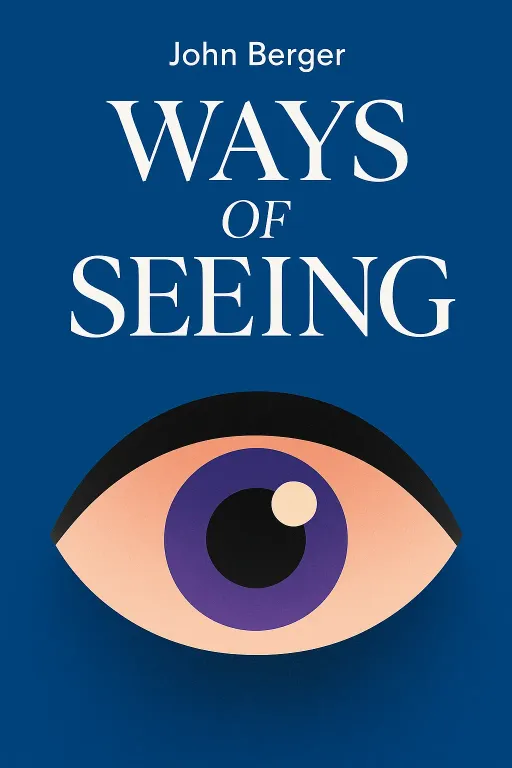
Nova: Not for nothing, Atlas, but perhaps not for. Today, we're diving into a book that fundamentally shifted how an entire generation understood art and, by extension, how we understand our own creative output. We're talking about by the incomparable John Berger.
Atlas: Ah, Berger! He was an art critic who didn't just critique art; he critiqued the entire of art, right? He was known for being quite revolutionary, almost an activist in the art world.
Nova: Exactly! Berger wasn't just an academic; he was a storyteller, a novelist, a painter himself, and a radical thinker who, in the 1970s, blew open the doors of elite art history. He democratized the conversation around art, arguing that seeing wasn't a passive act but a political one. And that's precisely where our "blind spot" comes in.
Atlas: That idea of democratizing understanding, making it accessible – that immediately resonates with anyone trying to build something lasting. So, tell me about this blind spot.
The Blind Spot: Passive Consumption vs. Active Engagement
SECTION
Nova: Well, the blind spot is simply this: We often look at art and culture without truly seeing the layers of meaning behind it. We consume it. We accept the narrative given to us, whether by the museum placard, the textbook, or even just the sheer weight of historical reverence.
Atlas: So, are you saying we’re essentially being told to see, even when we think we’re making our own judgments? Like, we look at a famous portrait, and we're told it's a symbol of beauty or power, and we just… absorb that?
Nova: Precisely. Berger showed how the meaning of a painting, for example, isn't inherent or timeless. It's constructed. It's shaped by its context, by who owns it, by who writes its history, and crucially, by how it's reproduced. When you see a famous painting in a textbook, it loses its original scale, its texture, its unique presence. It becomes an image among many, detached from its original purpose and context.
Atlas: That makes me wonder about the cost of that detachment. For someone trying to cultivate their own vision, this passive approach sounds like it starves their own creative engine. How do we even begin to break free from that? If we're just passively consuming, we're not really engaging our own minds.
Nova: That’s the core of it. This passive consumption limits our own creative output, making us feel like observers rather than active participants in the cultural conversation. Imagine a brilliant chef who only ever eats pre-made meals. They might appreciate good food, but they'll never truly understand the ingredients, the techniques, the behind the flavors. Their own culinary muscle atrophies.
Atlas: Wow, that’s a powerful analogy. It’s not just about missing out on the art itself, but actively hindering our own capacity for original thought and creation. It’s like we’re being fed an interpretation, rather than learning to interpret for ourselves.
The Shift: Deconstructing Perception and Empowering Vision
SECTION
Nova: And that's where Berger offers us a powerful lens to shift our perspective. He encourages us to deconstruct how we perceive art, to question the authority of the 'expert' and to trust our own interpretations. His work isn't about dismissing art history; it's about understanding the of art history.
Atlas: But wait, isn't there value in expert opinions? How do we question authority without just dismissing all historical context? For someone who values building a solid foundation, that sounds a bit like throwing the baby out with the bathwater.
Nova: No, not at all! It’s about understanding the behind the authority. Berger argued that when an artwork is reproduced, say, in a book or on a postcard, it changes its meaning. The original painting in a church had one purpose; the same image in an art history textbook has another. The way we it is altered by that reproduction and by the accompanying narrative. He makes us realize that even the most revered pieces of art are not immune to being used to reinforce existing power structures.
Atlas: So, the shift isn't about ignoring the experts, but becoming discerning about context and interests, then forming our own informed opinion. That’s a subtle but crucial difference. It’s like recognizing the rules of a game so you can play it more skillfully, or even invent a new game.
Nova: Exactly! It’s about empowering your own unique vision. Berger helps you move beyond passive consumption to active, critical engagement with visual culture. By understanding that art is not just a window into the past, but a mirror reflecting the power dynamics of its time, you can then truly appreciate its complexity and derive deeper insights for your own work.
Atlas: That’s going to resonate with anyone who's trying to build a foundation for their own work. So, for someone who wants to cultivate a lasting vision, how does deconstructing, say, a Renaissance painting help them design a strategic marketing campaign or foster a better team culture?
Nova: It's about transferable skills of perception. If you can deconstruct a Renaissance portrait to understand the patron's wealth, the artist's constraints, the societal values it upheld, then you can apply that same critical lens to a modern advertisement, a company's branding, or even the subtle power dynamics within a team meeting. It's about seeing beyond the surface to the underlying structures and narratives. It’s about asking: "What is this trying to tell me? And why is it trying to tell me?"
Synthesis & Takeaways
SECTION
Nova: So, ultimately, Berger's isn't just about art. It's a foundational text for critical thinking itself. It teaches us that true seeing isn't just looking; it's questioning, contextualizing, and ultimately, owning your interpretation.
Atlas: That’s a powerful compass, really. It’s about not just consuming the world, but actively shaping your perception of it, which is the first step to shaping your own impact. If our listeners want to start seeing like an artist tomorrow, what's one immediate mental practice they can adopt?
Nova: When you look at anything – an advertisement, a news image, a piece of art – always ask yourself two questions: "Who benefits from me seeing it this way?" and "What's being left out of this frame?" These two questions are powerful tools for unlocking those hidden narratives.
Atlas: That’s a fantastic, actionable takeaway. It shifts you from being a passive recipient to an active interrogator of the visual world around you. It truly allows you to trust your inner wisdom and cultivate your unique vision.
Nova: Absolutely. It’s about empowering yourself to truly see, and in doing so, to truly create.
Atlas: This is Aibrary. Congratulations on your growth!