Beyond the Canvas: Understanding Art's Enduring Impact
Golden Hook & Introduction
SECTION
Nova: We often think of art as something beautiful, something to admire from a distance, or perhaps a historical relic from a stuffy museum. But what if art is actually a weapon, a tool, a silent persuader shaping your deepest beliefs without you even realizing it?
Atlas: Whoa, a weapon? That’s quite a claim, Nova. I mean, sure, I know art can be provocative, but a shaping my beliefs? That sounds almost… insidious.
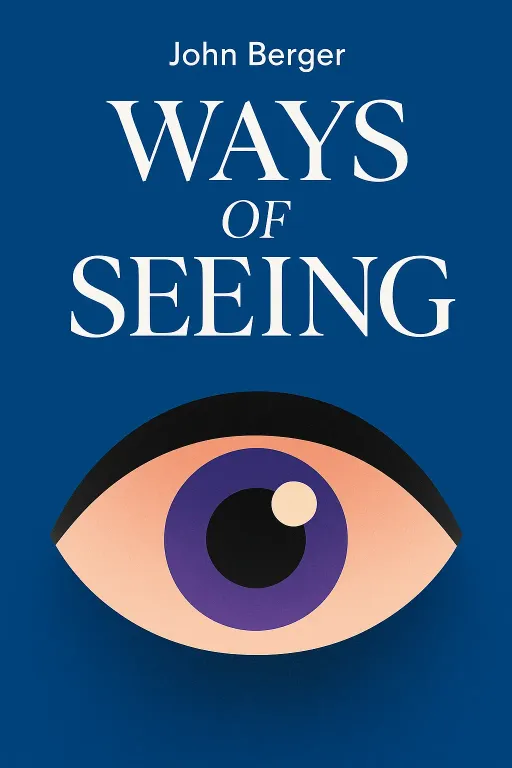
Nova: Insidious in the most fascinating way, Atlas. And that’s precisely what our discussion today, inspired by the profound insights in "Beyond the Canvas: Understanding Art's Enduring Impact," aims to uncover. This isn't just about pretty pictures; it's about dissecting art's hidden power. What's particularly compelling is how this book builds on revolutionary ideas from visionaries like John Berger, whose "Ways of Seeing" was originally a groundbreaking BBC series that completely upended traditional art criticism, making these complex ideas accessible to millions.
Atlas: Oh, I like that. So it's about seeing beyond the frame, beyond the brushstrokes. That immediately makes me think of what the book calls "The Blind Spot." How have we been so... blind to this?
Nova: Exactly. That’s our starting point. We've been conditioned to view art in such a narrow way, and it’s limiting our connection to culture and even ourselves.
Art's Blind Spot: Beyond Decoration and History
SECTION
Nova: The book argues that our "blind spot" is this tendency to categorize art as either mere decoration—something that matches the sofa—or as a distant, untouchable historical artifact. When we do that, we completely miss its profound role in shaping our perceptions, our values, and even our political landscapes.
Atlas: I guess that makes sense. I mean, I’ve walked through plenty of museums and felt that sense of distance, like I’m looking at something from another world. But what does "shaping our values" actually look like? Can you give me an example, something iconic that we we understand, but we're missing its deeper influence?
Nova: Absolutely. Let's take one of the most famous paintings in the world: Leonardo da Vinci’s Mona Lisa.
Atlas: Ah, the enigmatic smile. Everyone knows it. It’s the ultimate masterpiece.
Nova: And that’s precisely the point John Berger makes in "Ways of Seeing." He argues that its constant reproduction—on postcards, mugs, advertisements, even parodies—has fundamentally stripped it of its original context. It's no longer just a specific painting of Lisa Gherardini; it's become a commodity, a symbol of inaccessible wealth and status. Its fame now its actual visual content.
Atlas: Hold on. But isn't it still beautiful? Isn't its beauty universal? Even reproduced, it still evokes something, right? How does reproduction fundamentally change our experience and understanding, and what exactly are these "embedded ideologies" Berger talks about? I need a simpler way to grasp that.
Nova: That’s a great question, because beauty isn’t neutral. It's often a powerful vehicle for ideology. Think of it this way: imagine a famous brand logo, say for a luxury car. On its own, it’s just a design, a few lines and curves. But through relentless advertising, through its constant reproduction on sleek vehicles, in glamorous settings, it becomes imbued with ideas of success, power, and aspiration.
Atlas: Right, like it’s not just a car, it’s a lifestyle statement.
Nova: Exactly! The Mona Lisa, through its endless reproduction and elevation to "masterpiece" status, similarly embeds an ideology. It whispers to us about what "great art" should be: singular, expensive, revered, almost god-like. It teaches us to admire rather than to critically engage. It reinforces a certain power structure around who owns and defines art, rather than inviting us to experience it personally.
Atlas: Wow. So it’s not just a painting, it’s a lesson in how status and value are constructed, even if we don't consciously realize it. That’s actually really powerful, and a bit unsettling.
The Experiential Shift: Seeing Art as Dynamic Influence
SECTION
Atlas: Okay, so if we’re missing so much, if art is subtly shaping us in ways we don't even perceive, how do we start seeing art differently? How do we make it less about a luxury car logo and more about... something real, something we can connect with?
Nova: That’s where the second profound idea comes in, championed by John Dewey in "Art as Experience." Dewey argues that art isn't just an object to be admired; it’s an active process, an that connects us to the world and to each other. He emphasizes that "aesthetic experience" isn't confined to museums; it's continuous with everyday life.
Atlas: I’m curious. That makes me wonder, so it's not just about a painting on a wall? Can my morning coffee be art, then? Or a perfectly organized spreadsheet?
Nova: You’re absolutely hitting on Dewey’s point! It’s about the quality of the experience. Think of a beautifully prepared meal. The chef didn't just throw ingredients together; they considered texture, flavor, presentation, the entire sensory journey. Or a meticulously designed garden, where every plant, every pathway, is placed with intention to create a harmonious whole.
Atlas: Oh, I can see that. That’s a bit like a well-told story, too. There's a flow, a rhythm, an intention behind it that creates a complete experience. It's not just words; it's the of the narrative.
Nova: Precisely. Dewey would say that these are all aesthetic experiences. They involve a deep engagement, a sense of completion, a connection between the creator, the medium, and the experiencer. It’s about shifting from passively consuming something to actively participating in and appreciating its creation and its effect on you.
Atlas: So it’s about shifting from passive consumption to active participation, finding the "art" in the "experience" itself, whether it's a masterpiece or a meticulously brewed cup of tea. That makes me wonder, for a curious learner like many of our listeners, how does this new perspective change their daily interaction with the world? Beyond the museum, what’s the practical impact?
Nova: It's transformative. It fosters a deeper engagement with everything around you. You start to notice the intentional design in your city's architecture, the narrative flow in a news report, the subtle emotional impact of a piece of music you hear in a cafe. It cultivates critical thinking because you're constantly asking: "What's the intention here? What experience is being crafted? What message is embedded?" It turns everyday life into a canvas for aesthetic appreciation and critical analysis, making you a more discerning and connected individual.
Synthesis & Takeaways
SECTION
Atlas: That’s amazing. We’ve gone from thinking art is just decoration to understanding it as a silent persuader, and then to realizing that "art" itself is a dynamic, everyday experience. That’s a profound shift in perception.
Nova: It truly is. The core insight from "Beyond the Canvas" is this: Art isn't just a reflection of culture; it's an active participant, a powerful force that continuously shapes and reshapes our world. The true impact lies not just in recognizing its persuasive power, but in engaging with it as a lived experience. This shift allows us to decode the hidden messages, appreciate the "art" in everyday life, and transform passive viewing into active, critical engagement. It's about becoming a participant in culture, not just an observer.
Atlas: That’s actually really inspiring. So, for our curious listeners who want to start exercising this new "way of seeing," what's one concrete step they can take this week?
Nova: I love that question. Here’s a challenge: Next time you encounter image – whether it’s a painting in a gallery, an advertisement on a billboard, or even a social media post – pause for just five seconds. Don't just react. Ask yourself: What message is embedded here beyond the surface? What is it trying to make me believe or feel?
Atlas: And how does that make me feel, really? Not just "do I like it," but "how does it connect to my experience?" That’s a fantastic way to start.
Nova: Absolutely. Start small, start anywhere. The canvas of life is vast.
Nova: This is Aibrary. Congratulations on your growth!