Beyond the Canvas: The Philosophy Behind Artistic Expression
Golden Hook & Introduction
SECTION
Nova: What if everything you thought you knew about art was not just incomplete, but actively holding you back from a deeper understanding of the world itself?
Atlas: Whoa, that's a bold claim, Nova. Are you saying my carefully curated gallery visits, where I nod thoughtfully and pretend to understand the abstract expressionism, are all just a grand illusion? Because if so, my Sunday afternoons are about to get a lot more complicated.
Nova: Exactly, Atlas! We're diving into a concept that challenges that very illusion. Today, we're unpacking the profound insights from a work we're calling "Beyond the Canvas: The Philosophy Behind Artistic Expression," by the brilliant art philosopher, Dr. Eleanor Vance. It's less about art is, and more about we engage with it, and what that engagement reveals about ourselves and our culture.
Atlas: Okay, so we're not just critiquing my gallery etiquette. We're talking about a fundamental shift in perspective. For someone who thrives on dissecting complex systems and understanding deep cultural narratives, this sounds like an essential toolkit. Where do we even begin to unlearn what we think we know?
Nova: We begin, my friend, by acknowledging what Dr. Vance calls "The Blind Spot." It’s a pervasive way we approach art that often makes us miss its true power.
The Blind Spot: Art as Object vs. Experience
SECTION
Nova: So, "The Blind Spot." Think about how most of us encounter art. We see a painting, a sculpture, a piece of music. We admire its beauty, its technique, perhaps its historical significance. We treat it as a finished, static. Something to be consumed, critiqued, perhaps even purchased.
Atlas: Right. It’s an object. It’s there. I look at it. I decide if I like it or not. Pretty straightforward, isn't it? Is that the blind spot? Just seeing it as a thing?
Nova: Precisely. That's the surface level. The blind spot is overlooking art's deeper role. It’s not just a; it's a dynamic. It’s a way of and the world. When we reduce it to a mere object, we limit our engagement not just with that specific artwork, but with the entire cultural conversation it’s part of. It's like looking at a map of a mountain range versus actually climbing it. One gives you information, the other transforms you.
Atlas: I can see that. For someone accustomed to analyzing historical data or geopolitical shifts, reducing a complex cultural expression to just its aesthetic qualities would be like trying to understand a global conflict purely by looking at a single satellite image. You miss all the underlying forces, the human stories, the power dynamics. What are the real consequences of this "object-admiration" approach? How does it actively our understanding?
Nova: It fundamentally limits our ability to connect with broader cultural narratives. Imagine two people standing before a monumental historical painting, say, a grand canvas depicting a pivotal moment in a nation's founding. One person sees only the majestic brushstrokes, the vibrant colors, the sheer scale. They appreciate it as a beautiful, old object.
Atlas: A lovely piece for the dining room, perhaps.
Nova: Exactly! Now, the second person, acutely aware of this "blind spot," looks deeper. They ask:
Atlas: Ah, so it’s not just about what's the frame, but what's the frame – the historical context, the power structures, the societal biases. The first person is just admiring the surface, while the second is dissecting the cultural DNA embedded within it. That’s a massive difference in understanding. It's like analyzing a historical document only for its prose, not its implications for societal resilience or power shifts.
Nova: Absolutely. The first person leaves having "seen" a painting. The second leaves having gained insight into the very fabric of national identity, the construction of history, and the subtle ways art can both reflect and shape collective memory. One is passive reception; the other is active, transformative engagement. It's the difference between merely observing a system and truly understanding its mechanics.
Atlas: That makes me wonder, then, how do we shift from this passive observation to active engagement? How do we move past just admiring the canvas to truly seeing beyond it?
The Shift: Art as a Lens and Cultural Narrative
SECTION
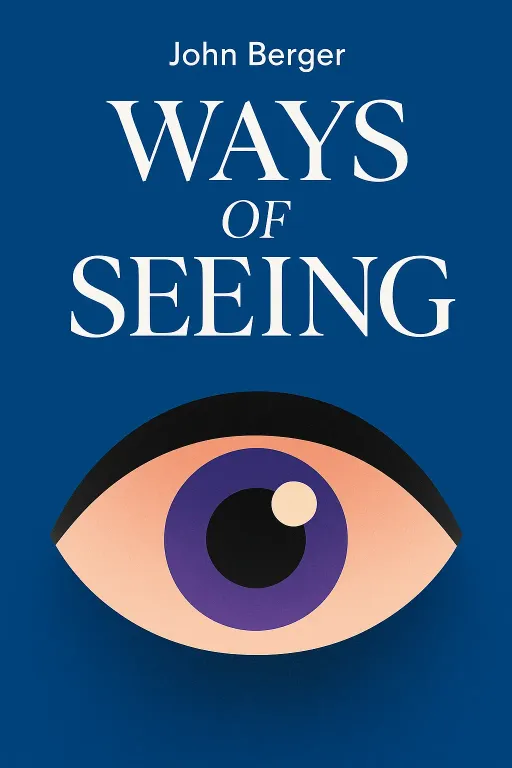
Nova: That's the perfect segue, Atlas, because the answer lies in what Dr. Vance, drawing from pivotal thinkers, calls "The Shift." This is where figures like John Berger, with his groundbreaking "Ways of Seeing," and John Dewey, with "Art as Experience," come into play. They radically challenge our interpretations.
Atlas: So, how do Berger and Dewey help us break free from this "blind spot"? What's the core of their argument?
Nova: Berger, for instance, argues that our perceptions of art are never neutral. They are profoundly shaped by history, by power structures, and by context. He urges us to question the traditional, often elitist, ways art has been presented and interpreted. It’s not just about seeing the art, but seeing we’ve been taught to see it, and benefits from that particular way of seeing.
Atlas: That sounds like a fundamental challenge to the notion of objective beauty. So, if my perception is shaped by history and power, how does a painting from centuries ago actually "shape" my perception today, beyond just being a historical artifact? Give me an example.
Nova: Think about the ubiquitous image of a classical nude in Western art. Berger would argue that for centuries, these images were not just celebrations of the human form, but were deeply embedded in a patriarchal gaze, often depicting women as objects for male viewing pleasure. When we see such an image today, without understanding that historical context and the power dynamics at play, we might unconsciously perpetuate that gaze. But once we understand Berger's insights, that same painting becomes a powerful lens through which to analyze gender roles, power, and representation throughout history, showing us how deeply ingrained certain societal views are.
Atlas: Wow. So, it's about deconstructing the visual rhetoric, almost like analyzing propaganda, but for beauty. And Dewey? How does his "Art as Experience" complement this?
Nova: Dewey takes it a step further, arguing that art isn't separate from life; it’s intrinsically woven into our direct experience. He emphasizes that true art transforms the observer. It’s not just about looking something, but about actively with it in a way that alters our consciousness, our understanding, and even our future actions. It’s a dynamic, two-way street where the art and the viewer co-create meaning in the moment.
Atlas: That makes sense. It’s not just about what the artist into the piece, but what the viewer to it and what they. So, if art is a lens, how do I actually that lens? What's a concrete way for someone like our analytical listeners, who dissect complex systems, to engage differently with a cultural artifact to gain these deeper insights?
Nova: Let’s use a contemporary example: a powerful piece of street art, a mural perhaps, in a bustling urban environment. The "blind spot" approach would be to walk past it, note its aesthetic appeal, or perhaps dismiss it as graffiti. But applying Berger and Dewey's insights, you'd pause. You wouldn't just see spray paint on a wall.
Atlas: Instead, I’d be asking...
Nova: Precisely! You'd ask: You're not just looking at colors and shapes; you're actively interpreting a visual manifesto, a historical commentary, a cry for justice, or a celebration of identity.
Atlas: So, I'm not just observing it as an object; I'm engaging with it as a direct experience that's transforming my understanding of urban life, social issues, and the power of public expression. It becomes a diagnostic tool for the culture itself. And that's the "powerful lens" Dr. Vance talks about. It shapes our perceptions and connects us to broader cultural narratives, rather than being a mere aesthetic adornment.
Nova: Exactly. These works show that art is never just decorative. It’s a conduit, a mirror, a hammer. It reveals the invisible structures that shape our reality, and when we engage with it consciously, it transforms our capacity to see and understand everything else.
Synthesis & Takeaways
SECTION
Nova: So, bringing it all together, Atlas, this isn't just about appreciating a painting or a sculpture. It's about recognizing that art, when truly engaged with, becomes a profound method for dissecting the hidden systems of culture and power around us.
Atlas: Absolutely. That deep question from the material we discussed, "How might a deeper awareness of the 'ways of seeing' change your next encounter with a piece of art or cultural artifact?" It’s not just rhetorical, is it? It's a call to action for anyone who seeks clarity and wants to understand the true dynamics at play in society.
Nova: It really is. This shift in perspective isn't confined to art galleries. It’s a model for approaching all complex systems, from understanding geopolitical shifts and their underlying power dynamics, to analyzing post-war reconstruction efforts and the resilient cultural narratives that emerge. It’s about questioning the surface and seeking the deeper, often unseen, forces that shape our perceptions and our world. It's about developing a critical lens for all of life's experiences.
Atlas: So, next time you're walking past a billboard, watching a film, or even just scrolling through your social media feed, don't just consume it. Ask yourself: Look beyond the canvas, and you might just find a whole new world opening up.
Nova: A powerful challenge, Atlas. And for our listeners, we encourage you to take that challenge. Start seeing art, and indeed all cultural artifacts, not as passive objects, but as active participants in shaping your understanding.
Atlas: What a journey into perception. Thank you, Nova, for illuminating these profound ideas.
Nova: Always a pleasure, Atlas. This is Aibrary. Congratulations on your growth!