Beyond the Canvas: The Hidden Structure of Artistic Genius
Golden Hook & Introduction
SECTION
Nova: What if everything you thought you knew about 'good art' was a carefully constructed illusion? What if the way you've been taught to see paintings, sculptures, or even architecture, has actually been holding you back from truly understanding their power?
Atlas: Whoa, that sounds like a conspiracy theory for the Louvre! I mean, aren't we just supposed to appreciate beauty? What sort of illusion are we talking about here?
Nova: Well, it’s less of a conspiracy and more of a deeply ingrained cultural habit. We often treat art as this separate, decorative entity, something to just look at, admire, or even dismiss. But great art isn't just seen; it transforms how we perceive and connect. Today, we're diving into the hidden structures of artistic genius, exploring how art shapes our very understanding of reality.
Atlas: Okay, so we're peeling back the layers. I'm curious, who are the minds that help us understand this profound idea? Because for a lot of our listeners, the idea of art transforming their worldview might feel a bit abstract.
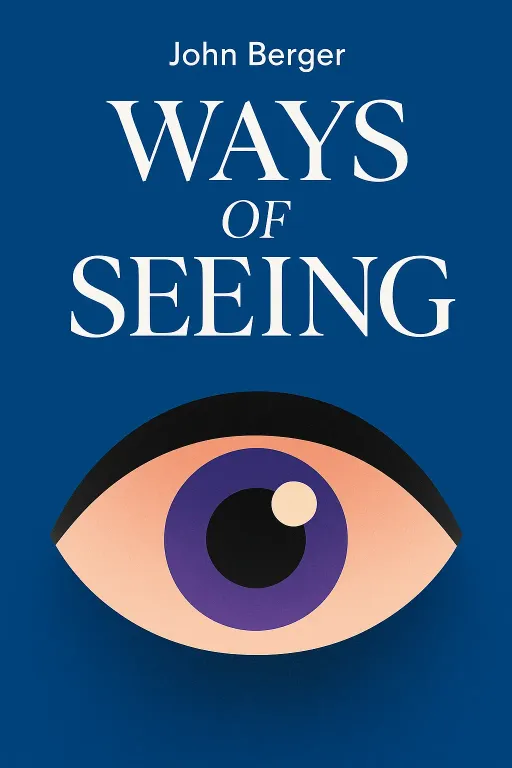
Nova: Excellent question, Atlas. We're drawing insights from three foundational thinkers whose ideas have profoundly reshaped how we think about art and perception. First, there's John Berger, whose seminal work fundamentally challenged the traditional art establishment and how we consume images. Then, John Dewey, with, who grounded aesthetics in the very fabric of our lived lives. And finally, Jonathan Gottschall, author of, who brilliantly connects our innate human need for narrative to art's essential function. Together, their work reveals that art is not merely a product; it's a dynamic process of perception and experience that deeply influences our worldview and connection to others.
Atlas: That makes sense. So, we're talking about shifting from passive observation to active engagement. I'm intrigued. Where do we begin this journey of unmasking?
Nova: We'll begin by challenging the very act of seeing itself.
The Conditioned Gaze: Unmasking How We See Art
SECTION
Nova: John Berger argues that how we see art is profoundly conditioned by history and convention. He invites us to question traditional interpretations and reclaim our own viewing experience. Think about it: when you walk into a museum, you’re not just looking at a painting. You're looking at it through layers of accumulated meaning, market value, historical narratives, and even the gallery's lighting. All of that subtly dictates your experience.
Atlas: Wait, are you saying that when I stand in front of a famous painting, like a Rembrandt, I'm not really seeing it for what it is? That sounds a bit out there. How does that impact someone who values understanding the big picture, who's used to dissecting complex systems? Are we just programmed to see what we're told is 'good'?
Nova: Exactly. Berger points out that the "original" painting, the physical object, is often treated with an almost religious reverence in museums. But then, it's reproduced countless times in books, postcards, and now digitally. Each reproduction detaches the image from its unique context and makes it ubiquitous, yet the aura of the original remains. What's even more interesting is how advertising capitalizes on this. They'll often borrow visual tropes or even entire compositions from classical art to imbue their products with a sense of grandeur, history, or sophistication.
Atlas: So, like, a perfume ad showing a woman in a pose reminiscent of a Renaissance Madonna, but with a modern twist? That’s a powerful way to tap into our subconscious associations. It’s like we're internalizing a set of design principles we didn't consciously choose, and that affects how we 'build' our own perceptions of value, even in everyday products. That’s actually really powerful.
Nova: Precisely. Consider a luxury car commercial that uses slow-motion shots, dramatic lighting, and a sweeping landscape, all reminiscent of a classical landscape painting. The car isn't just being sold for its mechanics; it's being sold as a symbol of status, power, and aspiration, leveraging centuries of visual conditioning that associates such aesthetics with prestige. The cause is the ad's skillful manipulation of art historical references, the process is our subconscious linking of those aesthetics to the product, and the outcome is our desire for that car, not just for its utility, but for the lifestyle and status it implies.
Atlas: That’s a perfect example. So it's about actively decoding these visual messages, even outside of a museum. It's about recognizing that our 'gaze' isn't neutral, it's a product of history, culture, and even commerce. That’s actually really powerful. But if our vision is so conditioned, how do we break free and truly art? What’s the next layer of understanding?
Nova: That naturally leads us to the second key idea we need to talk about, which often acts as a counterpoint to what we just discussed: John Dewey's profound insight.
Art as Lived Experience: Bridging the Mundane and Meaningful
SECTION
Nova: John Dewey posits that art isn't just an object, but an experience. It bridges the gap between the mundane and the meaningful, unifying our actions, thoughts, and feelings. For Dewey, a true aesthetic experience isn't passive contemplation; it's an active, engaged process where the viewer or creator becomes one with the work.
Atlas: I guess that makes sense. So you're saying art isn't just something on a wall, it's something we? Like, how does a painting become an 'experience' for someone who is constantly trying to balance rigor with engagement, someone who needs to see clear outcomes? How does it unify actions, thoughts, and feelings?
Nova: Think about a chef meticulously preparing a meal. It's not just about cooking; it's about the sensory input, the precision of their movements, the anticipation of the taste, the feeling of connection to the ingredients, the joy of creating. The finished dish is the product, but the is in the entire, unified experience of its creation. Similarly, for a viewer, truly experiencing art means allowing it to engage all your senses and emotions, not just your intellect. It means letting the colors, textures, and forms evoke feelings, memories, or new insights.
Atlas: That’s actually really inspiring. So it's about active engagement, not just consumption. That gives me chills. I mean, I imagine a lot of our listeners, who are driven by connection and seek harmony, might resonate with this idea of unification. How does that bridge the gap between the mundane and the meaningful for them?
Nova: Consider a piece of music. You don't just it; you it. The rhythm can make you tap your foot, the melody can evoke a memory, the lyrics can articulate an emotion you didn't know you had. In that moment, your physical reaction, your emotional response, and your cognitive understanding of the piece are all unified into a single, cohesive experience. The mundane act of listening transcends into something deeply meaningful. It’s a complete organism of an experience, where every part contributes to the whole. For Dewey, this is what distinguishes an "experience" from mere "doing." It has a beginning, a development, and a fulfillment.
Atlas: That’s a great way to put it. It’s like when you’re deeply engrossed in a complex problem at work, and suddenly all the disparate pieces click into place, and you feel that surge of understanding and satisfaction. That’s an experience. So, if art helps us unify our actions, thoughts, and feelings, it seems like it's also playing a deeper, more fundamental role in how we make sense of the world. Is that where Jonathan Gottschall comes in?
Nova: Absolutely. Your intuition is spot on. Our capacity for this kind of unified experience is deeply tied to our innate wiring for stories, which is exactly where Gottschall picks up the thread.
The Storytelling Imperative: Art as Our Sense-Making Engine
SECTION
Nova: Jonathan Gottschall argues that humans are wired for stories, and art is a primary mode of storytelling. Understanding this helps us see art's essential role in making sense of complex realities. From the earliest cave paintings to the latest virtual reality experiences, we've always used art to tell tales, to understand ourselves, and to navigate the world around us.
Atlas: Wow, whoa. So it's not just that we stories, it's that we stories? That sounds profound. But how does a painting or a piece of music tell a story in the same way a book does? Can you give an example? I imagine our listeners, who are often crafting compelling educational journeys or leading with purpose, would see the value in explicit narratives, but how does an abstract piece fit in?
Nova: That’s a fantastic question, Atlas. It's true that a novel has a clear plot, characters, and setting. But art can tell a story on a more primal, emotional, or symbolic level. Think of a powerful abstract expressionist painting, like a Jackson Pollock. There's no literal narrative, no characters. Yet, the frenetic energy, the interplay of colors, the sheer scale, can tell a story of chaos, creation, emotion, or the artist's internal struggle. The cause is the artist's spontaneous creation, the process is the viewer's emotional and imaginative engagement with the raw elements, and the outcome is a personal, resonant "story" of feeling or insight. It taps into our deep-seated need to find patterns and meaning, even in apparent randomness.
Atlas: That’s a perfect example. So art helps us not just understand stories, but also to frame and understand stories, especially when facing a new challenge. It gives us a framework. It’s like how a good leader uses storytelling to inspire and unify a team around a common purpose, even if the "story" is about market share or a new product launch. It’s about making sense of complexity.
Nova: Exactly. Art, in this sense, is our sense-making engine. It allows us to simulate experiences, explore emotions safely, and rehearse responses to life's challenges. It helps us process complex realities, forge connections, and ultimately, understand our place in the grand narrative of humanity. It’s how we communicate what it means to be human, across cultures and across time.
Synthesis & Takeaways
SECTION
Nova: So, bringing it all together, we've explored how our perception of art is conditioned, how art offers a unifying experience, and how it serves our fundamental need for storytelling. Nova's Take, our overarching message, is that art is not merely a product; it's a dynamic process of perception and experience that deeply influences our worldview and connection to others. It’s a powerful tool for self-discovery and insight.
Atlas: So basically you're saying that by actively engaging with art—by questioning our conditioned views, by embracing it as an experience that unifies our actions, thoughts, and feelings, and by recognizing its storytelling power—we can actually shift our perspective on, say, a tough project at work or a complex personal relationship? For someone who wants to bridge logic and emotion, and recharge their well of insights, this sounds like a practical recommendation.
Nova: Absolutely. It's about recognizing that art isn't just 'out there' to be consumed; it's 'in here,' shaping how we interpret reality, solve problems, and connect with others. It's not about becoming an art critic; it's about becoming a more perceptive, empathetic, and insightful human being. By deliberately engaging with a piece of art this week, truly allowing yourself to question your initial reactions, to feel its impact, and to consider the story it tells, you might just find a new lens through which to view a current challenge in your work or life.
Atlas: That’s such a hopeful way to look at it. It transforms something often seen as esoteric into a powerful tool for personal and professional growth. So, for our listeners, how might deliberately engaging with a piece of art this week shift perspective on a current challenge in your work or life? We'd love to hear your insights.
Nova: This is Aibrary. Congratulations on your growth!