

The Science-Backed Recovery Toolkit
Golden Hook & Introduction
SECTION
Nova: Two seconds. That is the amount of time it takes for your brain to bypass your logic center and toss you directly into an emotional spiral. One minor inconvenience, a weird look from a colleague, a notification ping, and suddenly you are in the deep end of anxiety or frustration.
Atlas: That feels like a conservative estimate. Some days, it feels like I am already in the deep end before I even pour my first cup of coffee. It is wild how quickly we go from functioning adults to spiraling messes.
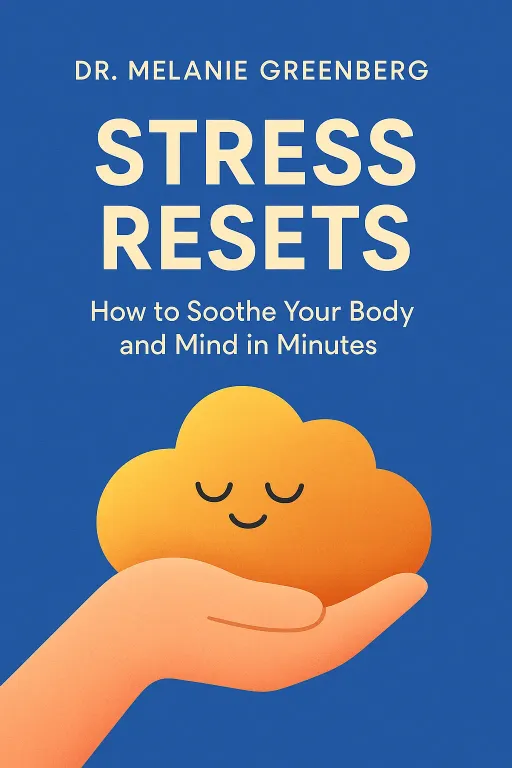
Nova: It is, and that is exactly why we are looking at two specific frameworks today. We are diving into the science of how to stop that spiral with Stress Resets by Jennifer L. Taitz, and how to build a foundation that prevents the spiral in the first place with Everyday Vitality by Dr. Samantha Boardman.
Atlas: I like that distinction. One is the emergency brake, and the other is the engine maintenance. Because most of the time, I am just trying to survive the week, not necessarily optimize my emotional engine.
Nova: We have all been there. Jennifer L. Taitz is a clinical psychologist who specializes in cognitive behavioral strategies, and she brings this very grounded, medical approach to emotional regulation. Then you have Dr. Samantha Boardman, who is a positive psychiatrist. Her work is fascinating because she challenges the conventional idea that self-care means retreating or doing less. She argues for active, positive engagement.
Atlas: That hits a nerve. Usually, when I hear self-care, I think of hiding in a room with a candle. If Boardman is saying that is the wrong approach, I am definitely listening.
Nova: She is. And when you combine Taitz’s strategies for the immediate moments of panic with Boardman’s approach to daily vitality, you actually get a complete recovery toolkit. Let us break down how this works.
The Biology of the Spiral
SECTION
Atlas: Okay, let us start with the emergency brake. I am intrigued by the idea that we can stop a spiral in its tracks. Usually, when I am in the middle of a bad mood or an anxiety spike, I feel like I am on a runaway train. My brain tells me to keep thinking, keep analyzing, keep worrying. How does Taitz suggest we actually stop that?
Nova: The key is realizing that you cannot think your way out of a physiological response. When you are spiraling, your sympathetic nervous system—your fight or flight mode—is fully engaged. Your amygdala is screaming. Trying to use logic, like telling yourself, calm down, this is not a big deal, is like trying to whisper to a fire alarm while it is blaring. It does not work.
Atlas: That makes perfect sense. I have tried that internal monologue approach. It usually just adds a layer of frustration because I am annoyed that I cannot calm down. So, if logic does not work, what does?
Nova: You have to hack your biology. Taitz focuses on what she calls a temperature reset. It sounds almost too simple to be true, but it is based on the mammalian dive reflex. When you splash ice-cold water on your face, specifically around your eyes and nose, your body instantly triggers a parasympathetic response. Your heart rate slows down, and your nervous system shifts gears. It is a biological override.
Atlas: Wait, are you saying that just splashing cold water on my face is a scientific way to stop an emotional spiral?
Nova: Exactly. It is not a mindfulness trick. It is a physiological intervention. The cold water hits your trigeminal nerve, and your body assumes you are underwater. To survive, it automatically conserves oxygen and lowers your heart rate. It forces your nervous system to downshift.
Atlas: I am picturing myself in a high-stakes meeting, excusing myself to the bathroom to splash ice water on my face. It sounds slightly unhinged, but honestly, if it works, I would do it.
Nova: And that is the beauty of it. It is portable. You do not need an app, you do not need to meditate for twenty minutes, and you do not need to clear your schedule. You just need a sink and cold water. The goal is to create a gap. You need that gap between the stimulus—the stressful event—and your reaction. The temperature reset gives you that gap. Once your heart rate is lower, then you can use your cognitive skills to address the situation.
Atlas: I can see how that changes the game. It is about buying time. I usually jump from the stressor straight to the reaction. This creates a buffer zone where I can actually choose how to respond.
Nova: Precisely. And Taitz is very clear that this is not about avoiding the problem. It is about regulating your state so you can face the problem with a clear head. We often mistake our emotional state for the reality of the situation. We think, I am panicked, therefore this situation is a catastrophe. But if you reset your physiology, you might realize, I am just tired and this is a manageable problem.
Atlas: That is a profound distinction. The state of our nervous system colors the way we view our reality. If I am calm, the world looks like a set of challenges. If I am panicked, the world looks like a minefield.
Nova: That is the core of it. By using these physical resets, you are essentially cleaning your glasses so you can see the world as it actually is, rather than through the lens of your own stress hormones.
The Myth of Withdrawal and the Engine of Vitality
SECTION
Atlas: Okay, I am sold on the emergency brake. But let us talk about the engine maintenance. You mentioned Dr. Samantha Boardman and her take on vitality. I have always thought that when I am burnt out, the solution is to withdraw. Go home, close the blinds, do nothing. Are you telling me that is the wrong approach?
Nova: Boardman would argue that is exactly how you drain your battery further. She suggests that we have this misconception about resilience. We think resilience is a shield that we use to protect ourselves from the world. We think it is about being tough and solitary. But she presents a compelling case that resilience is actually a muscle you build by engaging with the world, not by retreating from it.
Atlas: That is counterintuitive. When I am exhausted, engagement is the last thing I want. I want to be left alone.
Nova: And that is a natural reaction. But think about what happens when you withdraw. You are left alone with your thoughts, which often spiral. You lose the external feedback loops that keep you grounded. Boardman argues that vitality comes from what she calls everyday actions—small, meaningful engagements.
Atlas: Give me an example. What does she mean by active engagement when you are already running on empty?
Nova: It is not about taking on a massive new project or going to a networking event. It is about micro-connections. It could be as simple as having a genuine, five-minute conversation with a neighbor, or checking in on a friend, or even just doing something helpful for someone else. These actions shift your focus from your internal stress to an external connection.
Atlas: So it is about getting out of your own head by putting energy into something else?
Nova: Exactly. Think about it. When you are spiraling, you are hyper-focused on your own internal state. You are self-referential. Am I okay? Why am I stressed? What if this goes wrong? That is a closed loop. When you perform a micro-connection, you break that loop. You are momentarily part of a larger system. You are contributing, you are listening, you are connecting. That creates a sense of agency and belonging, which are the primary drivers of vitality.
Atlas: I see the parallel here. Taitz helps us stop the spiral with biology, and Boardman helps us build a buffer with sociology.
Nova: That is a perfect way to put it. Boardman’s research shows that people who prioritize these small, meaningful interactions report significantly higher levels of resilience. It is not that they do not get stressed. It is that they have a reservoir of positive engagement that keeps them afloat when the stress hits.
Atlas: I am thinking about the last time I felt really burnt out. I spent the whole weekend in bed. By Sunday night, I felt worse. I felt sluggish, disconnected, and even more anxious about the week ahead. If I had just gone to the park or called a friend for a quick chat, maybe the dynamic would have shifted.
Nova: That is the classic trap of passive recovery. We treat ourselves like machines that just need to be turned off. But humans are not machines. We are social, active beings. We need stimulation, but the right kind of stimulation. Passive scrolling on your phone is not recovery. It is just another form of consumption. A conversation, a walk, a small act of kindness—those are forms of active recovery.
Atlas: It sounds like the secret is balance. You need the ability to shut down the panic—the temperature reset—and you need the ability to turn on the vitality—the micro-connection.
Nova: Yes. And the brilliance of these two approaches is that they are accessible. They do not require a life overhaul. You do not need to quit your job and move to a cabin to find peace. You just need to change how you handle the next ten minutes.
Synthesis & Takeaways
SECTION
Atlas: It feels like we are talking about a shift from being a victim of our reactions to being an architect of our state.
Nova: That is exactly it. We often wait for the world to calm down before we calm down. We wait for the project to finish before we take care of ourselves. But these frameworks suggest that you can initiate the calm, and you can initiate the vitality, regardless of what is happening around you.
Atlas: Let us synthesize this for the listeners. If someone is listening to this and they are currently feeling that familiar tightening in their chest, what is the sequence?
Nova: Start with the reset. If you are in the middle of a spiral, do not try to talk yourself out of it. Go to the bathroom, splash cold water on your face, or hold an ice pack to your chest. Get your physiology back to baseline. That is your non-negotiable first step.
Atlas: And once the heart rate is down, then what?
Nova: Then you pivot to vitality. Once you are in a neutral state, identify one micro-connection you can make. Send a text to a friend, ask a colleague a genuine question, or do something small to help someone else. Do not aim for a grand gesture. Aim for a tiny, meaningful interaction.
Atlas: It sounds like a formula. Reset the body, engage the social system. It is so simple, but I can see how it would be transformative if you actually practiced it.
Nova: Most people do not practice it because they are waiting for the motivation to strike. They think, I will reach out when I feel better. But the research suggests the opposite. You reach out to feel better. You reset your physiology to gain the capacity to engage.
Atlas: That is the missing link. We wait for the feeling, but the action should come first.
Nova: It is the action-to-feeling loop. You act, and the feeling follows. If you wait for the feeling, you might be waiting forever.
Atlas: I love the idea that we have this toolkit at our disposal. It is not about having a perfect life where you never get stressed. It is about having a reliable system to return to equilibrium.
Nova: That is the hallmark of resilience. It is not the absence of stress. It is the speed and efficacy of your recovery. These strategies give you the tools to speed up that recovery time.
Atlas: I am definitely going to keep the cold water trick in my back pocket. And the micro-connection idea feels like something I can easily integrate into my daily routine. It is a small change, but I can see how it would accumulate over time.
Nova: It really does. It is the compound interest of emotional health. A small reset today, a small connection tomorrow—it builds a foundation that makes you much harder to knock off balance.
Atlas: This has been a great exploration. It is rare to get such actionable, science-backed advice that does not feel like another chore to add to the to-do list.
Nova: That is the goal. We want to provide insights that make life easier, not more complicated. Thank you for diving into this with me.
Atlas: Thank you for laying it out so clearly. It is empowering to know that we have more control over our emotional landscape than we often think.
Nova: We are always here to help you navigate those landscapes. Remember, the next time you feel that spiral starting, you have the power to stop it. Just add water, and then reach out.
Atlas: I love that. A perfect summary.
Nova: This is Aibrary. Congratulations on your growth!









