The Architecture of Cosmic and Spiritual Meaning
Golden Hook & Introduction
SECTION
Nova: If you took every single atom in the entire observable universe and nudged it just a fraction of a millimeter in any direction, the structural integrity of reality would collapse. Life, gravity, stars—all of it would vanish instantly. That is the cold, hard math of existence. But then, there is the part of us that looks at that same math and feels a profound, aching need for something more than just physics.
Atlas: That hits on a strange tension, doesn't it? We spend our lives trying to decode the laws of the universe, treating it like a complex machine we need to master. Yet, at the same time, we’re looking for a sense of purpose that feels entirely separate from those laws. It’s like trying to find the meaning of a symphony by only counting the number of times the cello plays.
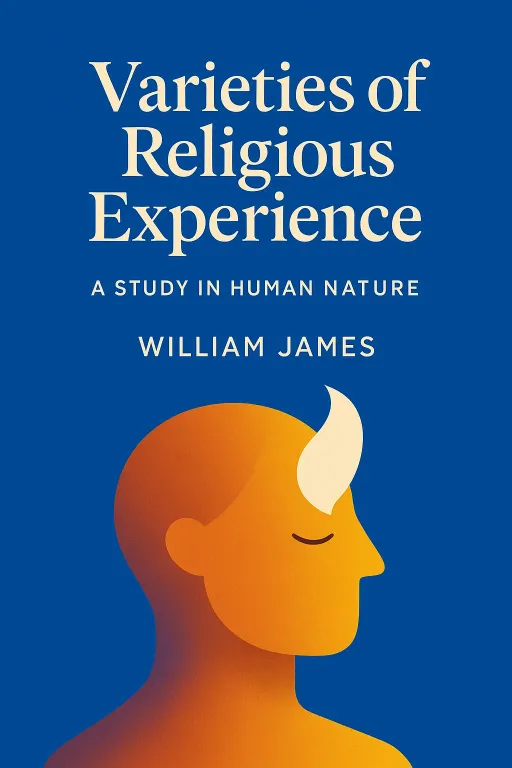
Nova: Exactly. Today, we are attempting to bridge that gap. We are diving into two distinct but complementary works. First, we have The Varieties of Religious Experience by William James, a seminal text that essentially treats spirituality as a psychological phenomenon we can study objectively. Then, we are layering that over Why the Universe Is the Way It Is by Hugh Ross, which examines the radical fine-tuning of the cosmos.
Atlas: It’s a fascinating pairing. William James was the father of American psychology, and he wrote this back at the turn of the 20th century, basically arguing that we should study the fruits of religious experience rather than the roots of religious doctrine. He was less interested in whether God exists and more interested in what happens to a human being when they believe God exists.
Nova: And Hugh Ross brings the astrophysical perspective. He’s an astronomer who looks at the universe not as a chaotic accident, but as a carefully constructed, perhaps even intentional, environment. When you put these two together, you get this massive, holistic framework: the physical container of the universe and the psychological container of the human mind.
The Inner Architecture of Experience
SECTION
Atlas: I want to start with James, because that psychological angle is so grounded. For a lot of people, the word "religious" or "spiritual" feels like it belongs in a church or a temple, not a lab. How did James actually turn that into a subject for study?
Nova: He treated it like a case study. James didn't care about the theology. He was obsessed with the transformative power of the experience itself. He looked at people who had these profound, life-altering moments of transcendence and asked a very clinical question: Does this change their behavior? Does it make them more resilient, more compassionate, or more effective as human beings?
Atlas: That makes sense from an analytical standpoint. It shifts the focus from "Is this true?" to "Is this useful?" But isn't there a risk there? If we define spirituality just by its utility, are we turning it into a self-help tool? Are we missing the point of what people are actually seeking?
Nova: That is the crucial tension. James would argue that the "truth" of the experience is irrelevant to the psychologist. If a person feels a deep, unshakable sense of peace that allows them to overcome a crippling depression or a substance addiction, the objective effect on their life is real. The experience has "truth" because it produces "fruits." He famously said that religion is not a conclusion of the intellect, but a feeling of the heart.
Atlas: I can see why that would appeal to someone who wants a clear, structural understanding of human nature. It’s essentially saying that our internal reality is just as "real" as our external reality. If you feel a sense of purpose, that feeling is a data point. It’s not just a hallucination.
Nova: Precisely. And that’s where the "Varieties" part of his book title comes in. He wasn't advocating for one specific path. He was documenting that these experiences are universal across cultures. Whether you’re a mystic in the East or a skeptic in the West, the psychological mechanism seems to be hardwired into us. We have a fundamental need to perceive meaning, and when we perceive it, our biology and our psychology shift to accommodate that meaning.
Atlas: Okay, but let’s play devil's advocate. If I have a profound experience that makes me feel like the universe loves me, but the universe is actually just a cold, indifferent vacuum of space, am I just lying to myself? Is this just a survival mechanism?
Nova: James would say that the "lie" doesn't matter if the change in your character is positive. But that brings us perfectly to the other side of the coin. Because what if the universe isn't actually a cold, indifferent vacuum? What if the environment we are living in was actually designed to support that very psychological need?
The Outer Architecture of the Cosmos
SECTION
Atlas: You’re pivoting to Ross. That’s a massive leap from the inner mind to the outer cosmos.
Nova: It is, but it’s a necessary one. If we only look at the internal experience, we’re only seeing half the picture. Hugh Ross, in Why the Universe Is the Way It Is, does something quite brilliant. He takes the hard data of astrophysics—the constants of physics, the expansion rate of the universe, the precise distance of the earth from the sun—and he maps them out to show just how narrow the window for life is.
Atlas: I’ve heard this referred to as the "Goldilocks" problem. Everything has to be just right, or else you get nothing.
Nova: Exactly. Ross argues that the universe is not just fine-tuned for life, but fine-tuned for a specific kind of life: sentient, moral, and conscious beings who can actually contemplate the universe. He suggests that the universe acts as a "cradle" or a "womb." It’s designed to provide the perfect conditions for us to exist, to learn, and to grow.
Atlas: That sounds like a design argument. But how does he reconcile that with the fact that the universe is also incredibly hostile? Most of the universe is empty space, radiation, and black holes. If it’s a cradle, it’s a very dangerous one.
Nova: Ross addresses that head-on. He points out that the hostility is part of the design. To develop the kind of character, the kind of moral agency that James was talking about, we need a challenging environment. If the universe were a paradise where everything was provided for us, we wouldn't need to innovate, we wouldn't need to struggle, and we wouldn't need to search for meaning. We would just exist.
Atlas: That is an interesting way to look at it. The struggle isn't a bug; it's a feature. It’s the friction that creates the heat of human growth.
Nova: That is exactly the point. The physical laws of the universe—gravity, entropy, the speed of light—they impose constraints. And those constraints force us to make choices. We have to work to survive, we have to collaborate to thrive, and we have to think to understand. That environment is the exact training ground for the "Varieties of Experience" that James studied.
Atlas: I’m starting to see the connection. You have the external architecture provided by the universe—this rigid, fine-tuned, challenging space—and then you have the internal architecture of the human mind, which is wired to seek meaning within that space. One is the stage, the other is the actor.
Nova: You nailed it. And this is where the "Purposeful Seeker" can find some clarity. The anxiety we feel, the sense that we don't fit in, the feeling that the world is too big and we are too small—that isn't a sign that we’re broken. It’s a sign that we are interacting with a system that is designed to push us toward something greater.
Synthesis & Takeaways
SECTION
Atlas: This reframes the whole idea of "existential crisis." Instead of seeing it as a breakdown, maybe it’s an optimization process. We are trying to align our internal psychological software with the external physical hardware of the universe.
Nova: That is a perfect way to put it. When you synthesize these two perspectives, you get a much more robust worldview. You stop looking for meaning as if it’s a hidden treasure you have to find, and you start seeing it as the result of your engagement with the world. You need the external structure—the hard reality of physics—to give your actions weight. And you need the internal experience—the psychological depth—to give those actions direction.
Atlas: It’s empowering, actually. It means you don't have to choose between science and spirituality. You can be an analytical thinker who respects the physical laws of the universe, and still be a person who seeks transcendence and meaning. In fact, you be both.
Nova: Exactly. The takeaway here is for the person who wants to master their own life. Don't waste time trying to separate the two. Acknowledge that the universe is a structured, challenging environment, and acknowledge that your internal need for meaning is a legitimate, essential part of your human operating system. Use the challenge of the universe to sharpen your character, just as James suggested.
Atlas: I think the most actionable thing here is to change the question. Stop asking, "What does the universe mean?" and start asking, "How does the structure of this universe allow me to become who I am supposed to be?"
Nova: That is the shift. The universe is the architecture, and you are the inhabitant. Your growth, your insights, your "varieties of experience"—that is the purpose of the whole system. You are the way the universe observes itself.
Atlas: That’s a heavy note to end on, but it feels like the right one. It moves us from being passive observers of a cold cosmos to active participants in a meaningful one.
Nova: And that is a shift that sustains you for the long haul. It moves you from a place of questioning to a place of purposeful building.
Atlas: I love that. We’ve covered a lot of ground today, from the psychology of the heart to the physics of the stars. If you’re listening and you’re feeling that push-pull between the logical world and the spiritual need, just remember: that tension isn't a problem to be solved, it's the environment in which you grow.
Nova: Precisely. Keep seeking, keep analyzing, and keep building. This is Aibrary. Congratulations on your growth!