

The Strategic Edge: Building Sustainable Competitive Advantage
Golden Hook & Introduction
SECTION
Nova: Atlas, if I told you that the secret to crushing your competition wasn't about being 'the best' at everything, but about being uniquely valuable to a very specific group of people, what would you say?
Atlas: Whoa, that's a bold claim, Nova. I mean, every entrepreneur, every business leader I know, they're constantly chasing 'best in class,' 'market leader,' 'disruptor.' Are you telling me that's… not the point?
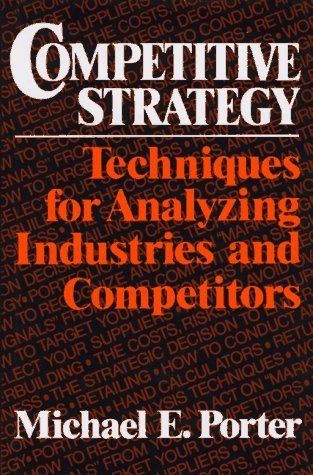
Nova: Exactly! It's delightfully counterintuitive, isn't it? And it's the foundational insight we're pulling from today as we dive into the strategic brilliance of Michael E. Porter’s seminal work,.
Atlas: Porter! The godfather of modern business strategy. His work has really shaped how we even talk about competition in the business world, hasn't it? It’s hard to imagine business school without him.
Nova: Absolutely. And when he published this book, it really shifted the conversation from just trying to be bigger or faster, to thinking about the of industries and how a company can carve out a defensible position within it. It’s not just a textbook; it’s a framework for seeing the chess board differently, which is why it's still so intensely studied today.
Atlas: That makes perfect sense. For anyone out there trying to grow a business, especially in a crowded market like the food industry, this isn't just theory; it's a lifeline.
Nova: Precisely. And to truly make that lifeline actionable, we’re also going to weave in the practical, customer-centric wisdom from Alexander Osterwalder and Yves Pigneur’s. Because knowing how to compete is one thing; knowing what customers actually is another entirely.
Unpacking the Competitive Landscape
SECTION
Atlas: So, let's start with Porter. You mentioned him shifting the conversation. What's the core idea he introduced that we really need to grasp?
Nova: The core, the absolute bedrock, is understanding that competitive advantage isn't just about internal efficiencies or brilliant products. It's fundamentally about the. Porter introduced what he called the "Five Forces" that shape industry competition.
Atlas: The Five Forces! Threat of new entrants, bargaining power of buyers, bargaining power of suppliers, threat of substitute products or services, and rivalry among existing competitors. I remember those from business school, but it’s easy to forget their practical punch.
Nova: It's easy to intellectualize them, but the practical punch is this: these forces determine the inherent profitability of an industry. A robust competitive strategy isn't about ignoring them; it's about understanding how to position your company those forces to either defend against them or exploit them.
Atlas: So, for someone in, say, the food industry, this means not just looking at their direct competitors, but also thinking about how easy it is for new food startups to pop up, or how much power grocery stores have over their pricing, or even how likely people are to just cook at home instead of buying their product?
Nova: You've got it. It’s like a strategic X-ray of your market. And once you understand those forces, Porter outlines three generic strategies for achieving competitive advantage: cost leadership, differentiation, or focus.
Atlas: Okay, cost leadership is clear: be the cheapest. Differentiation: offer something unique. But what about focus? Is that just a smaller version of the other two?
Nova: Not at all. Focus is about targeting a very specific, narrow market segment and then either being the cost leader or the differentiator. It's about deep specialization. It's not about being the best at everything; it's about being uniquely valuable to a specific customer segment. Think of a gourmet, organic, gluten-free bakery serving only a specific neighborhood. They're focused. They might not be the cheapest overall, or even the most differentiated in the entire city, but for, they're invaluable.
Atlas: That makes me wonder, then, how does a company even figure out where they can be uniquely valuable? That feels like the million-dollar question, especially when everyone is trying to stand out.
Nova: And that's where steps in, providing the perfect complement to Porter's grand strategic thinking. It’s the magnifying glass for that unique value.
Crafting Your Unique Market Position
SECTION
Nova: So, if Porter gives us the map of the competitive landscape, gives us the compass to navigate it directly to the customer. It's all about understanding what customers want, not just what we they want.
Atlas: I love that book. The Value Proposition Canvas is such a brilliant tool. It breaks down the customer into their 'jobs,' 'pains,' and 'gains.' It’s so much more insightful than just traditional market research.
Nova: It’s incredibly powerful because it forces you to look beyond demographics and into psychographics – what are customers actually trying to get done, what frustrates them along the way, and what makes them happy?
Atlas: Right, like for a food product, a customer's "job" isn't just "eat dinner." It could be "feed my family healthy food quickly," or "impress my friends with a gourmet meal without hours of cooking." Their "pains" could be lack of time, or difficulty finding quality ingredients, or fear of cooking failures. And "gains" could be convenience, health benefits, or the joy of sharing good food.
Nova: Exactly! And once you've mapped out those customer profiles, then you design your product or service around them, identifying how your offering creates 'pain relievers' and 'gain creators.' It's about meticulous alignment.
Atlas: So, let's take that tiny step you mentioned earlier: mapping out primary competitors. If I'm a food startup, I'd list my top 3-5 competitors. Then, for each, I'd identify their perceived strengths and weaknesses. But then, the crucial part: where does offering truly differentiate itself?
Nova: And this is where the two books truly synergize. Porter tells you to pick a strategy – cost, differentiation, or focus. gives you the tools to the differentiation or focus strategy by deeply understanding your customer and crafting a value proposition that directly addresses their specific pains and gains in a way competitors cannot match.
Atlas: That's the deep question, then: How can you use the Value Proposition Canvas to refine your food product or service, ensuring it directly addresses a critical 'pain' or 'gain' for your target consumers in a way competitors cannot match?
Nova: It requires brutal honesty. You might your organic kale chips are amazing, but if your target customer's biggest pain is the high cost of healthy snacks, and your chips are premium-priced, you've got a disconnect. You're not relieving their pain; you're exacerbating it.
Atlas: So, it's about finding that sweet spot where your unique strengths, your differentiation, directly solve a significant problem or create a substantial gain for a specific customer segment, making you genuinely irreplaceable to them.
Nova: Precisely. It’s not about being the best at everything, it’s about being to a specific segment. That’s your strategic edge. That’s how you build a sustainable competitive advantage.
Synthesis & Takeaways
SECTION
Atlas: This has been incredibly insightful, Nova. It feels like we've gone from the big-picture strategic thinking down to the granular, customer-focused execution. The synergy between Porter and Osterwalder is powerful.
Nova: It truly is. Porter gives you the macro-view of the battlefield, helping you understand the forces at play. gives you the micro-view of the customer's mind, allowing you to design the perfect weapon for that battle.
Atlas: And for our listeners, especially those in the food industry, this isn't just theoretical. This is about survival and growth. It’s about building something that can withstand the pressures of competition, not by brute force, but by smart, targeted value creation.
Nova: It’s about recognizing that competitive advantage isn't just a race to the bottom on price, or an endless quest for features. It’s about understanding your unique position and leveraging it to serve a specific group so well that you become their obvious, go-to choice. It's about intention and precision in a chaotic market.
Atlas: It really shifts your perspective from seeing competitors as threats to seeing the market as an opportunity to serve. What a powerful reframe.
Nova: Indeed. And it all boils down to trust: trust your instincts, hone your vision, and then meticulously plan how you'll deliver that unique value.
Atlas: That’s a fantastic way to put it. It empowers you to build something truly lasting. This is Aibrary. Congratulations on your growth!