From Individual Isolation to Relational Resilience
Golden Hook & Introduction
SECTION
Nova: We have been sold a dangerous lie about the self-made individual. We celebrate the person who succeeds alone, the lone wolf, the person who needs no one. But in the landscape of high-performance psychology and long-term success, that solitary pursuit is actually a structural failure.
Atlas: That hits hard. It feels like every business book and self-help guide for the last thirty years has been screaming that independence is the ultimate goal. You’re telling me the blueprint is fundamentally flawed?
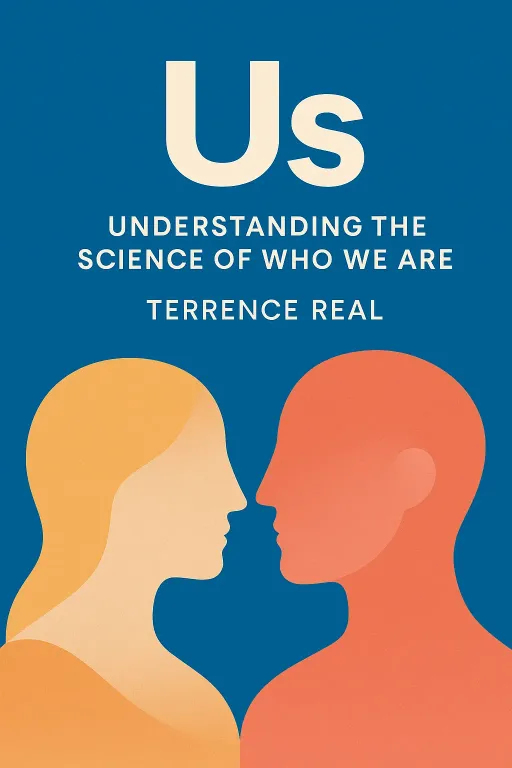
Nova: It is. Today we are dismantling that myth by looking at two distinct but deeply connected frameworks. We are diving into Us by Terrence Real, who argues that the modern worship of rugged individualism is the primary culprit in destroying our relationships. And we are balancing that with You Can Thrive After Narcissistic Abuse by Melanie Tonia Evans, which provides a radical, internal-focused framework for breaking the cycles of manipulation that keep us stuck.
Atlas: It is a fascinating juxtaposition. You have Terrence Real looking at the macro-level of how we interact, and Melanie Tonia Evans looking at the micro-level of our internal trauma wiring.
Nova: Exactly. Real is a family therapist who spent decades watching couples fail because they were playing a game of me versus you. He introduces the concept of the Relational Self, which is essentially a software update for how we handle conflict. And Evans, through her Quanta Freedom Healing framework, shows us that the reason we keep finding ourselves in these toxic, draining dynamics isn't just bad luck. It is a biological attractor pattern built from childhood wounds.
Atlas: So, we are talking about two different systems here. One is the system of how we relate to others, and the other is the system of how we relate to our own past. Let’s get into the mechanics of this.
The Myth of the Independent Self
SECTION
Nova: Let’s start with the idea of the Relational Self. Most of us operate under the assumption that a relationship is a contract between two independent entities. You have your needs, I have mine, and we negotiate. If you are not meeting my needs, you are the problem.
Atlas: That sounds like a perfectly rational, professional way to handle a partnership. Is that not how it should work?
Nova: It is a logical way to run a business, but it is a catastrophic way to run a human connection. Real argues that this stance is grounded in the myth of rugged individualism. When you view your partner as someone who must accommodate your needs, you are not in a relationship. You are in a transaction. And the moment that transaction falters, you move into a defensive posture.
Atlas: I can see that playing out in a high-pressure work environment. When two people are fighting for resources, they stop being a team and start being competitors. But how does that change when you bring it into a personal dynamic?
Nova: The neurobiology of it is fascinating. When you adopt a me versus you stance, your brain shifts into a survival mode. You are looking for flaws in the other person to justify your own position. You are essentially trying to win the argument. The problem is that in a relationship, if you win, the relationship loses.
Atlas: That is a sharp distinction. So, if I win the argument, the connection is damaged, which means I have actually lost the game of being in a relationship.
Nova: Exactly. Real suggests that the shift to a team mindset is not just a nice idea. It is a biological necessity. When you frame the challenge as a problem that we have to solve together, your brain chemistry changes. You stop scanning for threats in your partner and start scanning for solutions in the environment.
Atlas: That sounds like a fundamental shift in perspective. But let’s play devil’s advocate. If I am always trying to be the team player, do I not risk losing my own identity? If I am constantly accommodating the us, what happens to the me?
Nova: That is the crucial question. Real does not suggest you abandon your identity. He suggests that you expand it. The Relational Self is not about disappearing into the other person. It is about recognizing that your individual health is inextricably linked to the health of the connection. If you are healthy but the connection is toxic, you are still in a state of decay.
Atlas: It is like an ecosystem. You cannot have a healthy tree in a dead forest. The soil matters more than the individual plant.
Nova: That is a perfect analogy. If the soil of your relationship is poisoned by the constant need to be right or the need to defend your independence, nothing you do as an individual will thrive. You have to tend to the soil.
The Architecture of Attraction
SECTION
Atlas: That makes sense for people who are already in a stable, functioning relationship. But what about the people who find themselves trapped in cycles where the soil is constantly poisoned by someone else? This is where Melanie Tonia Evans comes in, right? Because you can have the best team mindset in the world, but if you are dealing with a personality that is fundamentally manipulative, the team approach might just get you steamrolled.
Nova: You are absolutely right. And this is where Evans’ work becomes essential. She talks about the Quanta Freedom Healing framework. Her core argument is that we attract these manipulative patterns not because we are unlucky, but because we have unhealed childhood wounds. These wounds act like a beacon.
Atlas: Wait, hold on. That sounds a bit like victim-blaming. Are you saying that if someone is being abused or manipulated, it is their fault because of their childhood?
Nova: That is a common misinterpretation. It is not about fault. It is about resonance. Evans argues that our nervous system gets calibrated to certain levels of chaos or neglect in childhood. As adults, we do not intentionally seek out abusers. We seek out the familiar. We are subconsciously drawn to the same emotional frequencies we grew up with because, on a primitive level, the brain perceives the familiar as safe, even if it is objectively toxic.
Atlas: Okay, that makes sense from a trauma-response perspective. It is like the brain is trying to solve an old problem with new people.
Nova: Precisely. You are trying to heal the past by re-enacting it with a different cast of characters. Evans calls these patterns the attractor field. If you do not change the internal frequency, you will keep attracting the same dynamic, even if you change the partner.
Atlas: So, the strategy here is not to fight the external abuser. It is to re-engineer the internal receiver.
Nova: That is exactly the shift. Evans emphasizes that focusing on the abuser—trying to fix them, change them, or expose them—is a waste of energy. It keeps you locked in the external chaos. The Quanta Freedom Healing framework is about going inward. It is about identifying the specific emotional triggers that light up when you are in a toxic situation and healing those wounds directly at the source.
Atlas: That sounds like a very high-level performance strategy. Instead of reacting to the market, you are changing your own internal algorithm.
Nova: It is the ultimate systems thinking approach to your own psyche. You are identifying the bug in your code. The bug is the childhood wound that says, I am only lovable if I am sacrificing myself, or I am only safe if I am controlling the outcome. Once you patch that bug, the external triggers lose their power.
Atlas: I am curious about the practical application of this. If someone is listening and they feel like they are constantly attracting the same type of draining, manipulative energy in their work or personal life, what is the first step in this internal re-engineering?
Nova: The first step is to stop looking at the other person. Stop analyzing why they are the way they are. Their pathology is irrelevant to your recovery. Instead, look at your own bodily sensation. When you feel that surge of anxiety, that desperate need to explain yourself, or that feeling of being small, that is the wound speaking. You take that feeling, you sit with it, and you provide yourself the validation you were missing as a child.
Atlas: It sounds simple, but I imagine it is incredibly difficult to do in the moment. It requires a massive amount of self-awareness to pause when your nervous system is screaming at you to fight or flee.
Nova: It is the hardest work you will ever do. It is essentially reparenting your own nervous system. But the payoff is permanent. Evans points out that once you shift your focus from the external threat to the internal release, the dynamic changes. Either the toxic person leaves because they can no longer find a foothold in you, or the relationship transforms because you are no longer playing the role they need you to play.
Atlas: It is like changing the frequency on a radio. If you stop broadcasting the signal that says, I am available for manipulation, the manipulator just stops tuning in.
Synthesis & Takeaways
SECTION
Nova: Exactly. And when you combine the two insights we have discussed today, you get a powerful roadmap for relational resilience. Terrence Real gives you the goal: a team-based, relational identity. Melanie Tonia Evans gives you the prerequisite: an internal nervous system that is no longer wired for trauma-based attraction.
Atlas: So, you cannot have the team mindset without doing the internal work. If you try to play on a team while you are still carrying around the wounds that make you attract manipulators, you are just going to be a team player for the wrong team.
Nova: That is a brilliant way to put it. You have to clear the internal interference before you can tune into a healthier relational frequency. You need the internal stability that Evans describes to be able to pull off the team-based vulnerability that Real advocates for.
Atlas: It really is a system. You have to optimize the individual, which is the internal healing, so that you can optimize the system, which is the relationship.
Nova: And that brings us to the takeaway. It is a simple, daily practice. The next time you find yourself in a defensive argument, whether it is with a partner, a colleague, or a family member, stop the flow. Take a deep, intentional breath. And ask aloud: How do we fix this as a team, rather than who wins?
Atlas: That is the perfect pivot. It stops the me-versus-you transactional loop and forces a reset to the team-based operating system. It is a small change, but I can see how it would be massive over time.
Nova: It is a massive change. It is the difference between being a collection of individuals fighting for survival and being a resilient unit capable of navigating any challenge. We are not designed to be rugged individuals. We are designed to be relational beings.
Atlas: That is a powerful note to end on. It is not about being weak and needing others. It is about being strong enough to build something that lasts longer than yourself.
Nova: Exactly. It is about choosing evolution over survival. And that is the most strategic move you can make.
Atlas: This has been a fantastic deep dive. I feel like we have just re-engineered our approach to the most important things in our lives.
Nova: I am glad we could connect these dots. It is amazing how these seemingly separate fields of therapy and trauma recovery align when you look at them through a systems lens.
Atlas: It definitely gives me a lot to think about for my own daily operations. Thank you for walking me through this, Nova.
Nova: It was a pleasure. And to everyone listening, take that question with you. How do we fix this as a team? It might just change the trajectory of your entire week.
Atlas: This is Aibrary. Congratulations on your growth!