

Stop Guessing, Start Mastering: The Guide to Material Intelligence.
Golden Hook & Introduction
SECTION
Nova: Everyone says practice makes perfect, but what if I told you that in the world of fine woodworking, endless practice without a fundamental understanding of your material is actually just perfecting frustration? Atlas, you’ve seen enough wobbly joints to know exactly what I’m talking about, right?
Atlas: Oh man, Nova, that hits close to home. I’ve definitely had my share of projects that started out looking great and then, a few weeks later, started telling a different, much sadder story. Like a beautiful cabinet door that suddenly decided it liked the shape of a potato chip.
Nova: Exactly! That potato chip door, that’s the silent scream of material misunderstanding. And that’s why we’re diving into a philosophy today that we’re calling "Stop Guessing, Start Mastering: The Guide to Material Intelligence." It’s a concept built on the bedrock of true craftsmanship, inspired by the foundational work of giants like R. Bruce Hoadley and the practical wisdom of master artisan Garrett Hack.
Atlas: Hoadley and Hack, those are serious names in the woodworking world. What kind of insights are we talking about here?
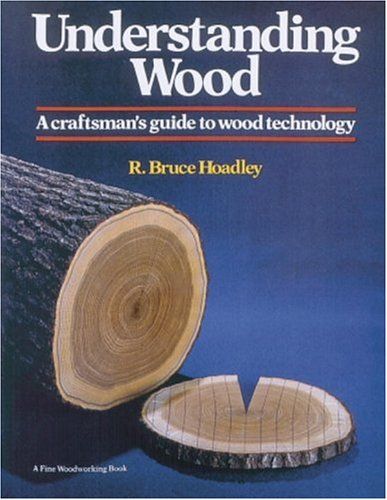
Nova: Well, Hoadley, a revered professor of wood science for decades, wrote "Understanding Wood," which is essentially the bible for anyone serious about the scientific rigor behind lumber. He transformed what was often anecdotal craft knowledge into clear, accessible biological and physical principles. Then you have Garrett Hack, a celebrated fine furniture maker, whose "The New Woodworker's Handbook" bridges that scientific understanding with the hands-on realities of the workshop, from selecting the perfect board to crafting lasting joinery. He really shows how that deep knowledge elevates craft to art.
Atlas: So it’s the theory the application. I like that. It sounds like moving from just following instructions to actually knowing the instructions work.
Nova: Precisely. And that "why" is where true material intelligence begins. Today, we're going to pull back the curtain on the hidden life of wood.
The Foundational Science of Wood: Understanding its Hidden Life
SECTION
Nova: Many approach a piece of wood just seeing a surface, a color, a grain pattern. But inside, it’s an incredibly complex, almost living, biological structure. Think of wood as millions of tiny, hollow straws, all bundled together. These aren't just empty spaces; they're cells, and they’re designed to transport water.
Atlas: Oh, I see. Like a miniature plumbing system for a tree.
Nova: Exactly! And that’s the key. These cells are hygroscopic, meaning they love water. They’ll absorb it from the air, and they’ll release it back into the air, constantly striving for equilibrium with their environment. Imagine leaving a dry sponge on a damp counter. What happens?
Atlas: It soaks up the water and gets bigger.
Nova: And then if you leave that wet sponge in the sun?
Atlas: It shrinks and gets stiff.
Nova: That’s wood, in a nutshell. As the moisture content changes, the wood cells swell or shrink. And here's the crucial part: they don't swell or shrink uniformly in all directions. They move most across their width, less along their thickness, and very little along their length. This differential movement is the silent killer of many woodworking projects.
Atlas: But wait, are you saying that every piece of wood is constantly moving, expanding, and contracting, even inside my house? That sounds a bit out there. Like, is my coffee table secretly breathing?
Nova: In a way, it is! Think about it like this: a tree is constantly adapting to its environment. Once it's cut and dried, that biological imperative doesn’t just vanish. It continues to react to the humidity in your home. Let's take a look at a classic example of what happens when a craftsman ignores this fundamental truth.
Nova: There was a renowned cabinetmaker, let's call him Arthur. Arthur was incredibly skilled with his chisels and planes; his joints were tight, his finishes impeccable. He built a magnificent dining table for a client, a large, solid oak slab for the top, joined with beautiful breadboard ends. He was meticulous with his technique, but he neglected one critical detail: the wood's inherent movement. He glued those breadboard ends on with a strong, continuous glue joint, believing he was creating an indestructible piece.
Atlas: Oh, I know where this is going. He essentially locked the wood in place.
Nova: Precisely. The cause of the problem was Arthur’s lack of material intelligence about wood movement. The process went like this: the table was delivered in the summer, when humidity was high. The oak top was fully expanded. As winter arrived, the humidity dropped, and the table’s top tried to shrink. But those breadboard ends, glued solid, wouldn't let it. They acted like an immovable vice. The internal stress built and built, like a silent war being waged within the timber itself.
Atlas: Wow, that’s kind of heartbreaking. What was the outcome?
Nova: The outcome was inevitable and devastating. One cold winter morning, the client heard a loud crack. The beautiful, solid oak top had split right down the middle, a wide, ugly chasm running the length of the table. The breadboard ends, too, had started to pull away, leaving unsightly gaps. Arthur, despite his superb technique, had created a visually stunning but structurally doomed piece. His guessing about wood behavior led to frustration, a ruined project, and a very unhappy client.
Atlas: That’s a powerful story. It really makes you realize that technique alone isn't enough. So, the wood cells are like tiny, thirsty straws, and they’re always moving. How much does a beginner really need to know about all these cellular structures? Is it like needing to be a botanist to make a chair?
Nova: That's a great question, Atlas. You don't need a botany degree, but you need an intuitive understanding, almost like learning the personality of your material. Hoadley's work gives you the language to understand wood behaves the way it does, which then empowers you to anticipate its movements. It's about moving from reacting to wood's surprises to proactively working with its nature.
The Art of Anticipation & Application: From Science to Master Craft
SECTION
Nova: So, if wood is this living, breathing, constantly moving entity, how do the masters not just fight it, but dance with it? This is where the wisdom of artisans like Garrett Hack comes into play, blending that scientific knowledge with practical application. It’s about material intelligence in action.
Atlas: Okay, so how do you even begin to “read” a piece of wood like that? It all looks pretty solid to me when I pick it up at the lumberyard.
Nova: That’s the key! It's about understanding grain direction and how the tree was cut. Think of a log. If you slice it straight across, you get flat-sawn lumber, often with those beautiful, flowing cathedral grain patterns. If you cut it radially, like slices of a pie, you get quarter-sawn lumber, with straight, parallel grain lines. The flat-sawn wood moves more across its width than quarter-sawn. This knowledge directly impacts how you use it.
Atlas: So basically you’re saying, knowing how the wood was cut tells you how it's going to misbehave?
Nova: Precisely! And armed with that foresight, you make deliberate choices. For example, a master artisan, when building a tabletop, might choose quarter-sawn lumber for its stability, even if it’s more expensive or harder to find. Or, if they use flat-sawn, they’ll incorporate expansion joints or floating panel techniques to accommodate that inevitable movement, rather than fighting it like Arthur did.
Nova: Let me tell you about another artisan, let's call her Clara, who embodied this material intelligence. Clara was commissioned to build a set of exquisite shaker-style cabinet doors, known for their clean lines and solid wood panels. Unlike Arthur, Clara didn't just pick beautiful wood; she it.
Atlas: I’m curious, what did she do differently?
Nova: The cause of Clara’s success was her deep application of material intelligence. The process went like this: first, she carefully selected her lumber, choosing boards that were dried to the appropriate moisture content for her region's climate. She then allowed the wood to acclimate in her workshop for weeks, letting it stabilize. When constructing the doors, instead of gluing the solid wood panels rigidly into the frames, she designed them to "float" within grooves, secured only in the center with a small dab of glue, and leaving tiny gaps at the rails and stiles. This allowed the panels to expand and contract freely with seasonal humidity changes, unseen within the frame.
Atlas: That’s a great way to put it. So, she wasn't trying to stop the wood from moving; she was giving it room to breathe.
Nova: Exactly. She anticipated its movement and designed it, not against it. The outcome? Her cabinet doors remained perfectly flat and stable year after year. There were no cracks, no warps, no unsightly gaps. Her clients were thrilled, and her reputation for meticulous, lasting craftsmanship grew. She transformed potential problems into predictable, beautiful outcomes, all because she understood the material’s inherent nature.
Atlas: That’s actually really inspiring. It sounds like this isn't just about avoiding problems, but about creating something that truly endures. It’s like, instead of trying to force a square peg into a round hole, you just make the hole a little bigger, or you find a different peg. That makes me wonder, does this material intelligence apply beyond woodworking? Could I apply this to, say, managing a complex team or even a garden?
Nova: Absolutely! The philosophy of material intelligence is deeply transferable. It’s about understanding the inherent nature of whatever you're working with – be it a team's dynamics, the soil in your garden, or the creative process itself. Instead of imposing your will blindly, you observe, you learn its tendencies, its strengths, its weaknesses, and then you adapt your approach to work it. That’s where true mastery lies.
Synthesis & Takeaways
SECTION
Nova: So, whether you're a woodworker, a manager, or a gardener, the lesson from material intelligence is profound: true mastery isn't just about perfecting your technique. It’s about a deep, almost intimate, understanding of the medium itself. It’s moving from a transactional relationship with materials or people to a collaborative one, where you anticipate their nature rather than fight it.
Atlas: That gives me chills. That’s such a hopeful way to look at it. It leads to not just better products or outcomes, but a deeper, more satisfying creative process, doesn't it? It's like finding a rhythm with the world around you.
Nova: It absolutely does. It’s the difference between guessing and truly knowing, between struggling and mastering. It’s about recognizing that the material often has its own inherent wisdom, and our job as artisans, creators, or leaders, is to listen to it.
Atlas: And for anyone listening who wants to take a tiny step towards this mastery, the book suggests something simple: grab a piece of scrap wood. Can you identify the grain direction and predict how it might move if exposed to humidity? It’s a small experiment, but it starts you down the path of truly seeing your material.
Nova: That’s a perfect example of how to begin this journey. From that simple observation, a world of understanding opens up.
Atlas: I love that. So, for our listeners, how might you apply this idea of "material intelligence" in your own craft, your work, or even your daily interactions? What "materials" are you currently guessing about, and how could understanding their true nature change your approach?
Nova: Food for thought indeed.
Atlas: This is Aibrary. Congratulations on your growth!