

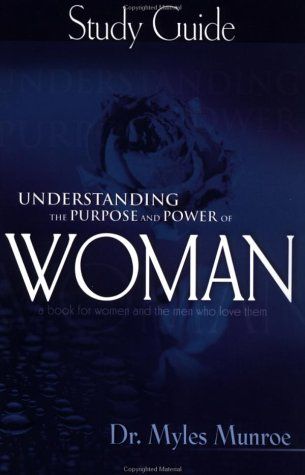
The Educator's Mandate: Unlocking Female Potential with Myles Munroe's Wisdom
Content
Content
Nova: -
Golden Hook & Introduction
SECTION
Nova: Have you ever looked at a young girl and wondered what incredible, world-changing potential is locked inside her? Not just what she be, but what she? Today, we're exploring a book that argues a woman's greatest power isn't something she has to acquire, but something she was created with from the very beginning. We're diving into Myles Munroe's "Understanding the Purpose and Power of Woman" with someone who lives and breathes this mission every day: educator and advocate, Vivian Ackon. Vivian, welcome.
Vivian Ackon: Thank you for having me, Nova. It's a critical conversation, and one I'm so passionate about.
Nova: It really is. And this book, it just hits so differently. It’s not about a superficial "girl power" message; it goes right to the source code, to the very design and purpose of woman. I’m so excited to unpack it with you.
Vivian Ackon: Me too. Because these ideas, they aren't just philosophical. They have the power to shape how we educate, how we mentor, and how girls see themselves from a very young age.
Nova: Exactly! And that’s our goal today. We'll dive deep into this from two powerful perspectives from the book. First, we'll explore the idea of woman as an 'Incubator of Potential,' which goes far beyond biology. Then, we'll discuss her role as an 'Essential Influencer,' completely redefining what it means to be a powerful partner.
Vivian Ackon: I'm ready. Let's get into it.
Deep Dive into Core Topic 1: The Incubator of Potential
SECTION
Nova: So let's start with that first big idea, Vivian. It's one that stopped me in my tracks. Munroe makes this really profound point about the very word 'woman.' He suggests its origin is 'womb-man.' And at first, you might think, okay, biology, childbirth. But he argues it’s so, so much bigger than that.
Vivian Ackon: It is. And that distinction is crucial. If we limit that concept to biology, we exclude so many women and misunderstand the true scope of that power.
Nova: Precisely. Munroe paints this picture of a woman having an innate, spiritual, and psychological capacity to be a 'womb' for… well, for everything. For a raw idea. For a dream that doesn't exist yet. For another person's undeveloped talent. She has the unique ability to take something fragile and formless, bring it inside her protected space—her mind, her heart, her encouragement—and incubate it. She nurtures it, protects it from the harsh outside world, and develops it until it's strong enough to be 'born' into reality.
Vivian Ackon: That is such a beautiful and accurate metaphor for the role of a great educator. You know, in education, we talk a lot about creating 'psychological safety.' That's the term we use. But 'incubator' or 'womb'... that feels more active, more purposeful. It’s not just a safe space; it’s a developmental space.
Nova: Yes! It's like a darkroom for developing film. The image is already on the film, but it's invisible. It needs the perfect, controlled, protected environment of the darkroom to emerge and become what it was always meant to be. That's the power Munroe is talking about.
Vivian Ackon: That's a perfect analogy. It makes me think about the practical application in a classroom. When a quiet girl has a unique idea, how do we as educators create that 'womb' or 'darkroom' for that idea to grow without being crushed by criticism or self-doubt? It's our most important job.
Nova: Have you seen this play out? I mean, a specific time where you realized, "I am being the incubator for this person's potential right now"?
Vivian Ackon: Oh, absolutely. It happens all the time, but one student really stands out. I had a student a couple of years ago, let's call her Amina. Incredibly bright, you could see it in her eyes, but so shy she would physically shrink in her chair. If you called on her, she would just whisper. Her potential was just a faint, undeveloped image on the film, to use your analogy.
Nova: I think we all know an Amina.
Vivian Ackon: Exactly. And our job, my job and the other teachers' jobs, was to become that incubator for her. We didn't just say "speak up!" That would have been like exposing the film to harsh light. Instead, we created a process. First, we had her write her thoughts down. Then, we'd ask her to share them with just one trusted friend. Then, in a small group of three. We slowly, carefully, developed her confidence. We were the 'womb' for her voice.
Nova: You were protecting it while it grew stronger.
Vivian Ackon: Precisely. We weren't giving her the answers or the voice. We were creating the environment where her own voice could be 'born' without fear. And the transformation was astounding. It took months, but by the end of the school year, this was the same young woman who volunteered to lead her team in the school's debate club. She stood at the podium and spoke with clarity and passion. She just needed that incubator to develop the strength that was already inside her.
Nova: Wow. That gives me chills. That's the concept in action. It's not about creating something from nothing. It's about nurturing what is already there, hidden in seed form.
Vivian Ackon: And it's a power every woman has, whether she's a mother, a CEO, an artist, or an educator. The power to see potential and create the environment for it to flourish.
Deep Dive into Core Topic 2: The Essential Influencer
SECTION
Nova: That's a perfect illustration, Vivian. And what I love about Amina's story is that it shows this nurturing isn't a passive act. It's an active, strategic, powerful one. Which brings us so beautifully to the second core idea from the book, which I think is one of the most misunderstood and, frankly, misused concepts in history: the idea of woman as a 'helper'.
Vivian Ackon: I agree. That word 'helper' comes with so much baggage. It often implies a subordinate, an assistant, someone in a secondary, less important role. And that has done so much damage to the self-perception of girls and women.
Nova: So much damage. But Munroe does this brilliant deep dive into the original text. In the book of Genesis, when the woman is created, the Hebrew phrase used is 'ezer kenegdo'. Now, we've all heard it translated as 'helper'. But Munroe breaks it down. The word 'ezer'... it's used over 20 times in the Old Testament. And in most of those cases, it's used to describe God Himself.
Vivian Ackon: That's a critical piece of context.
Nova: It's everything! It's used in phrases like "God is my helper," but the meaning isn't "God is my assistant." It means God is my strong rescuer, my necessary power, my source of strength in a time of desperate need. It's a word of immense power. And then you have 'kenegdo,' which means 'corresponding to' or 'face-to-face with.'
Vivian Ackon: So it's not someone standing behind or below, but someone standing equal, looking you in the eye. A counterpart.
Nova: Exactly! So 'ezer kenegdo' isn't a "little assistant." It's "a power equal to and corresponding to him." An essential, necessary, powerful partner. When you reframe it like that, the entire dynamic shifts. It’s not about subordination; it’s about strategic, powerful influence.
Vivian Ackon: This reframe is a game-changer for education. It's everything. We spend so much time, often with the best intentions, telling girls to be 'nice' and 'helpful.' But what they often hear is, 'be quiet, be agreeable, be an assistant.' They learn to serve rather than to lead.
Nova: How do you combat that in your work? How do you teach this 'ezer kenegdo' principle?
Vivian Ackon: We have to be very intentional about it. Reframing 'helper' as 'essential strategic partner' changes the entire curriculum. For example, in group projects, we actively look for and discourage the dynamic where the girls automatically volunteer to be the note-takers or the presentation designers, the background roles.
Nova: The 'administrative' tasks.
Vivian Ackon: Yes. Instead, we teach them to be the 'ezer kenegdo' of the group. We run leadership workshops where we don't just teach public speaking; we teach critical listening. We teach them how to identify what is from the conversation. What critical insight has no one else brought up? What question can unlock the whole problem? Their job isn't just to support the work; it's to provide the essential ingredient that makes the work successful.
Nova: So it's moving from "How can I help?" to "What essential value can I add that no one else sees?"
Vivian Ackon: That is the exact shift. It's the difference between teaching a girl to take notes in a meeting versus teaching her to provide the critical analysis that the meeting is fundamentally missing. It's about being an indispensable influencer. We see it on sports teams, in coding clubs, in student government. We're teaching them to be that 'ezer kenegdo'—the powerful, corresponding partner who elevates the entire enterprise.
Nova: And it connects so perfectly to the first idea. The 'incubator' is the internal power to develop potential. The 'essential influencer' is the external power to apply that potential in a partnership. They are two sides of the same coin of purpose.
Vivian Ackon: They are. You nurture the seed in the safe space, and then you bring that fully-grown plant into the garden to help the whole ecosystem thrive. One power feeds the other.
Synthesis & Takeaways
SECTION
Nova: This is so powerful. So, as we bring this all together, we have these two incredible, interconnected powers described by Myles Munroe. First, the internal, nurturing power of the 'womb-man'—the incubator of potential. And second, the external, relational power of the 'ezer kenegdo'—the essential influencer and strategic partner.
Vivian Ackon: And when a young woman understands both, she understands her inherent worth and her indispensable role in the world. She knows she has the power to develop greatness, both in herself and in others, and the power to stand as an equal, essential partner in any endeavor.
Nova: It's a blueprint for a life of purpose. So, Vivian, for every educator, parent, mentor, or even just a friend listening right now who is inspired by this and wants to put it into practice... what is one tangible thing they can do this week to help a young woman in their life begin to see and embrace this power?
Vivian Ackon: That's a great question. I would say this: find one thing she is uniquely good at or passionate about, even if it seems small or insignificant to the outside world. It could be her sense of humor, the way she organizes her notes, her ability to calm a friend down, anything.
Nova: So identify a specific seed of potential.
Vivian Ackon: Yes. But then, here's the crucial step. Don't just praise it. Don't just say, "You're so good at that." Give it a platform. Ask her to it to you or to someone else. If she's a great doodler, ask her to teach you how to draw a cartoon character. If she's great at a video game, ask her to explain the strategy to you.
Nova: Ah, I see. You're shifting her role.
Vivian Ackon: You are shifting her from being a passive student of her gift to an active master of it. You are making her the 'ezer kenegdo' in that moment—the essential power with the knowledge. That small shift, from simply receiving praise to demonstrating her power and influence, is where purpose begins to take root. It's a small action with a profound impact.
Nova: Let her move from student to master. That is a beautiful, actionable, and powerful takeaway. Vivian Ackon, thank you so much for bringing your wisdom and your passion to this conversation. It has been truly enlightening.
Vivian Ackon: The pleasure was all mine, Nova. Thank you for creating the space for this important discussion.
Nova: And to all of our listeners, we hope this conversation helps you see and nurture the incredible power and potential in the women and girls in your life. Until next time.