

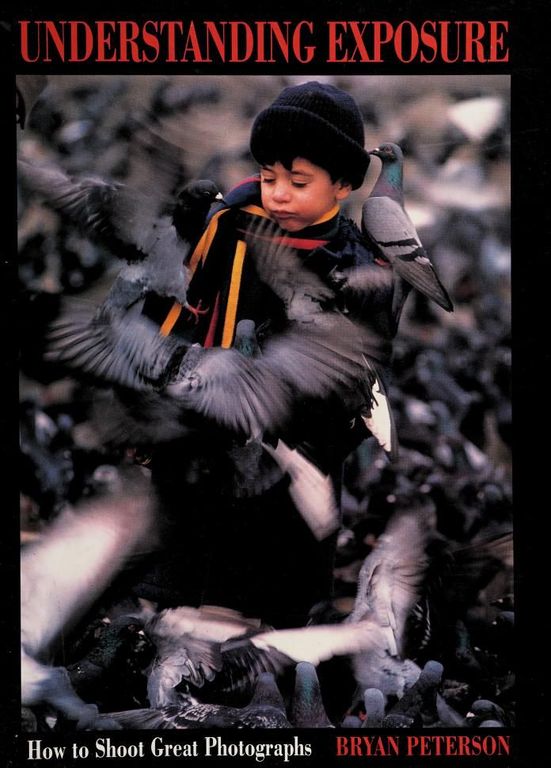
Understanding exposure
Introduction
Nova: Picture this. You've just bought a beautiful new camera. You unwrap it, feel the weight in your hands, and then… you freeze. Because staring back at you is that terrifying dial marked M. Manual mode. And suddenly that dream of capturing stunning photographs feels like it requires a degree in rocket science. Welcome to Aibrary. I'm Nova.
Atlas: And I'm Atlas. And I have to admit, Nova, I've been that person. I've stared at that M on the dial and thought, "There's no way I'll figure this out." But apparently, there's a book that's been rescuing photographers from exactly that feeling for decades?
Nova: There absolutely is. Bryan F. Peterson's Understanding Exposure. First published back in 1990, now in its fourth edition, and it has sold hundreds of thousands of copies worldwide. It's often the very first book recommended to any new photographer, and even experienced shooters keep it on their shelves as a refresher. What makes it special is that Peterson doesn't just teach you what the buttons do. He teaches you how to think like a photographer.
Atlas: That's a bold claim. Most camera manuals tell you what the buttons do. What's different here?
Nova: Peterson's central argument is that most people stay in automatic modes not because manual exposure is actually that hard, but because camera manuals and technical guides make it sound impossible. He strips away the jargon, gives things playful names like "the Sky Brothers" and "Mr. Green Jeans," and most importantly, he shows you that exposure isn't just about getting a correctly bright image. It's about making creative choices. A well-exposed photograph isn't necessarily a great photograph. A creatively correct exposure is the goal.
Atlas: Okay, I'm intrigued. Let's dig in.
Aperture, Shutter Speed, and ISO Demystified
The Photographic Triangle
Nova: Alright, Atlas, let's start with the foundation of the entire book. Peterson introduces what he calls the Photographic Triangle. Three ingredients: aperture, shutter speed, and ISO. Every single correctly exposed photograph is a combination of these three.
Atlas: So this is the exposure triangle that everyone talks about? I've seen diagrams online but it always felt like a math equation I'd never solve.
Nova: That's exactly the problem Peterson addresses. He says stop treating it like a formula and start treating it like a creative toolkit. Let's break each piece down the way he does. Aperture is the opening in your lens. Wide opening, like f/2.8, lets in tons of light and creates that beautiful blurry background. Narrow opening, like f/22, lets in very little light but keeps everything sharp from foreground to background.
Atlas: So aperture controls depth of field and how much light comes in at once. Got it. And shutter speed?
Nova: Shutter speed is simply how long the camera's sensor is exposed to light. Fast shutter speeds like 1/1000 of a second freeze action. A bird in mid-flight, a soccer player kicking a ball, droplets of water suspended in air. Slow shutter speeds like 1/4 of a second or even multiple seconds create motion blur. Think silky waterfalls or light trails from cars at night.
Atlas: And ISO is the sensor's sensitivity to light?
Nova: Exactly. A low ISO like 100 gives you the cleanest, sharpest image. As you increase it to 800 or 3200, the sensor becomes more sensitive to light, which is great in dark settings, but you introduce digital noise, that grainy look. Peterson's rule is simple: use the lowest ISO you can get away with. Raise it only when you have to.
Atlas: But here's where I always get stuck. If I change one of these, don't I have to compensate with another?
Nova: Yes, that's the triangle in action. If you open up your aperture to let in more light, you either need a faster shutter speed or a lower ISO to balance it out. Peterson's genius is that he doesn't just explain this relationship. He gives you mental models so you can navigate it intuitively rather than mathematically.
Atlas: Mental models. I like the sound of that. What kind of models?
From Storytelling to "Who Cares?"
Six Creative Exposures
Nova: This is where the book really shines. Peterson doesn't just say "here are f-stops, memorize them." Instead, he categorizes exposure choices by creative intent. He identifies six kinds of exposures, and three of them relate to aperture alone.
Atlas: Six kinds? Alright, walk me through them.
Nova: First, storytelling apertures. These are small openings like f/16 or f/22. You use them when you want everything in the frame to be sharp. A sweeping landscape where the flowers in the foreground and the mountains in the distance are both crystal clear. That's storytelling. The viewer's eye can wander anywhere in the frame and find detail.
Atlas: So the opposite would be isolating a subject?
Nova: Exactly. Second category: single-theme or isolating apertures. Wide openings like f/2.8 or f/4. You use these for portraits where you want the person sharp but the background melted away into a creamy blur. Or a flower with everything behind it out of focus. The aperture tells the viewer exactly where to look.
Atlas: And what about the third aperture category? I've heard the phrase "Who cares?" apertures somewhere.
Nova: That's Peterson's wonderfully irreverent name for the middle apertures, f/8 and f/11. He calls them "Who cares?" because in many situations, depth of field simply isn't critical. You're not trying to isolate a subject, and you're not trying to render a vast landscape. These are your everyday walkaround settings. They give you great sharpness and contrast without you having to overthink it.
Atlas: That's actually liberating. Most guides make it sound like you need to agonize over every f-stop decision. Sometimes you just don't care, and that's okay.
Nova: Exactly. Then Peterson moves to shutter speed with two more creative categories. Freezing action with fast shutter speeds, and implying motion with slow ones. He also covers panning, where you follow a moving subject with your camera using a moderately slow shutter speed, keeping the subject sharp while the background streaks. That's category three of the shutter speed techniques.
Atlas: So six creative approaches total. Three for aperture, three for shutter speed. And all of them tied to what you want the photograph to say.
Nova: That's the big idea. Peterson wants you asking a creative question before a technical one. Not "what settings do I need?" but "what story am I telling with this image?" The settings follow from that.
Metering Made Memorable
The Sky Brothers and Mr. Green Jeans
Nova: Let me ask you something, Atlas. If you're photographing a person standing in front of a bright sky, what happens with automatic metering?
Atlas: The camera usually gets confused. It either makes the person a silhouette or blows out the sky to pure white.
Nova: Right. And here's where Peterson does something brilliant. Instead of diving into complex metering modes and technical explanations about 18% gray, he gives you memorable shortcuts. He introduces the Sky Brothers.
Atlas: The Sky Brothers. That sounds like a band from the seventies.
Nova: It's actually a metering technique. The Sky Brothers are the blue sky to the north, the dusky sky at sunrise or sunset, and the blue sky with white clouds. Peterson teaches you that if you meter off the sky itself in certain conditions, you'll often get a perfect exposure. A blue northern sky, for example, is very close to that 18% gray that light meters are calibrated for. So instead of letting the camera average the whole scene and get confused, you point at the right part of the sky, lock in your exposure, recompose, and shoot.
Atlas: That is clever. And who's Mr. Green Jeans?
Nova: Mr. Green Jeans is the Sky Brothers' cousin on the ground. Peterson says that green grass in daylight or green foliage reflects light very similarly to that middle gray standard. So if you're in a tricky lighting situation outdoors, find some green grass in the same light as your subject, meter off that, lock exposure, and you've got a reliable starting point. It's not always perfect, but it's remarkably consistent.
Atlas: So instead of understanding the physics of reflectance, which most beginners don't care about, you just need to know: look for blue sky or green grass to meter.
Nova: That's the Peterson approach in a nutshell. Make it practical. Make it memorable. And make it work in the real world. He emphasizes that light meters are calibrated for a world that's 18% reflective, but the world isn't uniformly reflective. A snowy scene is way brighter than that. A black cat in a coal mine is darker. You need to know when to override the meter, and these simple reference points give you the confidence to do it.
Atlas: And this connects back to the creative choices, doesn't it? Because once you know how to meter properly, you can deliberately overexpose or underexpose for effect.
Nova: Exactly. Peterson devotes significant space to what he calls creatively correct exposures. Sometimes the technically correct exposure is boring. A high-key portrait deliberately overexposed to create an airy, ethereal feel. A low-key image where shadows dominate and only the essential details emerge. The book overflows with side-by-side comparison photos showing exactly what happens when you make these choices. Over a hundred of them across the book.
Atlas: I love that. It's not just theory. You can see the difference on the page.
Flash, Filters, and the Courage to Go Manual
Beyond the Basics
Nova: Here's something surprising about Understanding Exposure. Despite the title, it covers far more than just the triangle. Peterson writes about using flash, both on-camera and off. He discusses neutral density filters and polarizers. There's a section on night photography, shooting the moon, bracketing, even double exposures.
Atlas: So it's almost a complete photography primer disguised as an exposure book.
Nova: Reviewers often say the book should be called "The Basics of Photography" because it really does touch on everything a beginner or intermediate photographer needs. But the through-line is always exposure. Even when he's talking about flash, he's talking about how flash changes your exposure equation. Even when discussing filters, it's about how they affect the light reaching your sensor.
Atlas: What about white balance? That's one of those settings I've never fully understood.
Nova: Peterson has a famously controversial take on white balance. He says he leaves his camera set to Daylight ninety-nine percent of the time when shooting in natural light. He calls white balance one of the most overrated controls on a digital camera, right alongside what he cheekily calls the "hysteria-gram" instead of histogram.
Atlas: Wait, he dismisses the histogram too?
Nova: He doesn't dismiss it entirely, but he warns against obsessing over it. His philosophy is that photography should be about creating, not about staring at graphs on the back of your camera. Know the fundamentals, trust your eye, and don't let technical anxiety paralyze you.
Atlas: I can see how that would be both refreshing and a little controversial among technical purists.
Nova: It definitely splits opinion. Some reviewers criticize him for glossing over certain technical nuances. But the overwhelming consensus, especially from beginners, is that his approach is liberating. He gives you permission to stop worrying about getting everything textbook-perfect and start actually taking pictures.
Atlas: The book also includes exercises, right? It's not just reading.
Nova: Yes, and this is crucial. Peterson peppers the book with hands-on exercises designed to get you off the couch and behind the camera. He wants you to shoot the same scene at different apertures and compare. He wants you to practice panning on passing cars. He wants you to find a subject and deliberately underexpose it, then overexpose it, then find the creatively correct middle ground. The book only works if you do the work alongside it.
Atlas: That's a good reminder that reading about photography and doing photography are two very different things. What's his single most radical piece of advice?
Nova: It's in the opening pages. Find the M on your camera dial. Switch to it. And never switch back. He actually tells readers to throw away their camera manual. His argument is that the auto modes make you dependent on the camera's judgment, and the camera has no creative vision. It just wants to make everything middle gray. Once you take control of exposure yourself, you become the artist instead of just the person pressing the button.
Conclusion
Nova: So Atlas, after diving deep into Bryan Peterson's Understanding Exposure, what would you say is the biggest takeaway?
Atlas: I think it's that exposure is not a technical problem to solve but a creative language to learn. Peterson takes this thing that terrifies beginners, the exposure triangle, and reframes it entirely. Aperture isn't an f-number. It's a storytelling tool. Shutter speed isn't a fraction. It's how you express motion or freeze a moment. And the camera meter isn't a dictator. It's just a suggestion that you're free to override.
Nova: That's beautifully put. And I'd add that the book's longevity, four editions and counting, speaks to how well this approach resonates. Whether you're shooting with an entry-level DSLR from fifteen years ago or a modern mirrorless camera, the principles are identical. Light hasn't changed. Creative vision hasn't changed.
Atlas: The specific techniques he offers, the Sky Brothers, Mr. Green Jeans, the "Who cares?" apertures, these are memory hooks that stick with you long after you close the book. They give you a practical path from "I have no idea what I'm doing" to "I know exactly why I chose these settings."
Nova: And maybe most importantly, he gives you permission to experiment, to make mistakes, to deliberately break the rules. A creatively correct exposure isn't always the mathematically correct one. Sometimes the best photograph is a little too dark or a little too bright because that's what the moment demanded.
Atlas: So if someone's stuck in auto mode, afraid of that M on the dial, this is the book that says: you've got this. Turn the dial, leave it there, and start seeing light differently.
Nova: Understanding Exposure by Bryan F. Peterson. It's been the first recommendation for new photographers for decades, and for good reason. Grab a copy, grab your camera, and start making photographs that only you could make.
Atlas: This is Aibrary. Congratulations on your growth!