

Beyond the Frame: Enriching Your Visual Storytelling
Golden Hook & Introduction
SECTION
Nova: Stop trusting your eyes! Seriously. Everything you see, every image you consume, every photograph you take, is lying to you. Not maliciously, but profoundly.
Atlas: Whoa, that's a bold claim, Nova. Lying? I mean, I thought my eyes were pretty reliable. Are you telling me my morning coffee mug has been deceiving me all this time?
Nova: Not the mug itself, Atlas, but the way we interpret it, the story we tell ourselves about it, the value we assign to it. It’s all influenced by layers we rarely acknowledge. Today, we're diving into how images are never neutral, and how understanding that can revolutionize your own visual storytelling.
Atlas: Okay, so you’re saying there’s a whole hidden language, a secret code, behind what we perceive? That definitely pings my "Curious Explorer" radar.
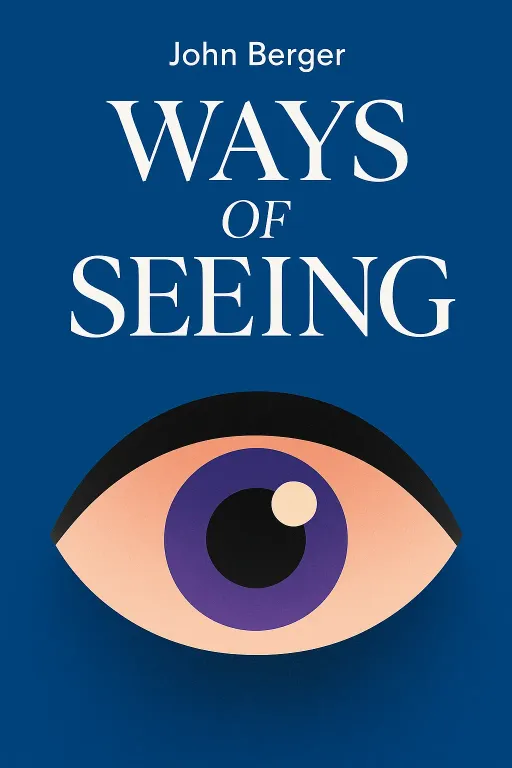
Nova: Absolutely. And to unpack this, we're looking at two titans of visual theory: John Berger's seminal "Ways of Seeing" and Scott McCloud's revolutionary "Understanding Comics." Both, in their own unique ways, radically shifted how we think about visual communication, moving from passive observation to active, critical engagement.
Atlas: That's a great way to put it. I'm curious, for someone like me who loves crafting and creating, how does my own personal history, my own unique lens, play into this idea that images are 'lying' or at least deeply influenced? Because I imagine that's a huge factor in what I choose to create and how I interpret art.
Nova: That's the perfect question to start with, Atlas. Because Berger argues exactly that: your personal history, your experiences, your culture – they don't just influence you see, but you see it. They create a frame, often an unconscious one, around every image.
Beyond the Canvas: Deconstructing Visual Power and Context
SECTION
Nova: So, let's start with John Berger and "Ways of Seeing." This book, which emerged from a groundbreaking BBC series, absolutely upended traditional art appreciation. Before Berger, many people viewed art history as this grand, objective narrative of masterpieces. But Berger said, “Hold on a minute.” He argued that images are not neutral. They're embedded in layers of context, power, and ideology.
Atlas: Okay, so it’s not just about appreciating the brushstrokes or the composition. It’s about the baggage the image carries. Can you give me an example that really illustrates this? Because for a lot of our listeners who are getting into photography or art history, that might feel a bit abstract.
Nova: Picture this: you see a famous Old Master painting, say a Rembrandt, hanging in a grand museum. The gilded frame, the hushed reverence of the gallery, the price tag you it's worth – all of that informs your perception. You see it as a masterpiece, an untouchable icon of culture. But what happens when you see a reproduction of that same Rembrandt on a coffee mug? Or an advertisement?
Atlas: Oh, I see what you mean. Suddenly, it’s not this sacred object. It's... a pattern. A decoration. It loses that aura, that sense of unique value. It's stripped of its original context.
Nova: Exactly! Berger meticulously dissects how the invention of mechanical reproduction fundamentally changed our relationship with art. It democratized access, yes, but it also detached the image from its original, unique presence. The meaning shifts with the context. He also highlights the 'gaze' – how images are often constructed from a particular viewpoint, historically often a male or powerful one, and how that shapes what is emphasized, what is objectified.
Atlas: That's fascinating. So, for a photographer, or anyone creating visual content, this means being aware of the context they're their image in, and also the inherent biases or perspectives baked into what they're capturing? It’s not just about what's the frame, but what the frame implies?
Nova: Precisely. Understanding Berger means that as a creator, you're not just taking a picture; you're engaging in a conversation about power, value, and perspective. You can consciously choose to challenge conventional gazes, to subvert expected contexts, or to infuse your work with a counter-narrative. It moves you from merely documenting to actively shaping perception, giving you a powerful tool to tell your story in a unique way.
Atlas: That’s actually really inspiring. It means my creative choices, even in something as simple as choosing a background for a photograph, carry more weight than I might have realized. It makes me think about how I can be more intentional with every visual decision.
The Language of Vision: Decoding Narrative Through Sequential Art
SECTION
Nova: And speaking of intentional visual decisions, that naturally leads us to the second key idea we need to talk about, which often acts as a counterpoint to Berger's deconstruction. If Berger shows us images hide, Scott McCloud, with his phenomenal "Understanding Comics," shows us images speak, how they construct meaning, often right before our eyes.
Atlas: "Understanding Comics" – I love that it takes a medium often dismissed as simplistic and elevates it to an art form, dissecting its fundamental language. But is it really applicable beyond comic books, Nova? I'm trying to improve my photography and maybe even dabble in creative writing.
Nova: Oh, absolutely, Atlas! This book is a masterclass in visual communication, period. McCloud breaks down the fundamental grammar of how sequential images, panel transitions, and even the "gutter" – the space between panels – create narrative and meaning. His core concept, and a truly profound insight, is "closure."
Atlas: What exactly do you mean by 'closure' in this context? Because my mind immediately goes to, like, emotional resolution, which I’m sure isn't what you're talking about with comics.
Nova: Great question! In McCloud's world, closure is the mental act of perceiving the parts and then perceiving the whole. It's your brain filling in the blanks, connecting disparate images to create a continuous narrative or a sense of movement. Think about it: a comic panel shows a character raising their fist, the next panel shows a character with a black eye. What happened in between?
Atlas: They got punched! I filled that in. My brain connected those two images to create an action.
Nova: Exactly! That's closure. Your mind actively participates in constructing the story. McCloud shows how artists manipulate this. They use different types of panel transitions – moment-to-moment, action-to-action, scene-to-scene, non-sequitur – each creating a different pacing, a different emotional impact, a different level of reader involvement.
Atlas: That makes perfect sense. So, if I’m creating a photo series, or even just curating an Instagram gallery, I’m essentially using McCloud's principles to guide the viewer through a narrative, even without words? I’m relying on them to 'close' the gaps between my images.
Nova: You've got it! Or think about film editing: a quick cut from a close-up of someone's worried face to a shot of a ticking clock. Your brain instantly creates tension and anticipation. That's closure at work in cinema. Understanding these mechanics means you can intentionally control the flow, the rhythm, the emotional beat of your visual story. You learn to guide the viewer's eye, to build suspense, to evoke specific feelings, not just through the content of a single frame, but through the between frames.
Atlas: That's a game-changer for anyone interested in visual storytelling. It’s like learning the secret code to make your audience not just look, but in the story. It empowers you to craft a narrative that unfolds in the viewer’s mind, making it so much more immersive.
Synthesis & Takeaways
SECTION
Nova: So, when you put Berger and McCloud together, it's incredibly powerful. Berger makes us critically aware of the invisible forces – the context, the power, the personal lens – that shape how we perceive and create images. He challenges us to question the 'truth' of what we see.
Atlas: And McCloud then gives us the actual toolkit, the grammar, to consciously construct our visual messages, to guide that perception, to tell stories effectively. It’s about being aware of the invisible context, mastering the visible language, to tell stories that truly resonate.
Nova: Precisely. This deeper understanding unlocks new creative dimensions, as we said at the top of the show. It transforms you from someone who just to someone who truly and can visual narratives with intention and impact. It’s about recognizing that every image you encounter, and every image you create, is a dynamic conversation, not a static fact.
Atlas: I'm curious, for our listeners, how does their personal history, their unique lens, influence the way they'll now choose to frame next photograph or narrative? It's about bringing all of themselves to their art.
Nova: Indeed. And by actively engaging with these ideas, you move beyond the frame, enriching your visual storytelling in ways you might never have imagined. It's about bringing your full, critical, and creative self to every visual experience.
Atlas: This is Aibrary. Congratulations on your growth!