

Stop Teaching, Start Designing: The Guide to Unlocking Deep Learning
Golden Hook & Introduction
SECTION
Nova: You know, Atlas, we often assume that if we just people enough information, if we dump enough data on them, they'll magically it. But what if that assumption is our biggest educational blind spot?
Atlas: Oh, I love that. Because my inbox, and probably the inboxes of so many of our listeners, are full of "training modules" that feel exactly like that: an information dump, click next, and then you're supposed to be enlightened. But I often just feel… heavier.
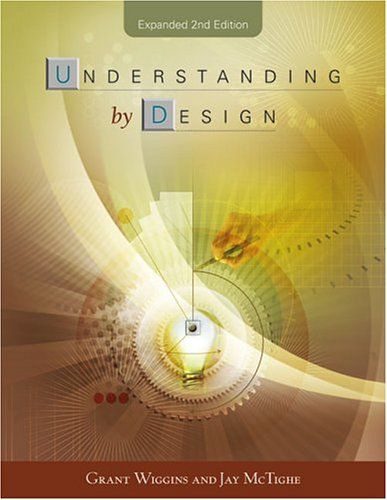
Nova: Exactly! And today, we're diving into a book that fundamentally challenges that entire premise: "Stop Teaching, Start Designing: The Guide to Unlocking Deep Learning." It's a powerful synthesis of educational thought, drawing heavily from giants like Grant Wiggins and Jay McTighe, whose "Understanding by Design" framework has become a cornerstone in effective curriculum planning globally. It really asks us to rethink our entire approach.
Atlas: Right, so it’s not just another methodology. You're saying it's a foundational shift, almost a philosophy, for anyone who wants to ensure learning actually sticks.
Nova: Precisely. And that's where we hit our first big revelation.
The Blind Spot: Why Traditional Teaching Fails Deep Learning
SECTION
Nova: The book argues that the biggest "blind spot" in education, whether it's a university lecture, a corporate training session, or an e-learning module, is focusing on content delivery instead of genuine understanding. We pour information into a vessel, hoping it transforms into knowledge, but often, it just... sits there.
Atlas: That's spot on. I’ve seen this countless times. People go through a training, they can regurgitate facts for a quiz, but come Monday morning, back on the job, it’s like they absorbed nothing. So what exactly is happening there? What's the mechanism of this "blind spot"?
Nova: Well, picture this: you're building a house. Traditional teaching is like gathering all the lumber, bricks, wires, and pipes, stacking them neatly, and saying, "There! You've got all the components of a house!" But there's no blueprint, no order, no functional design. The learner is left to assemble it themselves, often without the right tools or instructions. The content is there, but the isn't.
Atlas: That’s a perfect analogy. It’s like being handed a thousand Lego bricks and being told, "Build a spaceship." You have all the pieces, but unless you have the picture of the finished product, or even better, the step-by-step instructions, you’re just going to make a colorful mess.
Nova: Exactly! And this isn't just inefficient; it's actively detrimental to lasting knowledge. We're conditioning learners to be passive receptacles, not active constructors of meaning. They might pass the test, but the knowledge retention is often fleeting because they never truly with the material in a way that built deep connections in their minds. It’s the difference between memorizing a recipe and understanding the chemistry of cooking. One gives you a dish; the other gives you a chef.
Atlas: So basically you’re saying, if we're just delivering content, we're essentially asking people to build a house without a blueprint, and then wondering why they can't live in it. It’s frustrating for the learner, and it's frustrating for the educator. It sounds like a problem of intention versus outcome.
Nova: Absolutely. And once you see this blind spot, you can't unsee it. It makes you question every learning experience you've ever designed or participated in. But here's the good news: there's a powerful way to fix it.
Designing for Depth: The Power of Backward Design and Visible Learning
SECTION
Nova: And this is precisely where the "design" part comes in. If simply "teaching" isn't working, what we be doing instead? The answer lies in becoming meticulous architects of learning, not just content dispensers. This is where "Understanding by Design" by Wiggins and McTighe becomes our guiding star.
Atlas: Okay, so what does "Understanding by Design" actually mean? Is it just a fancy way of saying "plan ahead"? Because honestly, I imagine a lot of educators already think they're planning ahead.
Nova: That’s a great question, Atlas. And it’s where the "backward" part really matters. Most educators, even well-meaning ones, start with activities or topics: "I need to cover Chapter 3," or "We'll do this group project." Backward design flips that on its head. It says: Start with the. What should learners and be able to at the end? Then, what counts as of that learning? And do you design the learning experiences and instruction.
Atlas: Wow. Hold on. So it's not just planning ahead; it's planning from the backwards. That sounds like building a skyscraper. You don't just start laying bricks; you start with the vision of the finished building, then the architectural plans, then the engineering, and then the actual construction.
Nova: Exactly! It’s about clarity of purpose. And this approach is incredibly powerful when paired with insights from John Hattie's "Visible Learning." Hattie synthesized decades of research, looking at what truly works in education. He revealed the most impactful factors for student achievement, essentially making learning—and teaching—visible. He gave us the data on what actually moves the needle.
Atlas: So how do "backward design" and "visible learning" work together? Are they two sides of the same coin, or do they build on each other? Because one sounds like a framework, and the other sounds like a research synthesis.
Nova: They're beautifully complementary. Understanding by Design provides the and: clear outcomes, and what constitutes evidence of learning. It gives you the blueprint for the skyscraper. Visible Learning, on the other hand, gives you insights into the: what specific strategies, interventions, and teaching approaches have the highest impact on achieving those outcomes. It's like having the best construction techniques and materials to bring that blueprint to life.
Atlas: That’s a perfect example. So if I’m designing an e-learning module, instead of just dumping a bunch of facts about, say, project management frameworks, I'd start by asking: "What specific project management skills should learners be able to after this module?" And then, "How will I that demonstration?"
Nova: Precisely. You shift from "I need to cover Agile and Scrum" to "Learners should be able to a daily stand-up meeting and appropriate Scrum roles." And then you design activities that explicitly get them to that point, using high-impact strategies Hattie identified, like providing clear feedback or fostering self-regulation. It transforms the educator from a content provider to a skilled learning architect.
Atlas: That’s a huge shift in mindset. It’s not just about content anymore; it’s about crafting an experience that guarantees a specific, measurable outcome. It’s about being intentional about the.
Synthesis & Takeaways
SECTION
Nova: And that's the profound insight: the role of an educator shifts from a content dispenser to a meticulous architect of profound learning journeys. It's about designing experiences that unlock deep, lasting understanding.
Atlas: So, for our listeners who are designing their next e-learning module, or even just planning a team meeting where they want real understanding to happen, how would starting with desired learning outcomes fundamentally change its structure and assessment? What's the very first step they should take to apply this?
Nova: Don't start with the content you to cover. Don't even open your existing slides. Start by asking: "What should my learners be able to or differently after this module, that they couldn't before, and how will I they've achieved it?" That single question reorients everything.
Atlas: That's such a powerful reframe. It’s not just about better teaching; it's about unlocking potential and actually seeing the impact, which is what every builder aims for. It’s about empowering people to genuinely learn, not just passively receive.
Nova: Absolutely. When we stop teaching and start designing, we don't just improve educational outcomes; we elevate human potential.
Atlas: I love that. A profound thought to leave us with.
Nova: This is Aibrary. Congratulations on your growth!