

From Penthouse to Foundation: Rebuilding Your Life's Framework
Golden Hook & Introduction
SECTION
Dr. Celeste Vega: Imagine your life is a house you've spent decades building. You're in the penthouse, enjoying the view. Then, in a matter of weeks, an earthquake hits. The floors collapse, the walls crumble, and you find yourself not in the penthouse, but in the dark, damp subsoil, surrounded by wreckage. The big question isn't just to rebuild. It's what do you build upon? What's left of the foundation?
CESAR NADER: That’s a powerful image, Celeste. And it’s one that feels incredibly real to me.
Dr. Celeste Vega: I can only imagine. Today, we're exploring this very question with a surprising tool: a home repair manual. Our guest is Cesar Nader, a man who has held top positions in major institutions across the globe and, as he puts it, went from the penthouse of a skyscraper to the subsoil in a matter of weeks. Cesar, welcome.
CESAR NADER: Thank you for having me, Celeste. It's a pleasure.
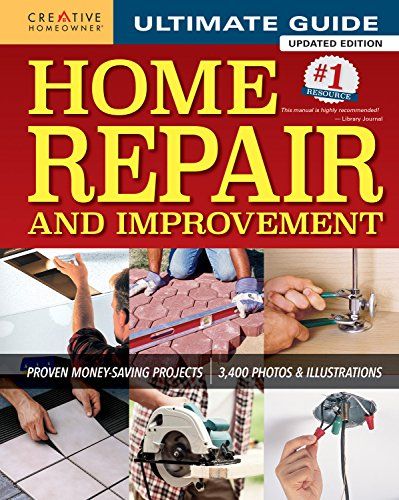
Dr. Celeste Vega: The book we're looking at is the "Ultimate Guide to Home Repair and Improvement." Now, listeners might be thinking, what does a book about fixing leaky faucets have to do with a profound life crisis? Well, that's exactly what we're here to find out. We believe the principles for rebuilding a house offer a stunningly accurate blueprint for rebuilding a life. Today we'll dive deep into this from two perspectives. First, we'll explore the critical importance of a 'structural inspection of the self' when things fall apart. Then, we'll discuss the process of 'redefining the foundation'—discovering who you are beyond the external façade.
Deep Dive into Core Topic 1: The Structural Inspection of the Self
SECTION
Dr. Celeste Vega: So, Cesar, let's start there, in that subsoil you described. The book is very clear on this point. On page 45, it says, "Before any repair, a thorough inspection is non-negotiable. Don't just paint over a water stain on the ceiling; you must find the leaky pipe in the attic." When you lost everything, what did that 'inspection' of your own life look like? What was the superficial 'water stain' versus the hidden 'leaky pipe'?
CESAR NADER: That’s the perfect analogy. The water stain was obvious to everyone. It was the loss of the job, the money, the status. It was the visible damage. You could see the stain spreading on the ceiling of my life, and that’s what people focused on. That’s what focused on, at first. The panic is about the stain. How do I cover it up? How do I fix it quickly?
Dr. Celeste Vega: Which is a very human reaction. The book even warns against these quick, cosmetic fixes. Did you feel that temptation to just 'patch the drywall'—maybe by immediately scrambling for another high-powered job—instead of doing that deeper, more painful work of climbing into the attic?
CESAR NADER: Absolutely. Society teaches us to patch the drywall. Put on a brave face, update your resume, network, project success even when you feel like a failure. But I learned that if you do that, the leak continues. The rot spreads. For me, the moment of truth came when I was truly in the subsoil, as I call it. When all the external definitions were gone. No title, no organization, no money. And the big question hit me… And now, who am I? That was the moment I decided to stop staring at the stain and go look for the leak.
Dr. Celeste Vega: And what did you find? What was the leaky pipe?
CESAR NADER: The leaky pipe… it was the fact that my entire sense of self-worth, my entire identity, was plumbed directly into those external things. My identity the penthouse. It wasn't a place I lived; it was who I was. The leak was a fundamental design flaw in my own internal structure. The financial crisis wasn't the cause of my collapse; it was merely the event that revealed the faulty plumbing that had been there all along.
Dr. Celeste Vega: In your bio, you say you learned that feeling the pain, the suffering, the desperation… that these are stages one has to live through. In our metaphor, is that the process of tearing down the walls and ripping up the floorboards to get to that broken pipe?
CESAR NADER: Exactly. It's messy, it's loud, it's painful. You don't want to do it. You want to pretend the problem isn't that bad. But the guide is right. You have to get to the source. For me, feeling that despair wasn't a sign of weakness; it was the demolition phase. It was the necessary destruction required before any real construction could begin. You have to consciously feel it all to clear the debris. Only then can you see the true extent of the damage and what you're really working with.
Deep Dive into Core Topic 2: Redefining the Foundation
SECTION
Dr. Celeste Vega: And that's a perfect transition. Because once you've found the source of the problem and cleared the debris, the book moves on to the most critical part of any structure: the foundation. It says on page 28, "A house is only as strong as its foundation." You can have beautiful windows, a fancy roof, imported marble… but if it's all sitting on a cracked or crumbling foundation, it's all worthless. It sounds like you discovered your identity was built on a foundation that wasn't as solid as you thought.
CESAR NADER: It wasn't just not solid; it was built from the wrong materials. My old foundation was a mix of ego, titles, power, and the approval of others. From a distance, it looked impressive, like polished granite. But it was brittle. The first real tremor—the financial crisis—and it just shattered. The whole structure came down with it.
Dr. Celeste Vega: So, when you began to rebuild, what did you use for the new foundation? The book talks about specific materials—poured concrete for strength, steel rebar for reinforcement against stress. As you started to rebuild your sense of self, what were the 'concrete and rebar' of the new Cesar?
CESAR NADER: That’s a question I had to answer for myself, in the quiet and the dark of that subsoil. The new concrete, I would say, is self-awareness. A brutal, honest knowledge of who I am, my strengths and my weaknesses, independent of what anyone else thinks. It’s not brittle; it’s solid.
Dr. Celeste Vega: And the rebar? The reinforcement that gives it tensile strength, that helps it withstand future earthquakes?
CESAR NADER: The rebar is resilience. And resilience, I learned, isn't about avoiding pain. It's about knowing you can go through it and come out the other side. It’s forged in the fire of that suffering I mentioned. Another steel bar is purpose. A purpose that isn't tied to a paycheck, but to a contribution. And maybe the most important one is connection—real, authentic human connection. These are the materials. They aren't as flashy as the old ones. You can't put them on a business card. But they are strong. They can withstand a storm. I had to analyze what failed, deconstruct it, and then consciously choose these new, stronger materials to build upon.
Dr. Celeste Vega: It's fascinating. You're essentially saying you had to become your own structural engineer. You had to read the blueprint of your own life, identify the fatal flaws, and then source entirely new materials to start again from the ground up.
CESAR NADER: Precisely. And it’s a slow process. You don't pour a new foundation in a day. It takes time to prepare the ground, to build the frame, to pour the concrete, and to let it cure. To let it become solid. Any attempt to rush it, to start building the walls too soon, will just lead to another collapse.
Synthesis & Takeaways
SECTION
Dr. Celeste Vega: So, when we pull it all together, the lesson from this home repair guide seems to be universal. Whether it's a house or a life, when there's a major collapse, you can't start with the roof or the fancy finishes. You have to go all the way down. You inspect the real damage, not just the surface-level cracks. You tear out what's broken. And you rebuild the foundation with stronger, more durable materials.
CESAR NADER: That's the journey. From the penthouse, to the subsoil, and then starting again, not with a skyscraper, but with a solid foundation that you know, you trust, and you built yourself.
Dr. Celeste Vega: It’s an incredibly powerful metaphor and an even more powerful story. As we close, if there's one piece of 'homeowner's advice' you could give our listeners, what would it be?
CESAR NADER: Well, the book recommends seasonal inspections of your home to catch problems early. So I would pass that on. You don't have to wait for a total collapse to check on your own structure. So I’d ask the listeners: What's one small 'structural inspection' you can do today? Take a moment. Look past the 'paint and drywall' of your daily routine, your job title, your social media profile. Take a flashlight and go down to your own basement. Check your foundation. Is it built on something solid and internal? Or is it resting on something brittle and external? Maybe it's time for a small repair, before a big crack appears.
Dr. Celeste Vega: A powerful and practical call to action. Cesar Nader, thank you so much for sharing your story and your wisdom with us today.
CESAR NADER: The pleasure was all mine, Celeste. Thank you.