

Mastering the Art of Team Building & Delegation
Golden Hook & Introduction
SECTION
Nova: What if I told you the best way to gain control, to truly lead, is to actually give it away? Sounds like a paradox, doesn't it? But in the world of team leadership, it’s a revolutionary truth.
Atlas: Whoa, that completely flips the script on what most of us have been taught about leadership: command, control, hierarchy. I mean, my initial thought is, isn't that just... chaos waiting to happen?
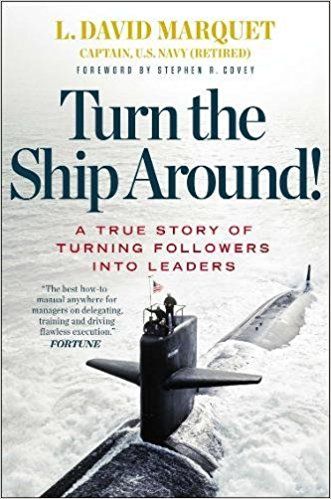
Nova: Precisely the reaction many have! But today, Atlas, we’re diving into a book that not only challenges that conventional wisdom but proves it profoundly effective in the most high-stakes environments imaginable. We're talking about "Turn the Ship Around! A True Story of Turning Followers into Leaders" by L. David Marquet.
Atlas: Marquet, the former nuclear submarine commander? I've heard whispers of his radical approach. It's fascinating to think about leadership lessons from that kind of intense, mission-critical setting. It speaks to the kind of foundational knowledge that can really shift how we approach complex systems.
Nova: Absolutely. Marquet’s journey on the USS Santa Fe wasn't just about managing a team; it was about transforming a struggling vessel into a top-performing unit by completely rethinking who held the power. It's a blueprint for true delegation and empowerment, and it sets the stage perfectly for our exploration into building teams that don't just follow, but truly lead.
The 'Leader-Leader' Model: True Delegation and Empowerment
SECTION
Nova: So, let's unpack this 'leader-leader' model. Marquet inherited a submarine crew that was, frankly, disengaged and underperforming. The prevailing culture was 'leader-follower,' meaning officers gave orders, and the crew executed. Simple, right? But it created a dependency that stifled initiative and problem-solving.
Atlas: That sounds like a lot of organizations I've seen. People waiting to be told what to do, not taking ownership. But how do you even begin to shift that, especially on a nuclear submarine where precision and strict protocols are literally life-or-death?
Nova: That's the brilliance of it. Marquet realized that if he wanted excellence, he couldn't be the bottleneck. He needed to push authority to the lowest possible level where the information resided. The pivotal moment came when he gave an order that one of his officers, an expert, knew was wrong. Instead of blindly complying, the officer was empowered to say, "Captain, I intend to..."
Atlas: Hold on, "I intend to..."? So, not "What do you want me to do?" or "Can I do X?" but "I intend to..."? That's a massive psychological shift. It sounds almost like insubordination on the surface, but it's clearly not.
Nova: Exactly! It's a declaration of intent, a statement of ownership. It forces the individual to think, to understand the situation, to propose a solution, and to take responsibility for it. Marquet's job then became not to give orders, but to intelligent intent. He had to resist the urge to tell them to do it and instead focus on clarity of purpose and competence.
Atlas: That makes perfect sense for high-stakes environments where you need people to think on their feet. But for leaders in, say, a fast-paced tech company or a strategic consulting firm, where the 'Architect' needs precise outcomes, isn't there a risk of losing control, or things going off track? How do you ensure competence when you’re delegating that much authority?
Nova: That's a crucial question, and Marquet addresses it head-on. He emphasizes two pillars: technical competence and organizational clarity. You can't just throw authority at an incompetent team. You have to invest in their training, their understanding of the 'why' behind the mission. When they understand the intent and have the skills, empowering them becomes less about risk management and more about unleashing potential. The leader's role shifts from being the 'brain' to being the 'nervous system' that ensures everyone is connected and informed.
Atlas: I can see how that would lead to a more resilient system. If everyone is capable of making decisions, the system is less reliant on a single point of failure. It’s like building redundancy into the very fabric of leadership itself.
Becoming a Multiplier: Amplifying Team Intelligence
SECTION
Nova: And that idea of unleashing potential leads us perfectly to our second profound insight today, from Liz Wiseman’s seminal work, "Multipliers: How the Best Leaders Make Everyone Smarter." While Marquet gives us the structure for delegation, Wiseman gives us the for amplifying the intelligence within that structure.
Atlas: I've heard the terms 'Multipliers' and 'Diminishers' thrown around, but what do they truly mean? I imagine a Diminisher is someone who just… makes people feel dumb?
Nova: It's more insidious than that, actually. Wiseman's research reveals that Diminishers aren't necessarily malicious; they often have good intentions. They might be "idea generators" who jump in with their own solutions, inadvertently shutting down others' ideas. Or "rescuers" who swoop in to fix problems, preventing their team from learning. The effect, however, is the same: they drain intelligence and capability from their team.
Atlas: Wow, that's actually really insightful. So it's not about being a bad person, but about an unconscious leadership style that stifles growth. That makes me wonder, and this is the deep question I think many of our listeners are grappling with: How can you shift your leadership style to consistently draw out and amplify the intelligence and capabilities of your team members, rather than inadvertently diminishing them?
Nova: That is question, Atlas. And Wiseman provides a powerful framework. Multipliers, on the other hand, are leaders who amplify the intelligence and capabilities of those around them. They don't just get more from people; they get from people. They ask big, challenging questions instead of providing answers. They create space for others to contribute, they challenge people to stretch, and they expect great things.
Atlas: So, it's about asking "What do think?" instead of "Here's what we're doing." It's about setting up the problem, creating the challenge, and then stepping back to let the team solve it. That sounds a bit like Marquet's 'I intend to...' model, where the leader trusts the team's capacity to figure things out.
Nova: Exactly! They are two sides of the same coin. A Multiplier leader creates the environment where the 'leader-leader' model can flourish. They understand that their job isn't to be the smartest person in the room, but to make everyone smarter. Think about the impact of a leader who walks into a meeting, not to dominate the conversation, but to genuinely listen, to challenge assumptions with insightful questions, and to draw out the best ideas from everyone. That's a Multiplier at work.
Atlas: Honestly, that sounds like a game-changer for any leader who wants to go beyond just getting tasks done and actually build a truly innovative and engaged team. It speaks directly to creating lasting value, which is something our listeners, the Architects and Strategists, are always striving for.
Synthesis & Takeaways
SECTION
Nova: So, when we bring Marquet and Wiseman together, we see a powerful synergy. Marquet gives us the structural shift – pushing decision-making authority down. Wiseman gives us the behavioral shift – the leadership mindset that amplifies intelligence. Both are fundamentally about trust and empowerment. They challenge the very notion of what a leader is.
Atlas: And the impact of this isn't just on productivity; it's on the entire culture of an organization. It's about fostering an environment where every individual feels valued, capable, and empowered to contribute their absolute best. It’s about building a system that sustains itself through collective intelligence, not just top-down directives.
Nova: Precisely. It’s about cultivating leaders at every level, not just followers. It's about building teams that are resilient, innovative, and deeply invested in the outcome. It's a profound shift from managing people to multiplying their genius.
Atlas: That’s incredibly compelling. For those of us listening who are constantly optimizing complex funnels and strategizing for impact, what’s one tangible, tiny step we can take to start shifting towards being a Multiplier and embracing that 'leader-leader' mentality?
Nova: Start small, but start with intent. Identify one recurring task you currently handle that could be effectively delegated. Instead of simply assigning it, work with a team member to define the desired outcome and the resources needed, then empower them to own the entire process. Resist the urge to micromanage. Trust them to figure it out.
Atlas: That’s a powerful challenge. It’s not just about offloading work, it’s about intentionally developing someone else’s capacity and ownership. It makes you think: what kind of legacy do you want to build as a leader? One of dependency, or one of multiplied intelligence?
Nova: A profound question for sure. And one that could redefine your entire approach.
Atlas: Absolutely.
Nova: This is Aibrary. Congratulations on your growth!