

Cultivating Visionary Leadership & Team Empowerment
Golden Hook & Introduction
SECTION
Nova: Atlas, if I told you that the best way to lead a team was to stop giving orders, what would you say?
Atlas: Hold on, Nova. Are you saying I should just… let them run wild? Because my strategic brain immediately goes to 'chaos theory' if there’s no clear direction. That sounds a bit out there for anyone trying to build something impactful.
Nova: Exactly! That's the counter-intuitive brilliance we're diving into today. We’re exploring some truly transformative ideas about leadership and team empowerment, drawing from insights by L. David Marquet and Simon Sinek, and Daniel H. Pink. It’s a journey into cultivating self-sufficient units, and it's particularly relevant for anyone who, like our listeners, is driven by impact and sustainable growth.
Atlas: Oh, I like that. The idea that giving up control actually amplifies impact. Because for so many, especially those who are building better systems, control feels like the ultimate lever for efficiency.
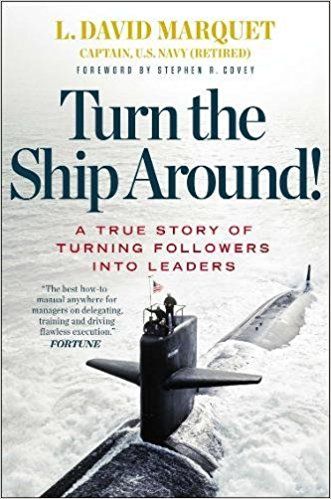
Nova: It does, doesn't it? And that's precisely why these books challenge our foundational assumptions. We're talking about a paradigm shift. L. David Marquet, a former nuclear submarine commander, wrote 'Turn the Ship Around!' after his incredible experience taking command of the worst-performing submarine in the U. S. fleet and turning it into one of the best. The fascinating thing is, he did it not by barking more orders, but by… well, by doing the opposite.
Atlas: A nuclear submarine? That’s about as high-stakes, hierarchical, and command-and-control as it gets. If he pulled it off there, I'm genuinely intrigued. What was this 'opposite' approach?
Leader-Leader vs. Leader-Follower: Empowering Ownership
SECTION
Nova: Marquet introduced what he calls a 'leader-leader' model instead of the traditional 'leader-follower' model. He realized that the crew was highly skilled but completely dependent on him for decisions. So, he started pushing decision-making authority down the chain. Instead of giving orders, he'd say, "I intend to do X," and then wait for his officers to identify potential problems, take ownership, and figure out the 'how.'
Atlas: So basically you’re saying he democratized tactical decision-making? That shifts the entire mental model. I imagine a lot of our listeners, who are always looking to optimize and streamline, might see the potential for increased efficiency there. Fewer bottlenecks at the top.
Nova: Absolutely. He wasn't just delegating tasks; he was delegating authority and competence. He’d phrase it as, "I intend to do X," and his officers would respond, "Sir, we will do X." This simple shift meant they owned the decision, not just the execution. It built competence and clarity, and led to a dramatic increase in morale and operational effectiveness.
Atlas: That’s a perfect example of how a strategic shift in leadership can completely redefine a team's capabilities. For leaders focused on sustainable growth, this isn't just a feel-good initiative; it’s a direct path to self-sufficient units. But wait, how do you ensure the decisions made further down the chain are good ones? Doesn’t that require an incredibly high level of trust and competence from day one?
Nova: That’s the critical piece, Atlas. Marquet didn't just throw them into the deep end. He focused heavily on technical competence and organizational clarity. His crew what they were doing and they were doing it. The 'leader-leader' model thrives on two pillars: competence and clarity. They were trained to a high standard, and the mission objectives were crystal clear. This allowed him to push authority down without fear of chaos.
Atlas: I can see how that would make a difference. It’s like, you’re not just giving them the keys; you’re giving them the driver’s license, the defensive driving course, and a detailed map of the destination. That changes everything. It sounds like it cultivates a sense of genuine agency.
Nova: Exactly. It fosters an environment where everyone feels responsible for collective success. They're not just waiting to be told what to do; they're actively looking for ways to contribute, to innovate, and to solve problems. This builds incredibly resilient teams, which is a massive advantage in any fast-paced environment. It moves beyond just managing operations to actually building better, more adaptable systems.
The Circle of Safety: Building Trust and Psychological Security
SECTION
Atlas: That makes me wonder about the psychological aspect of all this. Because even with competence and clarity, if people are afraid to speak up, to challenge an 'intention,' or to admit a mistake, that whole leader-leader model crumbles.
Nova: And that brings us perfectly to Simon Sinek's 'Leaders Eat Last.' Sinek argues that true leadership is about creating a 'Circle of Safety' within an organization. It's about designing an environment where people feel psychologically safe, where they trust their leaders and their peers. When this circle exists, people feel protected from external threats and internal politics, allowing them to cooperate and innovate without fear.
Atlas: So it’s not just about competence, it’s about feeling safe enough to that competence fully. Because if you're worried about getting thrown under the bus, you’re not going to take risks or offer dissenting opinions, even if they're brilliant.
Nova: Precisely. Sinek points out that in the wild, the strongest leaders ensure their pack eats first, taking the risks themselves. In an organization, this translates to leaders prioritizing the well-being and security of their team members. When leaders create this circle, employees know they're valued, that their voice matters, and that their mistakes will be learning opportunities, not career-enders.
Atlas: That’s actually really inspiring. For our listeners who are always looking to guide their teams through change, building this kind of trust is foundational. But how do you, as a leader, actively build this 'Circle of Safety'? Is it just about saying, 'Hey, you're safe here'?
Nova: It’s far more than words, Atlas. Sinek highlights that it’s built through consistent behaviors: demonstrating empathy, taking responsibility for failures, giving credit generously, and genuinely caring for your team members. It’s about being the person who would literally 'eat last' – ensuring everyone else is taken care of before yourself. This builds profound loyalty and resilience, creating teams ready to tackle any challenge. It’s about shifting from a transactional relationship to a truly human one.
Atlas: Wow. That's kind of heartbreaking when you think about how many organizations operate without that fundamental safety. It explains why some teams just seem to click and others are constantly struggling with internal friction, even when they have talented people. It’s a profound philosophical meaning to leadership.
Nova: It really is. And it ties directly into the 'leader-leader' concept. If your team feels safe, they're more likely to embrace the responsibility and autonomy given to them. They'll be more innovative, more engaged, and ultimately, more successful. It's about creating a culture where everyone feels empowered and responsible for collective success, which builds incredible trust and resilience.
Intrinsic Motivation: Autonomy, Mastery, and Purpose
SECTION
Nova: Now, Atlas, we've talked about empowering teams to make decisions and creating a safe environment for them to do so. But what actually drives people to to make those decisions, to to contribute, to to innovate, beyond external rewards?
Atlas: That’s the million-dollar question, isn't it? For those of us who are driven by impact, we want our teams to be just as invested. I imagine it goes beyond just a good salary, especially for someone who seeks efficiency and building better systems.
Nova: It absolutely does, and Daniel H. Pink unpacks this beautifully in 'Drive: The Surprising Truth About What Motivates Us.' Pink argues that for most creative and knowledge-based work, traditional 'carrot and stick' motivators actually. Instead, he identifies three key drivers of intrinsic motivation: autonomy, mastery, and purpose.
Atlas: Autonomy, mastery, and purpose. That makes sense. I can definitely relate to wanting control over my work, getting better at what I do, and feeling like it actually matters. But how do these play out in a practical sense for leaders?
Nova: So, autonomy is about the desire to direct our own lives. It's giving people control over their tasks, time, technique, and team. Mastery is the urge to get better and better at something that matters. It’s about providing opportunities for continuous learning and skill development. And purpose is the yearning to do what we do in the service of something larger than ourselves. It’s about connecting individual tasks to a meaningful mission.
Atlas: That’s a great way to put it. Because if you’re building better systems, you need people who are constantly seeking to master their craft and understand the larger purpose of those systems. It’s not just about checking boxes. This sounds like it directly addresses the 'growth recommendations' for leaders – trusting strategic instincts and allowing space for long-term vision.
Nova: Exactly. Pink cites examples like Atlassian, a software company that dedicates 20% of its developers' time to "FedEx Days"—24 hours to work on anything they want, as long as it's not their usual work. This autonomy leads to incredible innovation. Or Wikipedia, built by volunteers driven by mastery and purpose, not paychecks.
Atlas: That’s a perfect example. That gives me chills, actually, thinking about the power of tapping into that innate human drive. So, for leaders who are trying to cultivate self-sufficient units and guide their teams through digital transformation, it's about designing work environments that naturally foster these three elements.
Nova: Precisely. It’s about moving beyond just managing operations and understanding that true empowerment comes from within. When you give people autonomy, support their pursuit of mastery, and connect their work to a compelling purpose, you unlock an incredible wellspring of engagement, creativity, and resilience. This is how you foster a culture where everyone thrives and contributes to that sustainable growth.
Synthesis & Takeaways
SECTION
Atlas: Nova, this has been an incredible journey into what truly makes teams not just functional, but exceptional. From Marquet’s leader-leader model pushing decision-making down, to Sinek’s Circle of Safety fostering psychological security, and Pink’s autonomy, mastery, and purpose igniting intrinsic motivation… it all paints a picture of leadership that’s profoundly human.
Nova: It truly does, Atlas. It's about recognizing that the best leaders aren't those who control every variable, but those who cultivate an environment where everyone feels safe, empowered, and intrinsically motivated to contribute their best. It's about building systems that don't just manage people, but unleash their full potential.
Atlas: And for our listeners, the strategic orchestrators and practical innovators, this isn't just theory. This is the blueprint for creating the kind of self-sufficient units that can anticipate future challenges and truly lead through digital transformation. It’s about trust, it’s about safety, and it’s about tapping into that deep human desire to grow and contribute.
Nova: Ultimately, it’s about understanding that true leadership isn't about giving orders; it's about creating an environment where everyone feels safe, empowered, and responsible for collective success. This builds trust and resilience, transforming followers into leaders.
Atlas: That’s such a hopeful way to look at it. It puts the power back into the hands of the team, and the leader becomes the orchestrator of potential, not just the taskmaster.
Nova: Absolutely. This is Aibrary. Congratulations on your growth!