

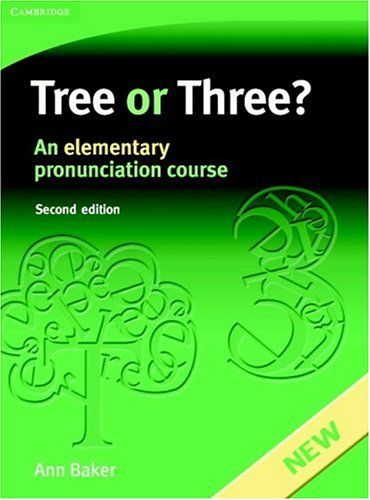
Tree or Three?
Introduction
Nova: Welcome to Aibrary, the podcast where we open the pages of the world's most impactful books and explore what makes them tick. I'm Nova, your knowledgeable guide.
Nova: And I'm our curious co-host, always ready with the questions you're thinking. Today, we're cracking open a book that has been quietly shaping the way millions of people speak English for over four decades. It's called "Tree or Three?" by Ann Baker.
Nova: Now, that title might sound a bit mysterious if you've never heard of it. What does "Tree or Three?" even mean?
Nova: Exactly the question I want to start with. Say those two words out loud: tree, three. If you're a native English speaker, they sound totally different. But for English learners from Vietnam to Spain to Japan, those two words can sound virtually identical. The title itself is a demonstration of the book's entire philosophy. It's a minimal pair, two words that differ by just one sound: the T at the start of "tree" versus the TH at the start of "three."
Nova: So the title is basically the first lesson baked right in.
Nova: Precisely. And here's why this matters: Ann Baker first published this book in 1982 through Cambridge University Press. The second edition came out in 2006, and it has never really gone out of print. That's remarkable staying power in the crowded world of English language teaching. We're talking about a 136-page book with 50 short units that has become a go-to resource for pronunciation teachers and self-learners around the globe.
Nova: But here's what I want to know: there are hundreds of pronunciation books out there. What makes this one so enduring?
How One Simple Idea Transformed Pronunciation Teaching
The Minimal Pair Revolution
Nova: The core insight behind "Tree or Three?" is deceptively simple. Ann Baker built the entire book around minimal pairs, pairs of words that differ by exactly one sound, like "ship" and "sheep," or "fan" and "van," or of course, "tree" and "three."
Nova: Okay, I've heard of minimal pairs before. But what makes them so powerful as a teaching tool?
Nova: Think about it this way. If you're learning English and your native language doesn't have the TH sound, like in "three," your brain literally may not hear the difference between that sound and a regular T. It's not that you're not paying attention. Your brain has been wired since infancy to categorize those two sounds as the same. Minimal pairs force your brain to confront the difference head-on. When you realize that saying "I see a tree" versus "I see a three" produces two completely different meanings, suddenly the sound distinction becomes meaningful, not just academic.
Nova: So it attaches real-world stakes to getting the sound right.
Nova: Exactly. And research backs this up. A major 2010 study published in the Journal of Language Teaching and Research specifically cited Ann Baker's books, "Tree or Three" and its intermediate-level sequel "Ship or Sheep," as prime examples of how minimal pairs can be used effectively. The study found that minimal pair drills dramatically improve both recognition and production of sounds at the word level. Students who trained with minimal pairs showed measurable improvement in distinguishing sounds like voiced versus voiceless consonants, which is a major hurdle for learners from many language backgrounds.
Nova: And Ann Baker wasn't working in a vacuum here, was she? There's a whole pedagogical tradition behind this.
Nova: Right. The minimal pair technique traces back to the audio-lingual approach of the mid-20th century, which emphasized pattern drills and repetition. But what Baker did was make it genuinely accessible. Each unit in "Tree or Three?" is short, focused, and non-intimidating. You get a mouth diagram showing tongue and lip position, then listening discrimination exercises, then the minimal pair drills, then short dialogues where you practice the sound in context. It's the complete package in maybe 15 to 20 minutes per unit.
Nova: So it's bite-sized but systematic.
Nova: And that's the genius. Fifty units doesn't sound like a lot, but when you break it down, you're getting targeted practice on virtually every consonant sound that causes trouble for English learners: the difference between S and SH, between B and P, between L and R, between F and V, and many more. Each unit builds on the previous one. It's a curriculum disguised as a workbook.
Who Uses Tree or Three and How
Inside the Classroom and Beyond
Nova: One of the most striking things about "Tree or Three?" is the range of contexts where it shows up. You'll find it in university ESL programs in Vietnam, in language schools across Europe, in self-study routines for IELTS candidates, and even in research labs studying second language acquisition.
Nova: What kind of learner is this book really designed for?
Nova: Baker explicitly wrote it for beginner to elementary level students, roughly A2 to B2 on the CEFR scale. But the instructions are written so that a student working alone can follow them just as easily as a teacher leading a class. Most units start with "Listen to the sound" and then guide you through each step. The back of the book even includes an answer key so self-learners can check their work.
Nova: That self-study angle feels important. Not everyone has access to a pronunciation teacher.
Nova: Absolutely. And the audio component is essential here. The book comes with audio CDs in its physical version, or digital audio files in newer reprints. You hear native speaker models, you pause, you repeat, you compare. It's the intuitive-imitative approach, where you learn by listening and copying, but structured in a way that doesn't leave you guessing. Some learners use what's called the shadowing technique, where they speak along with the audio with minimal delay to train their speech rhythm and muscle memory.
Nova: There's a companion piece to this book, isn't there? I keep hearing about "Ship or Sheep?"
Nova: Yes. Ann Baker created a two-book series. "Tree or Three?" is the elementary level. Once you master that, you graduate to "Ship or Sheep? An Intermediate Pronunciation Course," which is also structured around 50 units but tackles more advanced sound contrasts and introduces connected speech concepts like linking and elision. There's even a teacher's guide called "Introducing English Pronunciation" that helps instructors use both books effectively in the classroom. Cambridge University Press publishing all three shows they saw this as a complete system, not just a single workbook.
Nova: And this system has been cited in academic research repeatedly, hasn't it?
Nova: It has. The book appears in studies on pronunciation difficulties among Arabic speakers, Japanese learners of English, Czech EFL students, and Vietnamese university students. Researchers consistently point to Baker's minimal pair exercises as a gold standard for teaching discrete sounds. That's rare for a book that's also meant to be practical and classroom-friendly. It bridges the gap between linguistic research and everyday teaching.
What the Book Gets Right and Where It Falls Short
The Sound of Success
Nova: Let's talk honestly about what this book does well and where it has limits. Because no teaching resource is perfect.
Nova: Alright, start with the strengths. What makes this book genuinely good?
Nova: First, it's incredibly focused. The book targets high-problem areas, the specific sound contrasts that cause real misunderstandings. If you confuse "rice" and "lice," you might get a very strange meal. If you confuse "berry" and "very," you're changing the meaning entirely. Baker identified these trouble spots and built units around them. Second, the units are short. You can do one in 15 to 20 minutes, which makes daily practice sustainable. Third, it balances listening and speaking. You're not just repeating sounds blindly. You're training your ear to hear the difference first, then training your mouth to produce it.
Nova: And the drawbacks?
Nova: Critics and reviewers point out that the book is heavily focused on consonant sounds. While it does touch on word stress and intonation, it doesn't dive deeply into vowel sounds or connected speech. If you're looking for comprehensive coverage of English rhythm, linking, and the musical quality of the language, you'll need supplementary materials. Also, the second edition was published in 2006, which means the artwork and some cultural references feel dated to modern learners. And the older CD versions can be a headache if you don't have a CD drive anymore, though newer reprints are addressing this with digital downloads.
Nova: What about complete beginners? Someone who barely knows any English?
Nova: The book assumes a basic understanding of English. The instructions, while simple, are in English. For absolute beginners, teacher support or a pre-course in basic listening is recommended. That said, the mouth diagrams and visual supports are designed to be fairly universal, so a motivated learner with a dictionary can still make progress.
Nova: It sounds like the book knows exactly what it wants to be and doesn't try to be everything to everyone.
Nova: That's a great way to put it. Ann Baker didn't set out to write the encyclopedia of English pronunciation. She wrote a practical, focused tool for a specific job: helping learners hear and produce the consonant sounds that most often lead to confusion. And after more than 40 years in print, it's clear that job still needs doing.
Pronunciation in the Age of AI and Apps
Beyond the Book
Nova: Here's the question I find fascinating. In 2026, when we have AI-powered pronunciation apps like ELSA Speak that can give you real-time feedback on individual sound errors, when we have the University of Iowa's "Sounds of Speech" app with detailed animations of tongue and mouth positions, when YouTube is flooded with pronunciation tutorials, does a paper book from 1982 still matter?
Nova: That is the question, isn't it? I mean, AI can tell you exactly where your tongue should be.
Nova: And yet, "Tree or Three?" persists. I think there are a few reasons. First, there's something about the structured, progressive nature of a book that apps haven't fully replicated. You go unit by unit, you build on previous knowledge, and you can see your progress tangibly. Second, the minimal pair methodology isn't just a gimmick. It's grounded in decades of research on how the brain acquires phonological distinctions. The AI apps are often built on the same principles, just with fancier interfaces.
Nova: So the book and the apps are actually complementary?
Nova: That's exactly how many learners use them now. The prepedu. com review of the book specifically recommends pairing it with apps like ELSA Speak for personalized feedback and websites like ELLLO. org for listening practice. You use the book for structured, systematic study, and you use the apps for targeted drilling and instant correction. They reinforce each other.
Nova: What about the cultural context? Does a book written by a British author and published by Cambridge University Press privilege a particular accent?
Nova: The audio models in "Tree or Three?" use standard British English pronunciation, sometimes referred to as Received Pronunciation or RP. This is a valid consideration. In a world where English is a global language with countless legitimate accents, focusing on one standard can feel limiting. However, Baker's approach is more about intelligibility than accent elimination. The goal isn't to sound like you're from London. It's to be clearly understood. The sounds she focuses on, like the TH sound or the distinction between L and R, are crucial for intelligibility regardless of which English accent you're aiming for.
Nova: And ultimately that's what learners want, right? To be understood.
Nova: That's the whole point. Ann Baker named her book after the moment of confusion that every English learner dreads: saying a word and being misunderstood. "Tree or Three?" is a promise that confusion can be overcome with practice, one sound at a time.
Conclusion
Nova: So what have we learned about this unassuming little book with the clever title? First, that "Tree or Three?" by Ann Baker, first published in 1982 and still going strong, built its entire approach around minimal pairs, pairs of words that differ by just one sound. That focus, combined with short digestible units and integrated audio practice, made it a lasting resource for English learners worldwide.
Nova: Second, that it's part of a larger system. Baker created a complete pathway: "Tree or Three?" for elementary learners, "Ship or Sheep?" for intermediate learners, and a teacher's guide to support classroom instruction. Cambridge University Press has kept all three in print because the demand simply never went away.
Nova: Third, that the book has real limitations. It's consonant-focused, it's built around a British English model, and the 2006 second edition is showing its age in some ways. But its core methodology remains research-backed and effective.
Nova: And fourth, that in the age of AI pronunciation apps, the book hasn't become obsolete. It's become a partner. Learners combine structured book study with instant app feedback, getting the best of both worlds.
Nova: Here's what I keep coming back to. Ann Baker took one of the most intimidating aspects of learning English, being misunderstood because of your accent, and turned it into something approachable. Fifty short units. Fifteen minutes a day. One sound at a time. The title itself tells you that this is a journey from confusion to clarity.
Nova: And that's a lesson that goes beyond pronunciation, doesn't it? Any big skill, any daunting challenge, can be broken down into small, focused, daily practice. That's the philosophy of "Tree or Three?" in a single idea: don't try to fix everything at once. Pick one sound. Master it. Then move on.
Nova: Beautifully put. If you're an English learner struggling with pronunciation, consider picking up a copy, ideally with the audio. And if you're a teacher, Ann Baker's work is a reminder that sometimes the simplest tools, used consistently, produce the most lasting results. From confusion between "tree" and "three" to clear confident speech, that's the journey this book has been guiding learners through for over forty years.
Nova: This is Aibrary. Congratulations on your growth!