

Mastering Market Psychology: The Edge in Trading
Golden Hook & Introduction
SECTION
Nova: You know, Atlas, I overheard someone at a coffee shop the other day, absolutely convinced their stock pick was a sure thing because "the charts just felt right."
Atlas: Oh, I've heard that one before! It's amazing how often "feeling right" translates to "losing money." I mean, isn't that just a classic case of wishful thinking disguised as analysis?
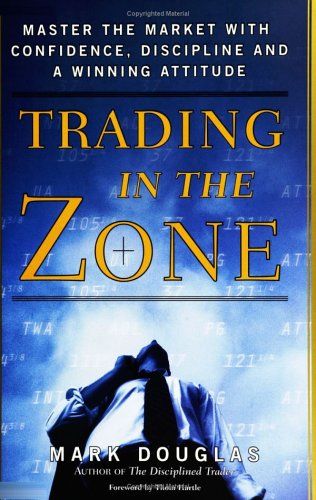
Nova: Absolutely. And it brings us to a crucial point in the high-stakes world of trading: the biggest battle isn't against the market; it's often against yourself. Today, we're diving into that fascinating, often treacherous, terrain of the trader's mind, drawing heavily from two groundbreaking works: "Trading in the Zone" by Mark Douglas, and "The Art of Thinking Clearly" by Rolf Dobelli.
Atlas: Mark Douglas, a true legend in the trading psychology space. His journey into understanding trader behavior was sparked by witnessing countless intelligent, well-researched traders consistently underperform due to emotional interference. He realized the market wasn't the problem; the internal game was. And Dobelli’s work, which systematically dissects cognitive biases, perfectly complements that.
Nova: Exactly. Douglas, for instance, wasn't just some academic; he worked directly with traders, seeing their struggles firsthand. His insights come from the trenches, observing how fear and greed could sabotage even the most meticulously planned strategies. It’s a very practical, almost therapeutic approach to trading.
Atlas: That makes perfect sense. For anyone in trading, whether seasoned or just starting, the psychological aspect can feel like this invisible, unpredictable force. You think you've got your strategy locked down, and then one unexpected market swing sends your emotions spiraling. It's like having a brilliant roadmap, but your internal compass keeps spinning wildly.
Unlocking the Trader's Mindset
SECTION
Nova: Precisely. And that's where we start our deep dive today: unlocking the trader's mindset. Mark Douglas argues in "Trading in the Zone" that consistent profitability doesn't come from mastering market analysis, but from mastering your mental state. He identifies fear and greed as the two primary emotional saboteurs.
Atlas: Oh, I know those guys. They show up uninvited to every trading session! But what does Douglas mean by "mastering your mental state" beyond just, you know, "don't be scared"? Like, practically, what does that look like?
Nova: Well, it’s about shifting your perception. Douglas introduces this concept of thinking in probabilities. He says that every single trade is unique, and the outcome of any individual trade is uncertain. The goal isn't to be right on every trade, but to understand that over a series of trades, your edge will play out.
Atlas: So, it's less about predicting the future of one stock, and more about trusting your system to work over many iterations, like a casino trusting its house edge?
Nova: Exactly. Think of it like a professional poker player. They don't win every hand, but they understand the probabilities, manage their risk, and play their system. They don't get emotionally attached to each hand because they know the long-term game is what matters. Douglas saw traders losing money not because their analysis was wrong, but because they’d get paralyzed by fear after a few losses, or become overconfident and reckless after a few wins.
Atlas: That’s fascinating. I imagine a lot of our listeners, especially those with a sharp, analytical mind, might struggle with that. The drive for mastery often means wanting to be right. The idea of embracing uncertainty, even in a system, feels counterintuitive to someone who seeks accuracy.
Nova: It is. Douglas tells a story about a trader who had a perfectly sound strategy, but after a string of small losses, he'd hesitate on his next entry. That hesitation would cause him to miss the big winning trade that would have made up for all the small losses and then some. The fear of another loss prevented him from executing his proven edge.
Atlas: So, the fear wasn't just an emotion; it was a direct, tangible cost. It actively stopped him from executing his strategy.
Nova: Absolutely. And on the flip side, greed. A trader might have a profit target, but when a trade goes really well, they get greedy and hold on, hoping for more, only to see the market reverse and wipe out their gains. It's the emotional attachment to the money itself, rather than the disciplined execution of the plan.
Atlas: It’s like the market is just a mirror reflecting your own psychological weaknesses back at you. That's a brutal thought, but also incredibly empowering if you can master it. It makes me wonder, how does this tie into Dobelli's "The Art of Thinking Clearly" and avoiding cognitive biases? Because surely fear and greed amplify those biases.
Nova: They absolutely do. Dobelli’s work is the perfect companion because he systematically breaks down the common cognitive biases that cloud judgment, especially in high-stakes environments like trading. He brings to light how our brains are wired to make systematic errors.
Atlas: Give me an example. What's one bias that just screams "trading pit disaster"?
Cognitive Biases and Trading Traps
SECTION
Nova: One perfect example is. Dobelli explains how we naturally seek out information that confirms our existing beliefs and ignore anything that contradicts them. In trading, if you're convinced a stock is going up, you'll only look for bullish news, positive analyst reports, and ignore any red flags.
Atlas: Oh, I've seen that. It’s like putting on blinders. You've already decided what you want to be true, and then you selectively filter reality to support it. That's incredibly dangerous when capital is on the line.
Nova: It is. Another huge one is. Dobelli highlights how the pain of losing something is psychologically twice as powerful as the pleasure of gaining an equivalent amount. This means traders will often hold onto losing trades for far too long, hoping they'll turn around, just to avoid realizing the loss.
Atlas: Wow, that’s actually really inspiring. So, it's not just about being "disciplined"; it's about understanding the deep, almost primal, psychological wiring that makes discipline so hard in the first place. You’re fighting against millions of years of evolutionary programming!
Nova: Exactly. And Dobelli’s brilliance is in making these biases explicit, almost like shining a spotlight on the hidden traps in our minds. For instance, he talks about the, where we continue investing time, money, or effort into something simply because we've already invested so much, even if it's clearly a losing proposition.
Atlas: That’s a perfect example for trading. You've put so much research, so much capital into a trade, and it's going south, but you can't bring yourself to cut it loose because of all the effort you've already put in. You're throwing good money after bad, just to justify past decisions.
Nova: And that's where the synergy between Douglas and Dobelli becomes so powerful. Douglas gives you the framework for mental mastery—the "why" and the "what" of psychological discipline. Dobelli gives you the specific "how" by dissecting the exact cognitive traps you need to be aware of and actively counter.
Atlas: So, it's not enough to just say, "I won't be greedy." You need to understand your brain is pushing you towards greed, and are kicking in that lead to those greedy decisions. It's about being proactive.
Nova: Precisely. Your mind, as we said, is your greatest asset and your biggest liability. The successful trader isn't necessarily the smartest analyst, but the one who can manage their internal state and systematically avoid these cognitive pitfalls. It's an inner game that dictates outer results.
Synthesis & Takeaways
SECTION
Nova: So, bringing it all together, the core of our podcast today is really an exploration of how mastering market psychology is the ultimate edge in trading. It's a profound insight: your mind is the most powerful tool, and also the most dangerous, in your trading arsenal.
Atlas: It’s a powerful realization. It means that true mastery isn't just about external market indicators, but about internal discipline and understanding those subtle, often subconscious, cognitive biases. It’s about building wealth not just through external strategy, but through internal fortitude.
Nova: Absolutely. And for anyone listening who wants to make a difference in their trading, to build wealth and influence, the journey starts here. Before your next trade, take a moment. Identify one potential cognitive bias you might be susceptible to – perhaps confirmation bias, or loss aversion – and consciously formulate a counter-strategy.
Atlas: That’s an immediate, actionable step. And I'd add a deep question for reflection: how often do your emotions, rather than your carefully crafted strategy, dictate your trading decisions? And what immediate steps can you take to create more emotional distance from those decisions?
Nova: Building on that, starting a trading journal, as we always recommend, becomes even more critical here. Document every decision, every emotion, every outcome. It's a powerful tool for self-awareness and learning from your own patterns, rather than repeating them.
Atlas: Because true mastery takes time and patience. It’s a journey, not just a destination.
Nova: This is Aibrary. Congratulations on your growth!