

Stop Guessing, Start Measuring: The Guide to Impactful PR Strategy.
Golden Hook & Introduction
SECTION
Nova: Forget everything you thought you knew about PR. If your public relations strategy feels more like a wish and a prayer than a robust growth engine, then this episode is for you.
Atlas: Oh, I love that. Because honestly, for so many of us, PR often feels like this nebulous, hard-to-quantify beast. We know it's important for brand reputation and visibility, but proving its actual impact? That's the holy grail.
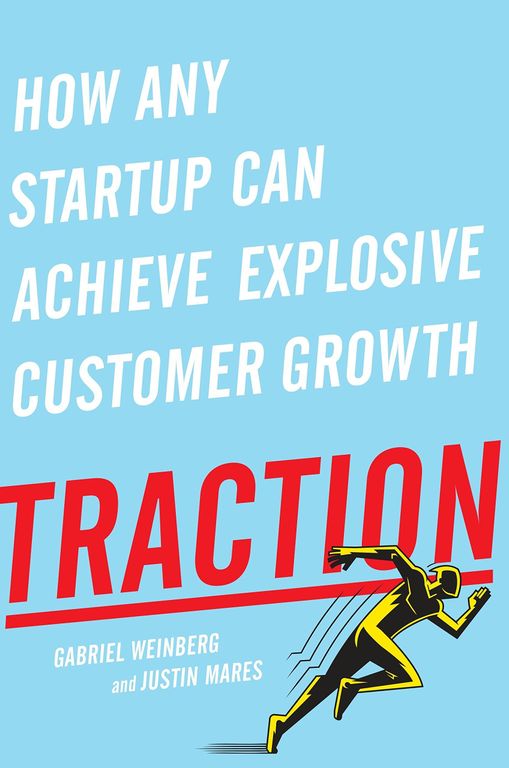
Nova: Exactly! And that's precisely what we're tackling today. We're diving deep into two seminal books that, when combined, offer a complete blueprint for turning PR into a measurable, impactful growth driver. First up, we're looking at "Traction" by Gabriel Weinberg and Justin Mares. Now, Gabriel Weinberg is a phenomenal entrepreneur, the founder of DuckDuckGo, and this book isn't just theory; it's a battle-tested guide born from the trenches of startup growth. It's widely acclaimed for its practical, actionable strategies to acquire customers and, as we'll see, public attention.
Atlas: And what's interesting there, is that it's not just about acquiring customers, it's about acquiring kind of traction. Which brings us beautifully to the measuring part. We’re also bringing in "Measure What Matters" by the legendary venture capitalist John Doerr. This is the book that introduced the OKR framework—Objectives and Key Results—to the world, a system he famously brought to Google in its early days. It's a framework that revolutionized how leading companies align their teams and measure progress, moving beyond vague goals to concrete, accountable outcomes.
Nova: So, today, we're marrying these two giants. "Traction" gives us the 'how-to' for strategically gaining attention, and "Measure What Matters" provides the 'what-to-measure' for ensuring that attention actually translates into tangible business results. It’s about stopping the guesswork and starting the measuring in PR.
From Guesswork to Growth: The Strategic Pursuit of PR Traction
SECTION
Atlas: That makes perfect sense. Because as a strategic integrator, my biggest challenge is always connecting the dots between activity and outcome. So, let’s start with "Traction." How does it help us move beyond just sending out press releases and hoping for the best?
Nova: It’s brilliant, actually. Weinberg and Mares argue there are 19 distinct channels for gaining traction, and the key is to systematically test and optimize them. Think of it like this: instead of just guessing which PR activities will work, you treat your PR strategy like a scientific experiment. You brainstorm, you rank, and then you test.
Atlas: Okay, so you’re saying it’s not about finding perfect channel, but about understanding that there are many, and then figuring out which ones are right for?
Nova: Exactly! And the book introduces something called the "Bullseye Framework." You brainstorm all 19 channels, then you narrow it down to a few that seem most promising, and finally, you focus intensely on the one that appears to have the most potential.
Atlas: That sounds rough, but… for someone who needs quick, tangible wins, how do you even identifying these channels without getting bogged down? It feels overwhelming when you're already trying to maximize impact across the board.
Nova: That’s a great question, and it’s where the "Bullseye" really shines. Let’s take a hypothetical. Imagine a sustainable fashion startup, "EcoChic," in a super crowded market. Their initial PR efforts were scattershot—a few influencer outreach emails here, a press release there. They were visible, sure, but growth was slow, and they couldn’t tell what was moving the needle.
Atlas: I totally know that feeling. It’s like, you're busy, but are you actually being effective?
Nova: Precisely. So, EcoChic applies the Traction framework. They brainstorm potential PR channels: content marketing, influencer collaborations, traditional media relations, community building, even offline events. They then rank these based on potential reach and cost. They decide to intensely test influencer marketing and thought leadership content.
Atlas: So, they don't just influencer marketing; they it? What does that look like?
Nova: It means they don't just send out free clothes. They set clear objectives. For influencer marketing, they might test micro-influencers versus mid-tier influencers, track engagement rates, website traffic from specific links, and even direct sales conversions. For thought leadership, they might publish two types of articles: deep dives on ethical sourcing versus trend pieces on sustainable fashion, and then measure which content generates more backlinks, media pick-ups, or leads.
Atlas: That’s actually really inspiring. So, they’re basically turning PR into a series of mini-experiments, each with a hypothesis and measurable outcomes. This is what a growth architect needs: data-driven insights, not just anecdotal success.
Nova: And the beauty is, they discover that while traditional media gets them some nice features, their most impactful traction comes from collaborating with niche sustainable living bloggers who have highly engaged audiences. Those collaborations drive specific website traffic and conversions at a much lower cost and higher ROI than a big, glossy magazine feature. That’s the "traction" they were looking for, systematically discovered.
Beyond Vanity Metrics: Measuring PR's True Impact with OKRs
SECTION
Atlas: Okay, so we've found our traction, we’re getting visible, we’re even getting specific results from those traction channels. But how do we prove that visibility actually to the bottom line? How do we connect those PR wins to the bigger strategic goals? That's where "Measure What Matters" comes in, right?
Nova: Absolutely. This is where John Doerr's OKR framework becomes indispensable for the strategic integrator. PR often gets stuck in vanity metrics: "We got 50 media mentions!" But how did those mentions contribute to revenue, brand sentiment, or market share? OKRs provide that vital link.
Atlas: So you’re saying we need to stop counting clip counts and start counting conversions?
Nova: In essence, yes. An Objective is you want to achieve—it's ambitious, qualitative, and inspirational. Key Results are you'll achieve it—they're specific, measurable, and time-bound. For PR, this means aligning your communication goals directly with overall business objectives.
Atlas: Can you give an example? For a brand steward, elevating brand reputation is absolutely critical, but how do you make that measurable with OKRs?
Nova: Let's stick with our EcoChic example. Their overarching business objective might be "Become the leading sustainable fashion brand for conscious consumers." A PR Objective could then be: "Elevate EcoChic’s brand reputation as the most trusted authority in sustainable fashion."
Atlas: That's a great objective. But how do you put numbers on "most trusted authority"? That feels very qualitative.
Nova: That's where the Key Results come in. They break down that objective into measurable outcomes. So, for EcoChic, the Key Results might be:
Atlas: Wow. Okay, so that’s incredibly specific. For someone trying to maximize impact and tie PR to growth, how do you prevent OKRs from becoming just another bureaucratic reporting exercise? And how do you ensure the 'Key Results' are truly and not just busywork?
Nova: That’s the critical distinction. Doerr emphasizes that Key Results must be but, and directly contribute to the Objective. They're not just a to-do list. The "Measure What Matters" philosophy is about transparency and alignment. Everyone knows what the objectives are and how their work contributes. If a Key Result isn't pushing towards the Objective, it's not a true Key Result. And the beauty of OKRs is their agility. They're typically set quarterly, allowing for quick adjustments based on what's working—or not. It’s not about punishing failure, but learning from it and adapting, which is crucial in the dynamic world of PR.
Atlas: So it's about being really intentional, right? Not just doing PR, but doing PR that you can actually prove is working. This truly elevates the role of PR from a support function to a core growth driver.
Nova: Precisely. It turns PR into a data-driven investment, rather than a speculative expense.
Synthesis & Takeaways
SECTION
Nova: So, bringing it all together, the biggest takeaway is this: PR isn't a nebulous art; it's a science of growth waiting to be optimized. "Traction" gives you the toolkit to systematically explore and exploit channels, while "Measure What Matters" provides the framework to rigorously prove the value of those efforts.
Atlas: And for the strategic integrator, the growth architect, the brand steward listening right now, this is a game-changer. It’s about transforming your PR from a 'hope and pray' approach to a 'test and measure' powerhouse. It’s about making PR a true engine for impact maximization.
Nova: Exactly. It’s about having a clear, repeatable system that not only gains visibility but consistently enhances brand reputation and contributes to your overarching growth goals.
Atlas: So, the 'Tiny Step' for our listeners, the one thing they can do by next week to move from guessing to measuring: Identify one PR channel you're currently using and define three clear, measurable Key Results for it. Just one channel, three KRs. Start small, but start with intent.
Nova: Precisely. Stop guessing, start measuring. And that, my friends, is how you truly build a brand that resonates and grows.
Atlas: Absolutely. This is Aibrary. Congratulations on your growth!