

How to Scale Acquisition Without Burning Out Your Team
Golden Hook & Introduction
SECTION
Nova: What if the secret to scaling your business isn't about doing more, but about doing much less?
Atlas: Whoa, that's a bold claim, especially in the world of growth where everyone's constantly chasing the next big channel. My gut tells me that sounds almost counter-intuitive for anyone trying to hit aggressive targets.
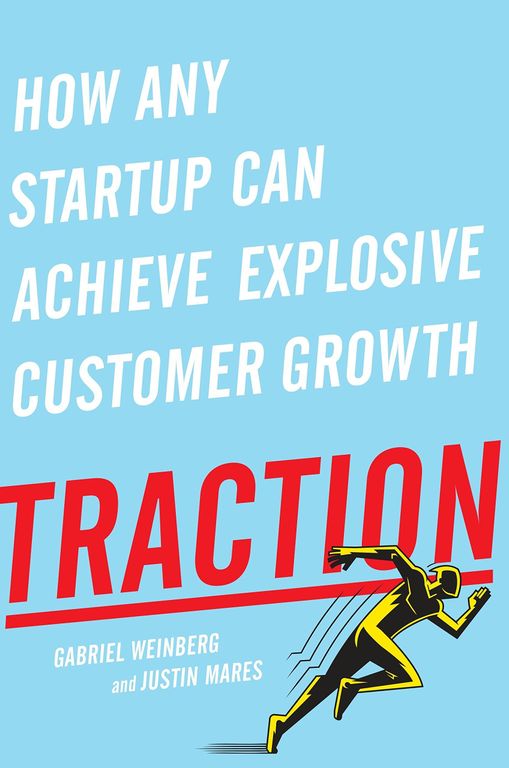
Nova: Absolutely, and that's precisely the myth we're tackling today. We're diving into 'Traction' by Gabriel Weinberg and Justin Mares. What's particularly compelling is that Gabriel Weinberg is the founder of DuckDuckGo, a company that famously carved out a significant niche against tech giants. He proved the very principles of focused growth that he articulates in this book, challenging the status quo and winning.
Atlas: That's a powerful endorsement right there. Someone who actually built something substantial using these ideas, not just theorized about it. So, what's the core problem they're addressing, this idea of "doing less"? Because for so many, scaling acquisition feels like a relentless sprint, and honestly, a recipe for exhaustion.
Nova: You've hit the nail on the head. The cold hard fact is, scaling user acquisition often feels like trying to be in 19 places at once. Imagine a chef trying to perfectly cook 19 different, complex dishes simultaneously. What happens? Everything is mediocre, the kitchen is chaos, and the chef is utterly burnt out. That’s what happens to teams when they try to be everywhere in their marketing efforts.
Atlas: Oh, I know that feeling. I imagine a lot of our listeners, especially those building and optimizing, are nodding vigorously right now. But why is that the default? Why do we instinctively feel we need to be on every platform, chasing every trend?
The Myth of Omnipresence & The Power of Focused Traction
SECTION
Nova: It's a combination of fear of missing out, a misunderstanding of how growth truly works, and sometimes, just a lack of a clear strategy. The belief is that if you're not everywhere, you're leaving money on the table. But the reality is, most acquisition channels for will yield very little return. The real cost isn't just the ad spend; it's the immense energy, focus, and creativity your team expends trying to maintain a presence everywhere. That's where the burnout truly sets in.
Atlas: That's a great point. It's not just about the budget, but the human capital—the mental bandwidth. So, what's the alternative then? If we're not trying to be everywhere, how do we scale without feeling like we're constantly underperforming or missing opportunities?
Nova: The real secret, according to Weinberg and Mares, is to identify and double down on the channels that truly work for your product. It’s about disciplined experimentation to find those one or two channels that are your product's natural home, its gravitational pull, if you will. Once you find them, you pour your resources, your team's energy, and your creativity into those specific areas until they're optimized.
Atlas: Okay, so it’s about extreme focus. That resonates with the pragmatic builder in me. But wait, how do you even which channels are working without trying them all? Isn't that the catch-22? It sounds great in theory, but for someone trying to optimize and prove impact, how do you avoid the initial scattershot phase while still discovering those golden channels?
The Bullseye Framework in Action: Disciplined Experimentation for Sustainable Growth
SECTION
Nova: Exactly! And that’s precisely where their brilliant Bullseye Framework comes in. It provides a structured, almost scientific way to approach this. Think of it like an archer aiming for a target. The target has three rings.
Nova: The is all about brainstorming. You list out all 19 potential traction channels they identify—everything from viral marketing and SEO to public relations, offline ads, community building, and even specific niche forums. The goal here isn't to them all, but to consider them all. You're casting a wide net for ideas, not for immediate execution.
Atlas: So, it's about being exhaustive in your, but not in your. I like that. It satisfies the visionary's need to explore possibilities without committing the builder's resources prematurely.
Nova: Precisely. Then you move to the. From that big list, you pick the 2-3 most promising channels—those that seem to align best with your product, your audience, and your resources. You then run on each of these. The goal is to gather just enough data to determine if a channel has potential, not to scale it immediately.
Atlas: That's smart. It's like A/B testing your entire marketing strategy. Can you walk us through a hypothetical scenario? Let's say a new B2B SaaS product is launching, aimed at helping small businesses manage their inventory. How would they use this to avoid burning out their small marketing team?
Nova: Fantastic question. Let's take that SaaS product. In the Outer Ring, their team brainstorms everything: Google Ads, LinkedIn content, industry podcast sponsorships, email marketing, cold outreach, even local chamber of commerce events. They list them all.
Nova: For the Middle Ring, they might identify three promising ones: targeted LinkedIn ads, email marketing to a purchased list of small business owners, and perhaps a partnership with an accounting software provider. They then run very lean tests: a small budget for LinkedIn ads, a short, focused email campaign, and an initial exploratory conversation with the accounting software company.
Nova: What they discover is that while LinkedIn ads get some clicks, the conversion rate is low. The email campaign gets opened but few replies. However, the partnership conversation with the accounting software reveals a huge, untapped opportunity for integration and cross-promotion. The referrals from that partnership are high quality and convert well.
Atlas: Wow, that's a perfect example. So, the data from those small tests points them directly to what works.
Nova: Exactly. That’s where the comes in. You identify that channel that showed the most promise—in our example, the strategic partnership. Then, you double down. You pour your resources, your team's focus, and your creative energy into making that partnership incredibly successful. You build out the integration, create co-marketing materials, and nurture that relationship until it becomes a significant, sustainable source of acquisition.
Atlas: That's actually really inspiring. It’s about making your team's efforts, right? Instead of having three people thinly spread across ten channels, you have those three people becoming experts in the one or two channels that actually move the needle. That must dramatically reduce burnout and increase impact.
Nova: It absolutely does. The team feels a sense of accomplishment because their work is directly contributing to measurable growth. They’re no longer just putting out fires or doing busywork across too many platforms. They're strategists and builders, seeing their focused efforts yield real results. It transforms acquisition from a chaotic sprint into a strategic, sustainable climb.
Synthesis & Takeaways
SECTION
Nova: So, ultimately, the core insight from 'Traction' is that sustainable growth isn't about brute force or being everywhere. It's about strategic focus. It’s about leveraging disciplined experimentation to find your product’s unique growth levers, allowing your team to excel and truly make an impact without succumbing to the relentless pressure of chasing every shiny new thing.
Atlas: That makes perfect sense. It’s about finding clarity in the chaos and optimizing for efficiency, which speaks directly to anyone who wants to build something impactful without burning out their incredible team. My biggest takeaway is that sometimes, the most strategic move is to prune the excess, not plant more seeds.
Nova: Absolutely. It’s empowering your team to be specialists in what truly matters, rather than generalists spread too thin. It leads to not just growth, but growth, healthier teams, and ultimately, a more robust business.
Atlas: So, for our listeners, the tiny step here is incredibly clear: list your top three current acquisition channels and brainstorm one new, unconventional channel that you could test using this Bullseye Framework. Don't just brainstorm; think about that small, inexpensive test you could run to see if it has potential. Empower your team by giving them that clarity and focus.
Nova: And remember, the goal isn't just more users; it's the users, acquired in a way that respects your team's energy and expertise. It's about building a foundation for long-term health, not just short-term gains.
Atlas: That's a perfect way to put it. This is Aibrary. Congratulations on your growth!