

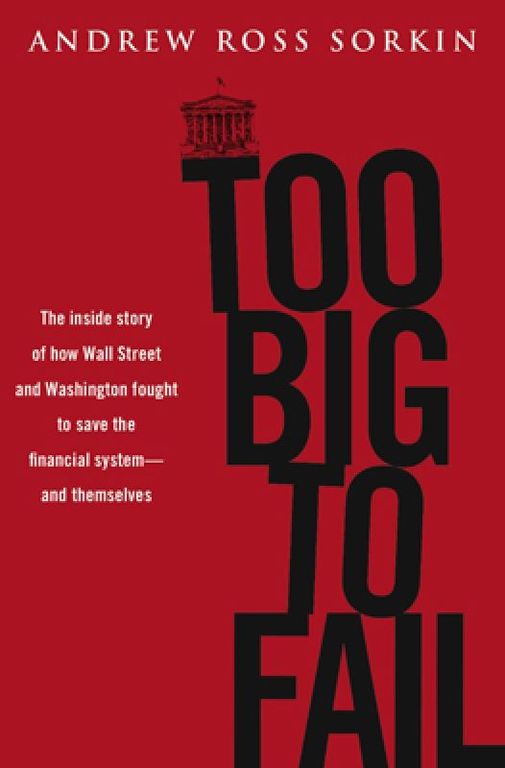
Too Big to Fail
Introduction: The Weekend That Almost Broke the World
Introduction: The Weekend That Almost Broke the World
Nova: Welcome to Aibrary. Today, we are diving into a book that reads less like history and more like a real-time thriller: Andrew Ross Sorkin's "Too Big to Fail." Imagine the world's economy teetering on the edge of a cliff, and you are locked in a room with the only people who might be able to pull it back. That's the access Sorkin grants us.
Nova: : That's the perfect framing, Nova. It’s not just about numbers; it’s about ego, fear, and the sheer, terrifying pressure on a handful of individuals. I remember reading excerpts when it first came out, and the feeling was visceral. What makes this book the definitive account, in your view?
Nova: It’s the access. Sorkin, reporting for the New York Times and CNBC, essentially embedded himself in the drama. He wasn't just reporting on the stock tickers; he was reporting on the conference calls, the secret negotiations, the sheer exhaustion of Treasury Secretary Henry Paulson. He captures the moment when the abstract concept of 'systemic risk' became a very concrete, very human problem.
Nova: : It’s the difference between reading a textbook summary of the 2008 crisis and being in the back room while they decide whether to let Lehman Brothers die. That decision—Lehman—is the pivot point, isn't it? The moment the government decided, 'We will let one fall.'
Nova: Exactly. And Sorkin details the agonizing calculus behind that choice. The book opens up that world, showing the hubris that led to the crisis, but then pivots sharply into the desperate scramble to contain it. It’s a masterclass in narrative non-fiction, turning complex derivatives and credit default swaps into high-stakes drama.
Nova: : So, we're not just getting a timeline; we're getting the psychology. We’re looking at greed, denial, and then, finally, raw survival instinct playing out in real-time among the titans of finance and government. That’s why this book remains so essential, even years later.
Nova: Absolutely. It’s the story of how the system, built on layers of complexity and risk, finally buckled. Let’s start by setting the scene: the sheer scale of the institutions involved and the terrifying speed at which everything unraveled.
Nova: : I’m ready. Let’s pull back the curtain on that chaotic September.
Key Insight 1: The Tipping Point Decisions
The Anatomy of Panic: Lehman's Fall and the AIG Lifeline
Nova: Chapter one in the book is essentially a countdown to midnight. We have to talk about Lehman Brothers. Sorkin paints a picture of the final days where the decision-makers, including Treasury Secretary Paulson, are essentially holding a ticking time bomb. What was the atmosphere like in those final hours before they let Lehman file for bankruptcy?
Nova: : The atmosphere, according to Sorkin, was one of disbelief mixed with a kind of fatalistic resignation. The key takeaway I got was that the decision to let Lehman fail wasn't a strategic move to teach a lesson; it was a failure of finding a buyer or a viable rescue package in time. They thought they could manage the fallout, which, in hindsight, was catastrophic hubris.
Nova: That’s the chilling part. Sorkin details the phone calls where executives are pleading, and the government officials are stone-faced, trying to calculate the contagion. He notes that the failure of Lehman was supposed to be a signal that the government let firms fail, restoring market discipline. Instead, it triggered pure panic.
Nova: : And that panic immediately jumped to the next giant in line: AIG. The transition from Lehman’s collapse to AIG’s near-death experience is incredibly fast in the book. AIG wasn't just a bank; it was an insurance company insuring trillions in derivatives. It was the plumbing of the entire global financial system.
Nova: Sorkin emphasizes that AIG was far more interconnected than people realized. It wasn't just about mortgages; it was about credit default swaps—insurance policies on those mortgages—that AIG had written without having the capital to back them up if everyone defaulted. It was a shadow banking system operating under an insurance license.
Nova: : The numbers Sorkin cites regarding the potential AIG bailout are staggering. We’re talking about an initial injection of $85 billion, which ballooned later. It highlights how opaque these instruments were, even to the regulators trying to save the day.
Nova: He stresses that the government had to act because AIG’s failure would have triggered a cascade of defaults across every major bank globally—Goldman Sachs, European banks, everyone who held those AIG insurance contracts. It was a systemic threat that dwarfed the Lehman problem.
Nova: : It makes you wonder about the people in the room. Were they heroes trying to stop a tidal wave, or were they the architects who finally had to admit their structure was flawed? Sorkin seems to give them the benefit of the doubt in the heat of the moment, focusing on competence under duress.
Nova: He focuses on the competence, yes, but also the sheer exhaustion. He describes Ben Bernanke, the Fed Chair, working around the clock, trying to understand the mechanics of these complex products while simultaneously trying to calm markets. It’s a portrait of leadership under impossible stress.
Nova: : I recall one detail about the initial AIG bailout—the government essentially took control because no private buyer would touch it. That’s the moment the phrase 'Too Big to Fail' stops being theoretical and becomes operational policy, right?
Nova: Precisely. The government essentially nationalized AIG to prevent the entire system from seizing up. Sorkin details the internal arguments: should we let them fail and risk a depression, or bail them out and create a massive moral hazard? The choice, in that moment, was clear, even if the long-term implications were terrifying.
Nova: : And the moral hazard is the core controversy we’ll get to later. But in that moment, the immediate goal was stopping the bleeding. Sorkin’s reporting on the weekend of the AIG rescue feels like watching a high-stakes hostage negotiation where the hostage is the global economy.
Nova: It is. He captures the feeling that they were making decisions based on incomplete information, relying on the assurances of the very people who created the mess. It’s a dizzying look at the concentration of power and responsibility.
Nova: : So, Lehman was the shock, and AIG was the confirmation that the contagion was everywhere. The government was forced to become the ultimate backstop, whether they wanted to or not.
Nova: That’s the narrative arc of the first half of the book. The realization that the system was so tightly interwoven that pulling one thread meant unraveling the whole tapestry. It sets the stage perfectly for us to examine the key players who were holding those threads.
Key Insight 2: The Human Drama Behind the Bailouts
The Power Brokers: Paulson, Bernanke, and the Moral Calculus
Nova: Let’s zero in on the key figures Sorkin profiles. Henry Paulson, the former Goldman Sachs CEO turned Treasury Secretary, is central. Sorkin portrays him as the reluctant savior, the man who understood Wall Street better than anyone in Washington, yet was tasked with policing it.
Nova: : Paulson is fascinating because he embodies the revolving door. He knew the players, he knew the products, but he was also deeply conflicted about using taxpayer money to save the institutions he once led. Sorkin captures that internal conflict brilliantly.
Nova: He details Paulson’s constant struggle to get Congress and the public to understand the severity. Remember, this was happening right after the initial TARP debates. There was massive public anger about bailing out banks, and Paulson had to sell them on the idea that this was necessary to prevent a 1930s-style depression.
Nova: : And then you have Ben Bernanke at the Fed. Bernanke, the scholar of the Great Depression, suddenly finding himself in the middle of the greatest financial crisis since 1929. Sorkin shows how his historical knowledge informed his aggressive use of the Fed’s emergency powers.
Nova: Bernanke’s actions were crucial. While Paulson managed the Treasury side, Bernanke was flooding the system with liquidity. Sorkin highlights how the Fed had to invent new mechanisms on the fly—lending to non-banks, creating emergency lending facilities—because the existing rules weren't designed for this level of interconnected failure.
Nova: : It’s the difference between the textbook response and the real-world improvisation. Sorkin shows that the tools they needed to stop the collapse were often the very tools that critics argued created the problem in the first place—namely, providing a safety net.
Nova: That brings us directly to the moral hazard. If you save everyone, you incentivize reckless behavior in the future. Sorkin doesn't shy away from this critique. He shows the executives who felt entitled to the rescue because they knew, deep down, they were deemed 'Too Big to Fail.'
Nova: : It’s the ultimate perverse incentive. The more successful and interconnected you become, the less personal accountability you face when things go wrong. Sorkin interviews executives who genuinely believed the government to save them because the alternative was societal collapse.
Nova: And Sorkin contrasts this with the fate of smaller firms, like Washington Mutual, which was allowed to fail without a massive government intervention. That disparity is what fueled the public outrage. Why does a firm with $300 billion in assets get saved, but a smaller one gets wiped out?
Nova: : The answer, according to the book’s narrative, is the sheer scale of the potential spillovers. It wasn't about rewarding good behavior; it was about preventing a complete breakdown of credit markets. Sorkin captures the chilling statistic that the failure of one major player could freeze lending for everyone else, crippling Main Street.
Nova: He also dedicates time to the internal politics, the clashes between the Treasury, the Fed, and the SEC. It wasn't a unified front; it was a collection of powerful egos, all fighting for control over the narrative and the rescue plan. That human element makes the book so compelling.
Nova: : It’s a testament to Sorkin’s reporting that he managed to get these people to talk, revealing the sheer exhaustion and the late-night compromises. It’s the drama of the decision-making process that elevates it beyond mere financial reporting.
Nova: Indeed. The book is a masterclass in showing that even in the most complex financial crises, the decisions ultimately boil down to a few people in a room making gut calls under immense pressure. This leads us perfectly into the central concept: the paradox of TBTF itself.
Key Insight 3: The Concept That Defined a Decade
The TBTF Paradox: Necessity vs. Moral Hazard
Nova: Let’s tackle the title head-on. The term 'Too Big to Fail' was actually coined back in 1984 by Congressman Stewart McKinney, long before the 2008 crisis. Sorkin uses this history to frame the debate: is TBTF an unavoidable reality of modern global finance, or a regulatory failure we can fix?
Nova: : It’s the central philosophical battleground. If an institution is so large and interconnected—a Global Systemically Important Bank, or G-SIB—that its failure causes widespread economic harm, then the government intervene. That’s the reality Sorkin documents.
Nova: But the consequence, the moral hazard, is that these firms know they have an implicit government guarantee. Sorkin explores how this knowledge encourages them to take on risks they otherwise wouldn't, because the potential upside is theirs, but the downside is socialized across the taxpayer.
Nova: : It’s like a casino where the house knows the government will always cover its massive losses. Sorkin’s reporting shows that the very structure of the modern financial sector, driven by mergers and growth, created this monster.
Nova: And the book details the attempts to tame it post-crisis. The Dodd-Frank Act was the legislative response, aiming to create mechanisms like 'Orderly Liquidation Authority' to allow a large firm to fail without crashing the whole system. But did it work?
Nova: : That’s where the controversy sharpens. Many critics, and even some of the people Sorkin interviewed, suggest that Dodd-Frank made the system safer on paper, but the largest banks are even bigger now than they were in 2008. The assets held by the top five banks have only increased.
Nova: That’s the enduring critique. If the banks are larger, the potential failure is even more catastrophic. Sorkin’s work, while chronicling the rescue, also serves as a warning that the underlying structural problem—the sheer size and complexity—was never truly solved, only managed.
Nova: : He captures the feeling that the regulators were playing whack-a-mole. They stopped the mortgage-backed security crisis, but the next crisis will likely come from an area they haven't even thought to regulate yet, perhaps in the shadow banking sector or new digital finance areas.
Nova: It’s the concept of 'rational irrationality' he mentions—the idea that within the system, taking massive risks was rational for the individual firm seeking profit, even if it was irrational for the system as a whole. Sorkin expertly shows how that logic dominated the pre-2008 landscape.
Nova: : And the book’s reception reflected this tension. It was praised as a gripping, must-read account of the drama, but it also forced readers to confront the uncomfortable truth that the system was saved by the very mechanisms that created the risk in the first place.
Nova: The book’s success, including the HBO adaptation, meant that the narrative of 2008 was cemented in the public consciousness through Sorkin’s lens—a lens focused on the boardroom drama rather than just the macroeconomic theory.
Nova: : It’s a powerful legacy. It took the abstract language of finance and translated it into a story of human decision-making. But that translation also risks oversimplifying the regulatory fixes that followed.
Nova: That’s a fair challenge. The book is a narrative triumph, but the policy debate it ignited is ongoing. The paradox remains: how do you allow capitalism to function with risk and reward, while preventing the failure of the largest players from destroying the global economy? It’s the question Sorkin forces us to keep asking.
Key Insight 4: The Book's Enduring Influence
Legacy and Echoes: Is the System Truly Fixed?
Nova: Moving into the final act of our discussion, let’s look at the book’s impact. It was a massive bestseller, adapted into a major television film. What did this level of popular success do for the public understanding of the crisis?
Nova: : It humanized the catastrophe. Before Sorkin, for many people, the crisis was about underwater mortgages and abstract financial products. After the book, it became a story about Jamie Dimon at JPMorgan, or Dick Fuld at Lehman, fighting desperately. It made the abstract personal.
Nova: And that personalization is key to political action. When people see the faces and hear the arguments, they are more likely to demand accountability. Sorkin’s work provided the narrative ammunition for those calling for stricter regulation and prosecution.
Nova: : Yet, Sorkin himself has continued to warn about the next crisis, even after writing about 2008. He’s pointed to current bubbles, like the AI boom, suggesting that the underlying human tendencies—greed, hubris, denial—haven't been cured by regulation.
Nova: He’s essentially saying that while the of the 2008 crisis might be regulated, the that causes crises is timeless. His subsequent work on the 1929 crash reinforces this—that history doesn't repeat exactly, but it certainly rhymes.
Nova: : That’s a sobering thought. If the book’s primary success was detailing the near-death experience of 2008, its lasting value might be in serving as a permanent, detailed warning label on the entire system.
Nova: It forces us to look beyond the headlines of quarterly earnings and examine the structural integrity. For instance, Sorkin details the role of credit rating agencies—Moody's, S&P—who gave AAA ratings to toxic assets. That failure of independent oversight is a recurring theme he highlights.
Nova: : And that’s a crucial point because those agencies were supposed to be the objective referees. Their failure to accurately price risk is as much a part of the TBTF story as the banks themselves. They were incentivized by the very institutions they were supposed to be scrutinizing.
Nova: It’s a web of perverse incentives. The banks wanted the ratings to sell the product; the rating agencies wanted the fees from the banks; and the government was slow to recognize the danger until the house was already on fire.
Nova: : So, if we take the book’s lessons to heart, what’s the actionable takeaway for the average listener who isn't running a multi-trillion-dollar balance sheet?
Nova: The takeaway is skepticism toward complexity and an insistence on transparency. If you can’t understand what a financial product does, or if the people selling it can’t explain it without resorting to jargon, that’s a red flag. Sorkin shows that complexity was used as a shield against scrutiny.
Nova: : And perhaps a deeper takeaway is understanding the role of government intervention. We hate bailouts, but Sorkin’s narrative makes a compelling case that in certain moments, the alternative was far worse. It forces a difficult conversation about the social contract in finance.
Nova: It’s a constant tension: the desire for free-market dynamism versus the need for systemic stability. "Too Big to Fail" doesn't offer an easy answer, but it provides the most detailed, gripping evidence of the cost of getting it wrong.
Conclusion: The Price of Stability
Conclusion: The Price of Stability
Nova: We've journeyed through the panic of September 2008, examined the high-stakes decisions made by Paulson and Bernanke, and wrestled with the enduring paradox of 'Too Big to Fail.' What is the single most important lesson you’re taking away from Sorkin’s deep dive today?
Nova: : The most important lesson is that the system is only as strong as the people running it, and those people are fundamentally human—driven by ego, fear, and self-preservation, even when the fate of the world is on the line. Sorkin proves that financial history is biography in disguise.
Nova: I agree. The book’s greatest achievement is ripping the veneer of mathematical certainty off the financial world and showing the messy, often improvised human drama underneath. It’s a powerful reminder that regulation is always playing catch-up to innovation and greed.
Nova: : And while Dodd-Frank was passed, the conversation Sorkin started about scale and interconnectedness is far from over. We are still living in the shadow of those decisions made over that one terrifying weekend.
Nova: Absolutely. The price of stability, as Sorkin illustrates, is eternal vigilance and a willingness to confront uncomfortable truths about the institutions we rely on. It’s a book that demands you pay attention to the fine print of global finance.
Nova: : It’s a necessary, if sometimes terrifying, read for anyone who wants to understand the modern economy. It’s a masterwork of investigative journalism.
Nova: Indeed. Thank you for exploring this landmark book with me. We hope this deep dive has given you a new appreciation for the fragility of the system we all inhabit.
Nova: : This is Aibrary. Congratulations on your growth!