

The Physics of Leadership: Forging the Future in the Classroom
Golden Hook & Introduction
SECTION
Albert Einstein: Imagine, if you will, a traveler walking down a road. He comes across three men working. He asks the first man, "What are you doing?" The man, annoyed, wipes sweat from his brow and grumbles, "I am cutting a stone." He moves to the second man and asks the same question. "What are you doing?" The man replies, with a bit more purpose, "I am building a wall." Finally, he approaches the third man, who is humming as he works. "And you, sir, what are you doing?" The man looks up, and with a light in his eyes, he says, "I am building a great cathedral."
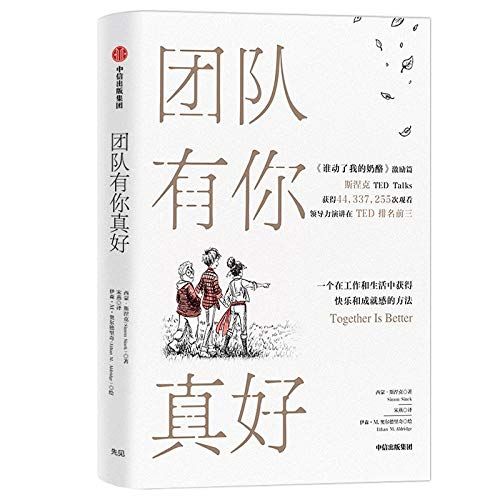
Albert Einstein: All three men were doing the exact same work. But their worlds were entirely different. This, my friends, is the simple, beautiful universe of Simon Sinek's little book, "Together Is Better." It suggests leadership is not a position, but the ability to show people the cathedral.
Albert Einstein: And I can think of no one who lives at this intersection of task and vision more profoundly than our guest today. Moath Hajjaj is an educator, a shaper of young minds. Welcome, Moath.
Albert Einstein: Precisely! And that's what we'll explore today. We'll look at leadership from two perspectives, like two fundamental laws of the universe. First, we'll examine the 'Leader's Compass'—the power of that cathedral-like vision. Then, we'll delve into the 'Architecture of Trust'—the practical science of building an environment where people feel safe enough to build it together.
Deep Dive into Core Topic 1: The Leader's Compass
SECTION
Albert Einstein: So, Moath, let's start with that cathedral. Sinek's idea is that a leader's job is not to do all the work, but to hold the vision, the destination, so clearly that it pulls the team forward. It acts like... like gravity! But in your world, the classroom, you have so many other forces at play. Curriculums, testing standards, administrative duties... How do you keep the focus on the cathedral when the world is handing you stones and telling you to just start cutting?
Albert Einstein: It is neat. It fits on a spreadsheet. A cathedral does not.
Albert Einstein: So the vision is not "pass the class," but "become a better thinker"?
Albert Einstein: Ah, so you change the frame of reference! It's relative! The work is the same, but the perception of the work, its meaning, is transformed. You're not ignoring the stones; you're just making sure everyone knows why they're lifting them.
Albert Einstein: It seems to me that this requires immense patience. Gravity works over very long distances and very long times.
Deep Dive into Core Topic 2: The Architecture of Trust
SECTION
Albert Einstein: This is fascinating. So, you have this beautiful vision, this cathedral of the mind. But a single person cannot build it. Sinek's title is, after all, "Together Is Better." This brings us to our second law: the Architecture of Trust. It's one thing to have a destination, but another entirely to convince a group of people to take the journey with you, especially when it's hard. How do you build that trust, that "Circle of Safety" as Sinek calls it, in a classroom?
Albert Einstein: What does this fear look like in a student?
Albert Einstein: You are the architect of the space. So how do you design it for safety? What are your building materials?
Albert Einstein: You are lowering the activation energy required for participation! Wonderful!
Albert Einstein: You are showing them that the leader is also on the journey, not just standing at the destination.
Synthesis & Takeaways
SECTION
Albert Einstein: So, it seems the formula is not so complex, though its execution is difficult. It is like my own work. E=mc² is a simple equation, but the universe it describes is endlessly complex. Your formula for leadership seems to be: Vision + Trust = Progress. A clear vision to pull us forward like a distant star, and a circle of trust to hold us together like the strong nuclear force.
Albert Einstein: Indeed. Moath, this has been truly illuminating. For the other educators, the managers, the parents, the team leaders listening right now... if they want to start building their cathedral tomorrow, if they want to lay the very first stone of this grand project, what is the one, small, actionable thing they should do?
Albert Einstein: Ah, you don't give them the vision. You ask them to help you find it.
Albert Einstein: To ask the question, and then to listen. Perhaps that is the most fundamental force of all. Moath Hajjaj, thank you for helping us see the cathedral.