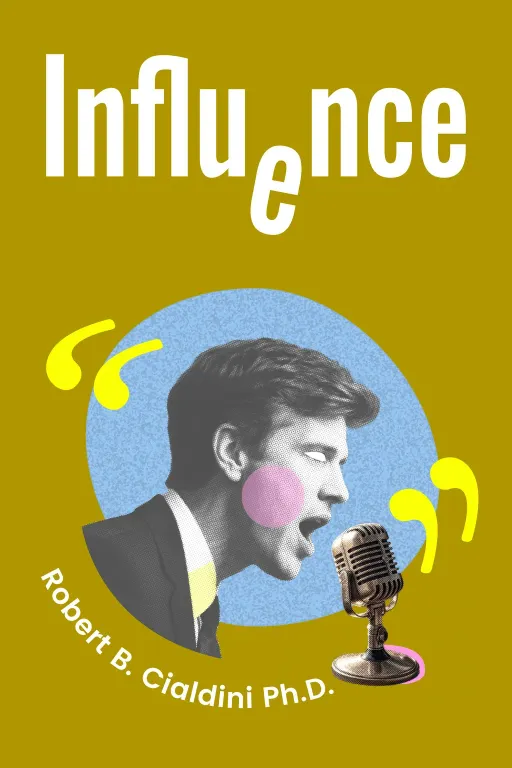
The 'Brilliant Idea' Trap: Why Influence, Not Just Innovation, Drives Agent Adoption.
Golden Hook & Introduction
SECTION
Nova: We build the most elegant, robust Agent systems. We pour our genius, our late nights, our entire intellectual being into them. And then… crickets. Absolute silence. Your brilliant solution sits there, technically perfect, but gathering digital dust.
Atlas: Oh, I know that feeling all too well. It’s like building a supercar in your garage, but no one ever takes it for a test drive, let alone buys it. It’s a gut punch when you know your tech is groundbreaking.
Nova: Exactly! It's the 'Brilliant Idea' Trap, and it's a cold, hard fact of innovation. Having a stellar Agent engineering solution is only half the battle. Your innovative ideas need to be adopted by to create real value. And today, we're unpacking that frustrating reality through the lenses of two giants: Robert Cialdini, a social psychologist whose research into influence spans decades, and Daniel Pink, a a former speechwriter who redefined what it means to 'sell' in the modern age.
Atlas: So, we’re talking about the secret sauce that makes our awesome tech actually? The thing that makes our meticulously crafted Agent architectures not just functional, but?
Nova: Absolutely. It's about a fundamental shift in focus. It's moving beyond just 'building it' to 'making sure it actually gets used and valued.' For every full-stack engineer, every architect, every value creator out there who is striving to turn cutting-edge Agent tech into tangible results, this is the missing piece.
From Innovation to Influence: The Unseen Battle for Agent Adoption
SECTION
Atlas: That makes me wonder, Nova, why do we, as engineers, often fall into this trap? We're trained to optimize, to build, to solve technical problems. The idea that our solutions might not be adopted just because of some 'psychology of influence' feels… almost unfair. Like, shouldn’t good tech just win on its own merit?
Nova: That’s a deeply ingrained belief in the engineering world, isn't it? The assumption that quality and innovation are self-evident. But the truth is, humans are complex. Even the most logically superior Agent system faces a gauntlet of human biases, existing habits, and competing priorities. Think of it like this: you’ve engineered a truly intelligent Agent that can automate a complex business process, saving thousands of hours. But if the team lead fears it will make their role redundant, or if the end-users find its interface slightly unfamiliar, that 'brilliant' solution will struggle to see the light of day.
Atlas: So it's not just about the code, it's about the and the in that context. That resonates with me as an architect. I’m always thinking about how our Agent systems integrate with existing business processes. But sometimes, even with perfect integration, there's a human wall.
Nova: Precisely. And this is where Cialdini’s insights become invaluable. His work, which is the result of decades of research into what makes people say 'yes,' fundamentally shifts your focus from merely presenting facts to strategically shaping perceptions. It's about understanding the deep-seated psychological triggers that drive human behavior and decision-making, even in highly technical environments.
The Six Pillars of Persuasion for Technical Leaders (Cialdini's Principles)
SECTION
Atlas: Okay, so if we’re talking about psychological triggers, what are some of these 'pillars' that engineers and architects can actually use? Because "influence" can sound a bit… manipulative to a lot of us.
Nova: That’s a fair point, and it’s a common misconception. Cialdini’s work isn't about manipulation; it's about understanding human nature and using ethical persuasion to achieve mutually beneficial outcomes. Let's dive into two key principles that are incredibly relevant for Agent adoption: and.
Atlas: Social Proof. Like, "everyone else is doing it, so it must be good"?
Nova: In essence, yes, but more nuanced. Social Proof is our tendency to look to others for guidance on how to behave, especially when we're uncertain. For an Agent project, this means showcasing successful pilot programs. If you can demonstrate that "Team X successfully implemented this Agent system and saw a 30% efficiency gain," that’s powerful social proof. It's not just your word anymore; it's a verifiable, internal success story. It builds confidence and reduces perceived risk for other teams considering adoption.
Atlas: I see. So instead of just saying "our Agent framework is robust," I should highlight that "the finance team, after a three-month pilot, is now processing transactions 2x faster with our framework." That’s much more compelling. It’s like saying, "Don't just believe me, believe your colleagues' results."
Nova: Exactly! It provides a tangible, relatable example within their own organizational context. And then there’s. This isn't about pulling rank, but about establishing credibility and expertise. People are more likely to listen to and follow the advice of those they perceive as knowledgeable and trustworthy authorities.
Atlas: So, for an Agent architect, that would mean… getting the CTO to endorse the new system? Or maybe having a lead engineer, someone with a lot of respect, champion the idea?
Nova: Precisely. If a highly respected technical leader, someone whose opinion is genuinely valued across the engineering organization, publicly supports your Agent solution, that carries immense weight. It signals, "This isn't just a shiny new toy; this is a strategically sound, well-vetted path forward." It’s about leveraging legitimate expertise, not just a job title.
Atlas: That makes sense. It’s about building trust in the solution by associating it with trusted sources. I can see how that would cut through a lot of the initial skepticism we often encounter from developers who are naturally wary of new tools that might disrupt their workflow. How about? What does that look like in the Agent world?
Nova: Reciprocity is simple: we feel obligated to return favors. For an Agent engineer, this could mean offering to help a stakeholder with a small, unrelated technical challenge you ask them to consider your large Agent project. Or, providing genuinely useful insights or tools that benefit them, without immediately asking for something in return. That builds a bank of goodwill.
Atlas: So, it’s not just about showing up with a fully baked Agent solution and saying 'here, use this!' It's about building relationships, adding value upfront. I can definitely apply that. Just identifying a key stakeholder for my current Agent project and brainstorming how to apply one of these principles, even just offering a helpful tip or a quick code review, could open doors.
Beyond Selling: Attunement, Buoyancy, and Clarity for Agent Architects
SECTION
Nova: And building on that, Daniel Pink expands our understanding of influence beyond just 'selling' to what he calls 'moving people.' He argues that in today's world, everyone is in sales, whether we realize it or not. For architects and value creators, his insights on are particularly powerful.
Atlas: "Moving people" – I like that framing better than "selling." As an architect, my goal is to influence the direction of our technical strategy, to ensure our Agent systems are stable and scalable. But how do I, someone who thrives on logic and data, develop something like "attunement" for squishy human emotions?
Nova: Attunement is about perspective-taking, Atlas. It's about truly understanding the other person's point of view, their needs, their fears, and their motivations. For an Agent architect, this means moving beyond the technical specifications to ask: "What problem is this person trying to solve? What are their KPIs? What keeps them up at night?" It's not about being a mind-reader, but being an active, empathetic listener. It's about adapting your message to frame of reference.
Atlas: So, instead of just presenting the technical elegance of our new Agent orchestration layer, I need to frame it in terms of how it solves the specific pain points of the business unit, like reducing operational overhead or improving data security. I need to get inside their heads, not just my own technical sandbox.
Nova: Exactly. And then there's. This is your ability to stay afloat in an ocean of rejections and setbacks. Because let's be real, even the best Agent ideas will face resistance. Buoyancy is about resilience, maintaining a positive outlook, and not letting 'no' derail your mission. Pink talks about 'interrogative self-talk' – asking yourself, "Can I do this?" instead of telling yourself, "I can do this." It primes your mind for solutions.
Atlas: That sounds incredibly important for anyone trying to implement big changes, especially with Agent systems that might challenge existing paradigms. It’s easy to get discouraged when your carefully crafted solution gets shot down due to organizational inertia or a lack of understanding. So, it's about being prepared for that pushback and having a strategy to navigate it.
Nova: Absolutely. And finally,. This is about making your message so clear, so compelling, that it helps others see their situation in a new light. For architects, this means translating complex Agent decision logic or the intricacies of a high-performance Agent system into a simple, understandable narrative. It's about identifying the true problem, not just the symptom, and presenting your Agent solution as the key to unlocking that clarity.
Atlas: So, simplifying the 'how' and focusing on the 'why' in a way that truly resonates. "Break boundaries" was a growth suggestion for me, and this feels like it directly addresses that – bridging the gap between deep technical understanding and clear business communication.
Synthesis & Takeaways
SECTION
Nova: When you combine Cialdini’s foundational principles with Pink’s modern framework, you get a powerful toolkit. It’s not about abandoning your technical brilliance; it’s about amplifying its impact. The 'Brilliant Idea' Trap is overcome not by building brilliantly, but by understanding and ethically applying the psychology of influence. That's how your Agent solutions gain the traction they deserve and create real, lasting value.
Atlas: It’s a profound shift in perspective. For a full-stack engineer or architect, it means recognizing that our role extends beyond the code. Our ability to integrate Agent technology, to ensure its stability and scalability, and to drive innovation, is directly tied to our capacity to influence, to persuade, and to move people. It’s about becoming a value creator, not just a code creator.
Nova: Precisely. And the tiny step you can take this week is to identify one key stakeholder for your current Agent project. Then, brainstorm how you could apply just one of Cialdini's principles – perhaps Reciprocity by offering a small, unsolicited help, or Social Proof by sharing a small internal success story – to better communicate the value of your work to them. Start small, but start influencing.
Atlas: That's a practical, actionable step. It's about not just building the future, but also inspiring others to join you in it.
Nova: Exactly. Because the most brilliant Agent in the world is useless if no one’s using it.
Nova: This is Aibrary. Congratulations on your growth!