

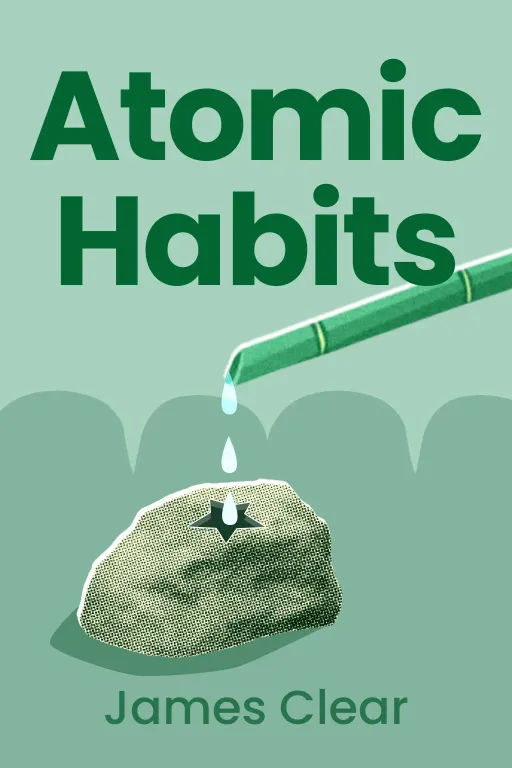
How to Build a 'Health Stack' Without Overwhelm: The Habit Science.
Golden Hook & Introduction
SECTION
Nova: Atlas, what’s the first thing that comes to mind when I say 'New Year's Resolutions'?
Atlas: Oh, Nova. I’d say 'well-intentioned delusion, quickly followed by self-flagellation.' Why, you ask? Don't tell me we're about to dive into the annual cycle of hope and despair.
Nova: Exactly! Because today, we're tearing down that delusion by diving into the science of habit formation, specifically drawing insights from two titans in the field: James Clear's and BJ Fogg's.
Atlas: Ah, the dynamic duo of not feeling bad about yourself for not having enough 'willpower'! Honestly, it’s refreshing to hear those names. I feel like my internal monologue has been a drill sergeant for too long.
Nova: Absolutely. Clear, for instance, isn't just an academic; he's a former baseball player who overcame a devastating injury. He applied scientific principles to his own recovery and performance, eventually distilling them into a framework for anyone, regardless of their starting point. And Fogg, a Stanford researcher, has dedicated decades to understanding human behavior, pioneering the 'Tiny Habits' method after realizing grand changes rarely stick. They both offer a different lens on why we struggle, which is precisely where we need to start.
Atlas: That makes sense. It’s like they're saying, 'Stop blaming yourself, start blaming the system.' So, if it's not about my inherent laziness, what the real unseen battle we're fighting when it comes to building healthy habits?
The Unseen Battle: Why Habits Are So Hard (and It's Not Your Fault)
SECTION
Nova: That's the perfect question, Atlas. The cold, hard fact is that building new healthy habits often feels like an uphill battle against inertia and motivation. We to make better choices, but consistency is hard. And here's the crucial part: the secret isn't more discipline; it's understanding how habits truly form. We've been sold this idea that if we just, we'll magically stick to things.
Atlas: Hold on, are you saying it's not actually fault when I fail to stick to a new habit? Because my inner critic has a very different story, and it's quite loud. It basically says, 'You clearly just don't want it badly enough.'
Nova: Precisely. Think of it this way: imagine trying to push a giant boulder uphill every single day. That's what relying solely on motivation feels like. Now, imagine a gentle river flowing downhill. Which one requires less effort? Our brains are wired for efficiency. They love established neural pathways, those ingrained routines. Introducing a new habit is like trying to carve a new path for that river, and our brain's default is to resist that friction.
Atlas: Oh, I've been there, mentally pushing that boulder. It's exhausting just thinking about it. So, if it's a design problem, what's wrong with the 'design' most of us are using? Why do we keep setting ourselves up for failure?
Nova: We often aim too big, too fast, and too reliant on a surge of initial motivation that inevitably fades. We tell ourselves, 'I'm going to run five miles every morning,' when we haven't run in five years. We don't design our environment to support the habit. We don't make it easy, or even visible. For the 'Strategic Builder' listener, this is about inefficient system design. You'd never build a company with a system designed to fail, right? Yet, we do it to ourselves all the time with our habits.
Atlas: That's a great way to put it. It's like trying to scale a business without any infrastructure. Okay, so we're fighting a losing battle with brute force. What's the strategic alternative? How do we build a system that works our brain, instead of against it, to make these habits stick?
The Art of the Tiny: Systematically Engineering Effortless Habits
SECTION
Nova: That's precisely where James Clear and BJ Fogg come in, offering two incredibly powerful frameworks for engineering effortless consistency. Think of it less as a battle, and more like redirecting that river we talked about, making the flow natural and easy. Clear's gives us a fantastic overarching system with his four laws of behavior change.
Atlas: Okay, lay them on me. I'm ready to take notes. What are these four laws?
Nova: They are: Make it Obvious, Make it Attractive, Make it Easy, and Make it Satisfying. To make it Obvious, for example, if you want to remember to take your vitamins, put the bottle right next to your coffee maker – something you see and interact with every morning. To make it Attractive, you could pair the habit you to do with a habit you to do. Maybe you only let yourself watch your favorite show while you're on the exercise bike.
Atlas: I like that. So I'm essentially bribing myself into better behavior. What about making it Easy? That sounds like my kind of law.
Nova: Exactly. This is where most people fail. If you want to go to the gym, lay out your gym clothes the night before. Better yet, choose a gym that's on your commute home. Reduce the friction. And finally, Make it Satisfying. This is crucial because our brains crave immediate rewards. If the reward for a healthy habit is far in the future, it's hard to stick. So, find a way to give yourself an immediate, small reward, or simply acknowledge the progress.
Atlas: Okay, 'Obvious, Attractive, Easy, Satisfying'—I get the concepts, but can you give me a super concrete example? Like, for someone who wants to drink more water, what does that look like in practice? What's the 'atomic' part of it?
Nova: For drinking more water, 'Obvious' means having a full water bottle on your desk or in your car. 'Attractive' could be adding a slice of lemon or cucumber to make it more appealing. 'Easy' is having filtered water readily available, not having to walk to the kitchen and fill a tiny glass. 'Satisfying' is simply noticing how much better you feel, or even putting a sticker on a tracker for each bottle you finish. And 'atomic' refers to these tiny, fundamental changes that, when compounded, create immense energy and results. It's about small, foundational units that build up.
Atlas: That makes sense. It’s not just a catchy name; it’s about the power of the small. But wait, so Clear says 'make it easy,' and Fogg says 'make it.' Is there a distinction, or are they just different shades of the same genius? And honestly, 'flossing one tooth' sounds almost silly. Does that work for a 'Strategic Builder' aiming for big impact?
Nova: That's a brilliant question, and it's where their genius truly complements. Clear provides the overarching system and the principles, while Fogg gives you the micro-tactics for frictionless. Fogg’s 'Tiny Habits' method is all about starting incredibly small, almost comically so, and attaching new habits to existing routines. The infamous 'floss one tooth' example isn't about having perfectly clean teeth from day one; it's about creating a feeling of immediately.
Atlas: Oh, I see. It's about building momentum, not perfection.
Nova: Exactly! Fogg highlights the importance of fostering positive emotions that drive repetition. When you successfully floss one tooth, you feel good. That tiny win makes you more likely to do it again. For a 'Strategic Builder,' this isn't silly; it's about building an unshakeable foundation. You don't build a skyscraper by pouring the entire foundation at once. You lay rebar, pour concrete in layers, and ensure each tiny component is solid. The 'tiny' aspect is about creating that initial, undeniable win that then makes bigger changes possible.
Atlas: That's a powerful reframe. So, the 'why' is that our brains resist friction, and the 'how' is to systematically remove that friction, starting with almost comically small steps. It's like building a personal operating system for health. So, what's the single most strategic thing a listener can do right after this episode to begin building their own 'health stack' without feeling overwhelmed?
Synthesis & Takeaways
SECTION
Nova: The most strategic thing is to internalize this core insight: it's not about willpower, but about environmental design and starting small. The power of small, consistent actions that compound over time is truly immense. We often overestimate what we can do in a day and underestimate what we can do in a year. These frameworks show us how to leverage that compounding effect for our well-being.
Atlas: It feels like we're not just talking about habits, but about fundamentally redesigning our relationship with progress itself. What's the biggest mindset shift you hope listeners take away from understanding these concepts?
Nova: The biggest shift is realizing that mastery isn't about grand gestures, but about relentless consistency in tiny, almost invisible actions. It's about becoming the of person who does the thing, not just trying to the thing. When you consistently take that tiny step, you're not just doing a habit; you're casting a vote for the person you want to become. And that, for a strategic builder, is the ultimate foundation for sustainable growth and long-term impact, far beyond just health.
Atlas: That's a powerful reframe. So, if you're a strategic builder, a culture weaver, or a resilient learner listening to this, Nova and I have a tiny challenge for you: Choose just one small health habit—like drinking a glass of water after brushing your teeth—and try Fogg's method for three days. Make it obvious, make it easy, and celebrate that tiny win. You might be surprised how that tiny crack opens up a floodgate of consistent change.
Nova: Absolutely. And tell us how it goes!