

Systems Thinking for Educational Excellence
Golden Hook & Introduction
SECTION
Nova: You know, Atlas, I was thinking about how we often try to fix things in education, right? We see a problem, we isolate it, and we throw a solution at it. But what if that approach is actually making things worse? What if our best intentions are creating unintended consequences that spiral out of control?
Atlas: Huh, that’s a tough pill to swallow, Nova. I imagine a lot of our listeners, especially those managing high-stakes educational environments, feel like they’re constantly triaging, putting out fires. Are you suggesting that the very act of focusing on those individual fires is actually fueling the larger blaze? That sounds a bit out there.
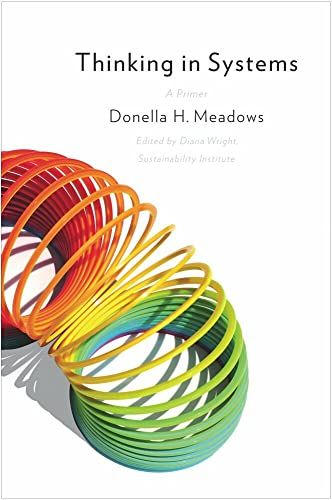
Nova: Exactly! And that’s precisely what we’re diving into today with a truly foundational text: by the brilliant Donella H. Meadows.
Atlas: Oh, I love Donella Meadows! She was a pioneering environmental scientist and a systems thinker long before it became a buzzword. What’s fascinating is how she, as an MIT-trained scientist, managed to bridge the gap between rigorous scientific thinking and accessible, almost philosophical wisdom. Her work isn't just theory; it’s born from decades of grappling with complex global challenges.
Nova: Absolutely. And her insights are more relevant than ever for anyone in education. Because what Meadows helps us understand is that to truly optimize education, we must move beyond isolated problems and embrace a holistic, systemic view, recognizing the interconnectedness of all parts of the school ecosystem.
The Interconnected Web: Unmasking Hidden Dynamics
SECTION
Nova: So, let’s start with the core idea: a system. Meadows defines a system not just as a collection of parts, but as a set of interconnected elements that are organized in a way that achieves something. Think about a school. It’s not just teachers, students, and administrators. It’s the curriculum, the bell schedule, the lunch program, the parent-teacher associations, the local economy, the district policies, the emotional climate in the hallways—all interacting.
Atlas: Okay, so a system is more than just the sum of its parts. It’s about how those parts. But how does that apply to, say, a common problem like student disengagement? We often try to fix that by just changing the curriculum or adding a new program.
Nova: That’s a perfect example, Atlas. Meadows would argue that student disengagement isn’t an isolated problem; it’s a symptom of deeper systemic issues. Imagine a school where teachers are overworked, resources are scarce, and there's a culture of high-stakes testing. A new curriculum, while well-intentioned, might just add more pressure, leading to more burnout for teachers and more anxiety for students, ultimately exacerbating disengagement.
Atlas: That makes me wonder… so, if we just keep trying to fix the symptoms, we’re essentially playing whack-a-mole, right? We solve one problem, and another pops up somewhere else because we haven’t addressed the underlying structure.
Nova: Precisely. Meadows introduces the concept of. These are the circular processes where the output of a system becomes an input that affects future outputs. In education, a positive feedback loop could be a successful program that generates enthusiasm, which then leads to more participation, which further boosts success. But there are also negative, or balancing, feedback loops that resist change.
Atlas: Can you give an example of a negative feedback loop in a school system? Because I imagine a lot of our listeners, who are always striving for efficiency and tangible results, are constantly battling against things that resist their efforts.
Nova: Of course. Consider a school trying to implement a new, innovative teaching method. Let’s say it requires more collaborative planning time for teachers. The initial enthusiasm might create a positive loop. But then, a balancing feedback loop kicks in: the teachers already have packed schedules, administrative tasks pile up, and the new method starts to feel like "one more thing." The initial resistance grows, resources are stretched thin, and eventually, the innovative method is either watered down or abandoned. The system "pushes back" to maintain its status quo.
Atlas: That’s so relatable. It’s like the system has its own inertia. So, if these feedback loops are constantly at play, how do we even begin to influence them? It sounds overwhelming.
Nova: That leads us directly to the power of. Meadows identified that in any system, there are specific places where a small shift can lead to significant changes in the entire system. It’s not about pushing harder; it’s about pushing in the right place. For our school innovation example, a leverage point might not be the new curriculum itself, but rather a fundamental shift in how teacher planning time is protected and valued, or how administrative burdens are reduced.
Atlas: Right, like finding the pivot point instead of just applying brute force. So, instead of just saying "teachers, collaborate more," it’s about restructuring the school day or reallocating resources to genuinely that collaboration. So you're saying, for someone focused on optimization, identifying these leverage points is the ultimate efficiency hack?
Nova: Exactly. It's about optimizing the system, not just its individual components. And that brings us to Peter Senge’s work, which builds beautifully on Meadows’ foundations.
The Learning Organization: Cultivating Systemic Intelligence
SECTION
Nova: Peter Senge, in, takes these systemic insights and applies them directly to how organizations, including schools, can continuously adapt and thrive. He argues that the only sustainable competitive advantage is an organization’s ability to learn faster than its competition.
Atlas: Oh, I’ve heard of Senge. He really popularized the idea of "learning organizations." For our listeners who are future-focused innovators, always looking for ways to elevate their institutions, this concept probably feels like the holy grail. But how does this connect directly with Meadows’ systems thinking?
Nova: Senge’s work is essentially systems thinking applied to human organizations. One of his key disciplines is indeed "Systems Thinking" – seeing the whole, understanding interdependencies, and identifying feedback loops. But he also adds four other crucial disciplines:, which is about individuals continually clarifying and deepening their personal vision;, which challenges our deeply ingrained assumptions;, uniting people around a common future; and, fostering dialogue and collective intelligence.
Atlas: So, it’s not just about understanding the system, but also about cultivating the within the system to think and act systemically. It’s interesting how his work emerged from the business world, but its principles are so universally applicable to any complex organization, like a school.
Nova: Absolutely. Take the "Mental Models" discipline. In education, we often operate from deeply ingrained assumptions about how students learn, what motivates teachers, or even the role of parents. Senge would say that until we bring these mental models to the surface and critically examine them, we’ll keep making the same systemic mistakes. For example, if a school leadership team operates under the mental model that "students are just lazy," they'll design systems that punish rather than inspire.
Atlas: That’s a powerful point. It challenges the very way we perceive problems. So, for a strategic architect who values tangible results, how do Senge’s ideas translate into practical action within a school? What's a "tiny step" someone could take right now?
Nova: A great tiny step, directly inspired by Senge, would be to map out one complex process in your school – say, student enrollment or curriculum development – as a system. Identify its key components, the feedback loops, and critically, the potential leverage points. Where are the bottlenecks? Where are the unintended consequences? This isn't just about efficiency; it's about understanding the living organism that is your school.
Atlas: That’s a brilliant way to make it tangible. It moves from abstract theory to a concrete exercise. And I can see how that would naturally lead to a "deep question" for those who are engaged leaders, driven by impact: How can we foster a culture where every member of our school community—from the newest teacher to the most seasoned administrator—thinks systemically about their role and its impact on the larger educational mission? Not just seeing their piece of the puzzle, but the whole picture.
Nova: Precisely. Because when individuals and teams start thinking systemically, they move beyond blame and turf wars. They see how their actions ripple through the entire ecosystem, fostering a sense of collective responsibility and shared purpose. This is where the magic happens – where a school truly becomes a learning organization.
Synthesis & Takeaways
SECTION
Nova: So, bringing it all together, what Meadows and Senge illuminate for us is that education isn’t a collection of disparate parts; it’s a dynamic, living system. And to truly elevate it, we need to understand its intricate dance of feedback loops and identify those crucial leverage points.
Atlas: You know, it’s not just about fixing problems, it’s about designing for dynamic impact. It’s about cultivating a mindset where every decision is viewed through a systemic lens. That's a profound shift, moving from reactive problem-solving to proactive, holistic design. It gives me chills to think about the potential.
Nova: It is. And the deepest insight here is not just about optimizing operations, but about fostering a culture of continuous learning and adaptation. It's about remembering that every action, every policy, every conversation creates ripples that echo throughout the entire educational landscape. The future of learning isn't just about new technology or curricula; it's about understanding and nurturing the complex human systems that deliver it.
Atlas: And for anyone who’s ever felt like they’re pushing a boulder uphill, these ideas offer a different path—one that’s about finding the right fulcrum. It's about understanding that real change doesn't always come from the biggest effort, but from the most insightful one.
Nova: Absolutely. This is Aibrary. Congratulations on your growth!