

Mastering the Future: Strategic Foresight & Innovation R&D
Golden Hook & Introduction
SECTION
Nova: Atlas, I was reading this wild statistic the other day. Did you know that the average lifespan of a company on the S&P 500 index has shrunk from 61 years in 1958 to just 18 years today?
Atlas: Whoa, that's a brutal reality check, Nova. Eighteen years? That's barely enough time to get a mortgage paid off, let alone build a lasting legacy. What's eating these giants?
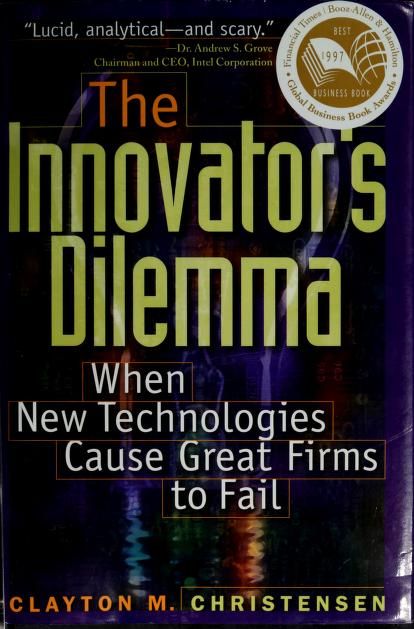
Nova: Exactly! It’s not always about incompetence, which is the really fascinating part. Often, they're doing everything 'right' according to their existing playbook. And that brings us perfectly to our topic today, diving deep into the strategic foresight required to not just survive, but to truly master the future. We're drawing insights from two phenomenal books: by Clayton M. Christensen, and by Donella H. Meadows.
Atlas: Oh, I've heard whispers about Christensen's work. What's striking about him?
Nova: What's truly striking about Christensen is that he wasn't just an academic; he was a Harvard Business School professor who profoundly shaped how we understand market dynamics. His work wasn't just theoretical; it was born from observing real-world corporate failures. He brought a rigorous, almost scientific approach to understanding why even well-managed companies can stumble. It makes his insights incredibly practical, which is why has been called one of the most important business books ever written.
Atlas: That makes me wonder, if even the 'best' can fail, what hope do the rest of us have? And how do we even begin to understand those underlying currents of change?
Nova: That’s the million-dollar question, isn't it? And it leads us right into our first core topic, which is all about understanding that paradox.
The Innovator's Dilemma: Navigating Disruptive Technologies
SECTION
Nova: So, by Clayton Christensen fundamentally challenges our assumptions about what makes a company successful. It's not about being bad at business; it's about being at the wrong things.
Atlas: Too good at the wrong things? That sounds a bit out there. Can you give an example? What exactly is this dilemma?
Nova: Absolutely. Think about the hard drive industry. In the 1980s, companies like Seagate and Micropolis were kings. They focused on making bigger, faster hard drives for their demanding mainframe and minicomputer customers. They poured R&D into improving performance, which was exactly what their best customers wanted.
Atlas: Right, that's classic business strategy: listen to your customers, give them what they ask for, improve your product. What's the problem there?
Nova: The problem arose with the emergence of smaller, lower-capacity 5.25-inch drives, and then even smaller 3.5-inch drives. These 'disruptive' technologies were initially inferior in terms of capacity and speed. They couldn't meet the needs of the mainframe market. So, the established players, quite rationally, dismissed them. Why invest in a product their best customers didn't want, that offered lower margins?
Atlas: Hold on, so these big companies saw the new tech, but they ignored it because it wasn't good enough for their market? That sounds like a business death wish in hindsight!
Nova: It does, doesn't it? But at the time, it was the logical, financially sound decision. The smaller drives found a niche in emerging markets, like personal computers and then laptops, which didn't need massive storage. These new markets were initially small and less profitable. But here's the kicker: the disruptive technology. Suddenly, those smaller, initially inferior drives became powerful enough to challenge the established market, and the incumbents, who had doubled down on their traditional products, couldn't catch up.
Atlas: Wow. So basically, their success became their blind spot. They were so focused on optimizing for today's customers that they missed tomorrow's. It's like being a master chef who refuses to learn about molecular gastronomy because his steakhouse is doing great.
Nova: That's a perfect analogy! Christensen talks about how disruptive innovations tend to be simpler, cheaper, and initially perform worse than established products. They appeal to a new or less demanding customer segment. But they have a different value proposition—perhaps convenience, accessibility, or a new application. And they improve at a much faster rate than the established technology.
Atlas: That’s actually really inspiring for someone trying to innovate. It means you don't have to be perfect from day one; you just have to find a niche and keep improving. But for the big players, it sounds like a constant existential threat. How do you design your innovation processes to be both efficient in the short-term and resilient to long-term systemic changes?
Nova: That’s the core challenge. Christensen suggests that companies often need to create separate, autonomous units to nurture disruptive technologies, units that aren't beholden to the parent company's existing customer base or profit expectations. It’s about building a future, but you must first understand the underlying currents and structures of change. And that's where our second book,, comes into play.
Systems Thinking: Understanding Underlying Currents of Change
SECTION
Nova: So, if gives us a framework for anticipating market shifts, by Donella Meadows provides the tools to understand the fundamental architecture of those shifts. It’s about seeing the forest, the trees, and the mycorrhizal network connecting them all.
Atlas: Oh, I like that! We're moving beyond just the immediate impact of a disruptive tech to understanding the entire ecosystem. What exactly is systems thinking?
Nova: Donella Meadows, a brilliant environmental scientist and pioneer in the field, describes a system as an interconnected set of elements that is coherently organized in a way that achieves something. It could be a forest, a company, an economy, or even your own body. Systems thinking is about recognizing these interconnections, understanding feedback loops, and identifying leverage points.
Atlas: That makes me wonder, for our listeners who are trying to build innovative R&D pipelines, how does this help them? It sounds a bit abstract.
Nova: It’s incredibly practical once you grasp it. Let's take the example of a company trying to innovate. A traditional approach might be to throw more money at R&D, or hire more engineers. But a systems thinker would ask: What are the feedback loops here? Is there a 'success to the successful' loop, where existing products get all the resources, starving new, unproven ideas? Or a 'fixes that fail' loop, where short-term solutions create bigger problems later?
Atlas: So, you're looking for the hidden dynamics, not just the surface-level problems. It's like trying to fix a leaky faucet by constantly bailing out the water, instead of just tightening the pipe.
Nova: Exactly! Meadows emphasizes that many of our biggest problems—from environmental crises to corporate failures—stem from our inability to see and understand these system dynamics. We often focus on symptoms rather than root causes, or we push on the wrong leverage points.
Atlas: That makes a lot of sense. For someone trying to map out an entire future, as our visionary listeners are, understanding these levers would be incredibly powerful. How does this connect back to the innovator's dilemma?
Nova: Beautifully. describes a system—the market and the company within it—that creates a specific, predictable outcome: the failure of incumbents. Systems thinking gives you the language and the mental models to dissect that system behaves that way. You start to see the reinforcing loops that drive established companies to ignore disruptive tech, and the balancing loops that eventually force them to adapt, often too late.
Atlas: So, it's not just about identifying the disruptive trend, but understanding the entire intricate dance of forces that allow it to emerge and thrive, or conversely, cause resistance. That’s a fundamentally different way of approaching strategy. It’s about designing for resilience, not just efficiency.
Nova: Precisely. Meadows calls for us to shift our mental models. Instead of linear cause-and-effect thinking, we need to embrace circularity, interconnectedness, and the idea that our interventions can have unintended consequences. It's about humility and constantly learning from the system itself. This equips you with the mental models to understand the underlying currents and structures of change.
Synthesis & Takeaways
SECTION
Nova: So, bringing these two powerful ideas together, we see a profound truth: to build a future, you must understand the underlying currents and structures of change. It's not enough to just spot a new technology; you have to understand the systemic forces that allow it to disrupt, and the systemic inertia that prevents incumbents from adapting.
Atlas: That gives me chills. It’s like these books are saying, 'Look, the future isn't just happening to you; it's being woven by these invisible threads, and if you understand the pattern, you can influence it.' It's about profound philosophical meaning, not just quarterly reports.
Nova: Absolutely. For our visionary listeners, the aspiring innovators and strategic builders, the takeaway is clear: embrace the journey of self-discovery, not just about your industry, but about the very nature of change itself. Practice daily mindfulness, even five minutes, to quiet the noise and see these systems more clearly.
Atlas: That's a great way to put it. It’s not about predicting the future with a crystal ball, but understanding the forces that shape it, and then strategically positioning yourself to ride those waves, or even create them. It requires incredible foresight.
Nova: Indeed. And for those looking for their next strategic move, identify a current industry trend and analyze it through the lens of both disruptive innovation and systems thinking. Ask yourself: How might it reshape your target R&D areas? How can you design processes to be both efficient now and resilient long-term?
Atlas: That's a powerful challenge. It's about designing your innovation processes to be both efficient in the short-term and resilient to long-term systemic changes. What a journey of continuous unfolding.
Nova: It truly is. And that's what makes this work so compelling and so vital for anyone looking to master the future.
Atlas: That’s a fantastic way to cap it off. This is Aibrary. Congratulations on your growth!